
The results of the Knesset elections place the State of Israel at an increased risk for a prolonged period of political uncertainty and an extended term for a transition government, international credit rating agency Fitch warns. According to Fitch, the situation in which the political system faces a dead end, along with the tangible risk of the absence of a stable parliamentary majority for government operations, aligns with Israel's current credit rating, which stands at 'A' with a negative outlook.
According to the election results, the Likud Party will remain the largest faction in the Knesset with approximately 27 seats, but the bloc led by Prime Minister Benjamin Netanyahu reached only 53 seats, far short of the 61-MK threshold required to form a coalition. On the other side, the bloc led by Gadi Eisenkot stands at 48 seats, alongside the Arab parties holding 19 seats. This comes after impressive turnout figures of 78% of eligible voters, compared to just 71% in the 2022 elections.
Fitch points to the complex constitutional path expected now. Under Basic Law: The Government, the President of the State will most likely grant Netanyahu the initial mandate to form a government for 28 days, with an option for an extension of up to 14 additional days. If he fails to assemble a majority, the mandate will be transferred to Eisenkot for a period of 28 days. If this attempt also fails, the president may task another Knesset member with the job if at least 61 MKs explicitly request it.
The agency estimates that the chances of establishing a stable coalition with a majority of 61 MKs are low. An alternative scenario of a broad coalition uniting the Netanyahu and Eisenkot blocs without the haredi parties exists theoretically, but does not constitute the baseline scenario. Therefore, if coalition talks fail, the Knesset will be dissolved and elections will be held within 90 days, with the outgoing government continuing to serve as a transition government throughout the process.
According to Fitch analysts, the most likely scenario is the dissolution of the Knesset as early as the beginning of January and repeat elections in early April. This timeline coincides with the mechanisms of the Budget Department, as the failure to approve the state budget by March 31 leads to the automatic dissolution of the Knesset. The law states that if the budget is not approved within three months from the start of the fiscal year, it may be approved up to 145 days from the day the government is formed (whichever is later), so March 31 is not the absolute final date, but a lack of agreement by the legal deadline will lead to dissolution.
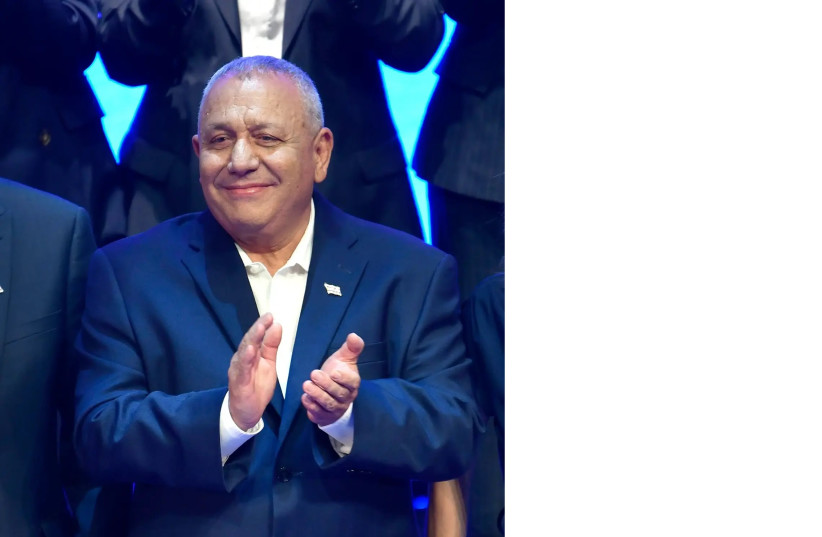
Political deadlock threatens budget approval and economic stability
The emerging outcome presents Israel with a return to a reality of fragile coalitions and frequent transition governments, similar to what the economy experienced during 2019–2022 when the country was dragged into five election campaigns. Because the outgoing coalition lacks a parliamentary majority, approval of the 2027 state budget before new elections appears completely unlikely.
The absence of an approved budget will force an involuntary belt-tightening on the economy under fiscal rules. In such a situation, the government will be permitted to spend an amount limited monthly to only 1/12th of the lower of two ceilings: The previous year's expenditure ceiling or the allowed expenditure, adjusted to the average population growth rate over the preceding three years. For comparison, in 2026, the allowed expenditure stood at a gap of NIS 32 billion above the expenditure ceiling of NIS 699 billion.
Operating under a "continuation budget" framework is not foreign to the Israeli economy. In 2020, the country operated for a full year without an approved budget amid the coronavirus pandemic, relying on special aid packages and external funding. In 2021, the budget was approved only in November after about 10 months of operating under a continuation budget, and in 2023, the country operated under this mechanism for about five months until the budget was approved in May.
The realization of a scenario without a 2027 budget will dictate a monthly expenditure restriction based on an expenditure ceiling of NIS 699 billion, plus an indexation to estimated population growth of only 1.5%. This forced restraint is expected to significantly limit government spending and may even reduce the fiscal deficit in the short term.
However, Fitch stresses that this temporary drop in the deficit should not be viewed as "fiscal consolidation" (structural budget balance). The reduction in spending does not stem from responsible policy measures or long-term reforms to bolster public coffers, but solely from political paralysis. The agency expects that Israel's debt-to-GDP ratio will continue to rise moderately, a key factor that continues to serve as one of the main drivers keeping Israel's rating outlook negative.