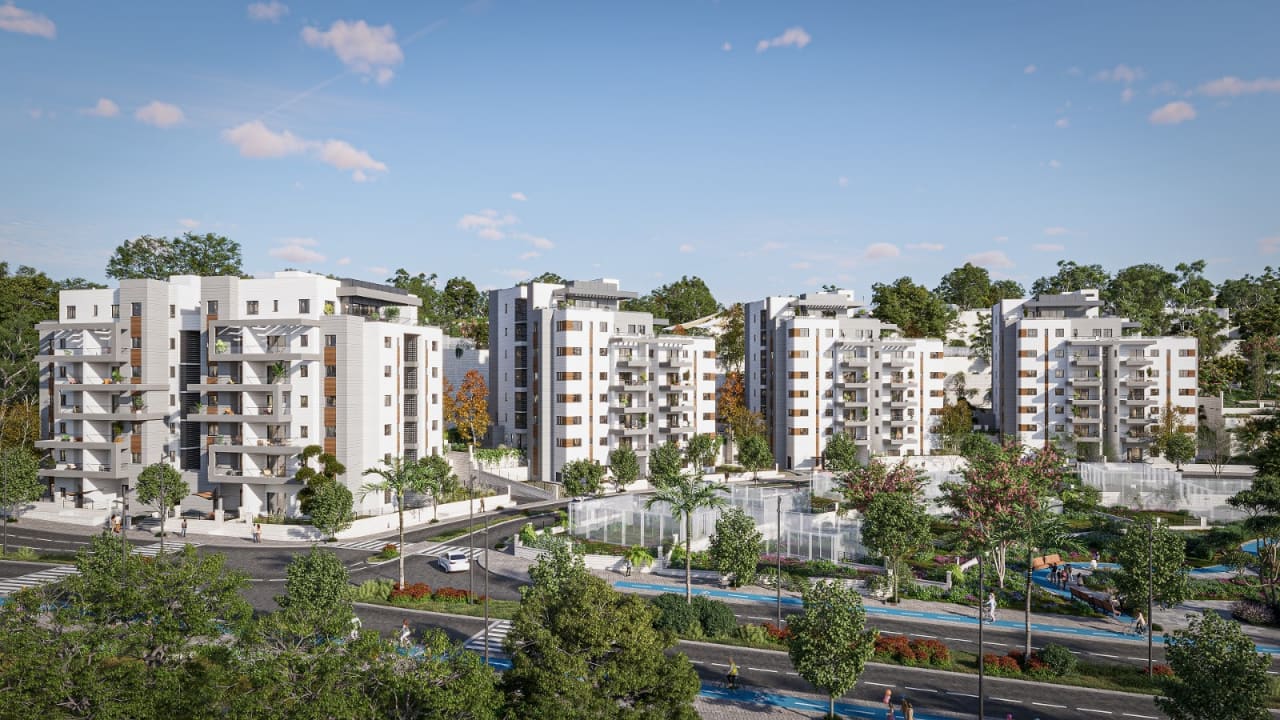
Rabbi Kalman Topp, one of the leading figures in US rabbinic leadership who served for years as the rabbi of the Beth Jacob congregation in Beverly Hills, purchased an apartment in a new project in Givat Hamatos and is expected to
immigrate to Israel and settle in Jerusalem. About 35% of the buyers in the project are foreign residents, most of them from the US, who are planning to make aliyah upon completion of construction.
At the peak of his public career in the United States, Rabbi Kalman Topp, one of the prominent figures in Orthodox rabbinic leadership in the US, chose to take the major Zionist step: Immigrating to Israel, establishing his home in Jerusalem, and taking part in founding a new community in Givat Hamatos.
Rabbi Topp purchased an apartment in a project by the Ram Aderet and Salit companies in the new neighborhood, where he is expected to settle upon the completion of construction. For years he served as the senior rabbi of the Beth Jacob congregation in Beverly Hills, Los Angeles, alongside his role as the first vice president of the Rabbinical Council of America (RCA). Previously, he also served as a rabbi at the Young Israel of Woodmere
community in New York.
From Beverly Hills to the capital
The move was also highlighted in the Jewish Journal, where Rabbi Topp’s decision to leave the US at the height of his activity and join the establishment of a new community in Jerusalem was described as a step with broader significance for
Diaspora Jewry. The article emphasized that in an era of rising antisemitism and uncertainty in Jewish communities around the world, potential Olim are looking in Israel not only for an apartment, but also for community, leadership, and a sense of belonging.
A strategic shift for diaspora jewry
Rabbi Topp’s choice aligns with a trend observed in recent years among Orthodox and Zionist Jews from the US who seek to turn Israel from a national home into an actual home. According to the project’s developers, about 35% of the apartment buyers are foreign residents who plan to make aliyah upon the completion of the apartments, expected in about a year and a half.
Among the American buyers, some are already calling Givat Hamatos "the Beit Shemesh of Americans, just inside Jerusalem." The reason, according to the developers, is the combination of new housing in buildings that are not giant towers, green spaces, public and religious institutions, and planning that enables the creation of a cohesive community within the borders of the capital.
Building "The Beit Shemesh of Jerusalem"
Givat Hamatos is one of the most significant new land reserves for construction in Jerusalem and is expected to include about 2,561 housing units, alongside educational institutions, parks, public areas, and community centers. In the coming years, the neighborhood is also expected to benefit from a connection to the Blue Line of the light rail.
For Rabbi Topp, this is more than a real estate transaction. The choice to leave an established community in the US, make aliyah to Israel, and establish a home specifically in a new Jerusalem neighborhood gives the step a clear Zionist dimension: Not just talking about the future of the Jewish people in Israel, but being a partner in building it.
This article was written in cooperation with Ram Aderet