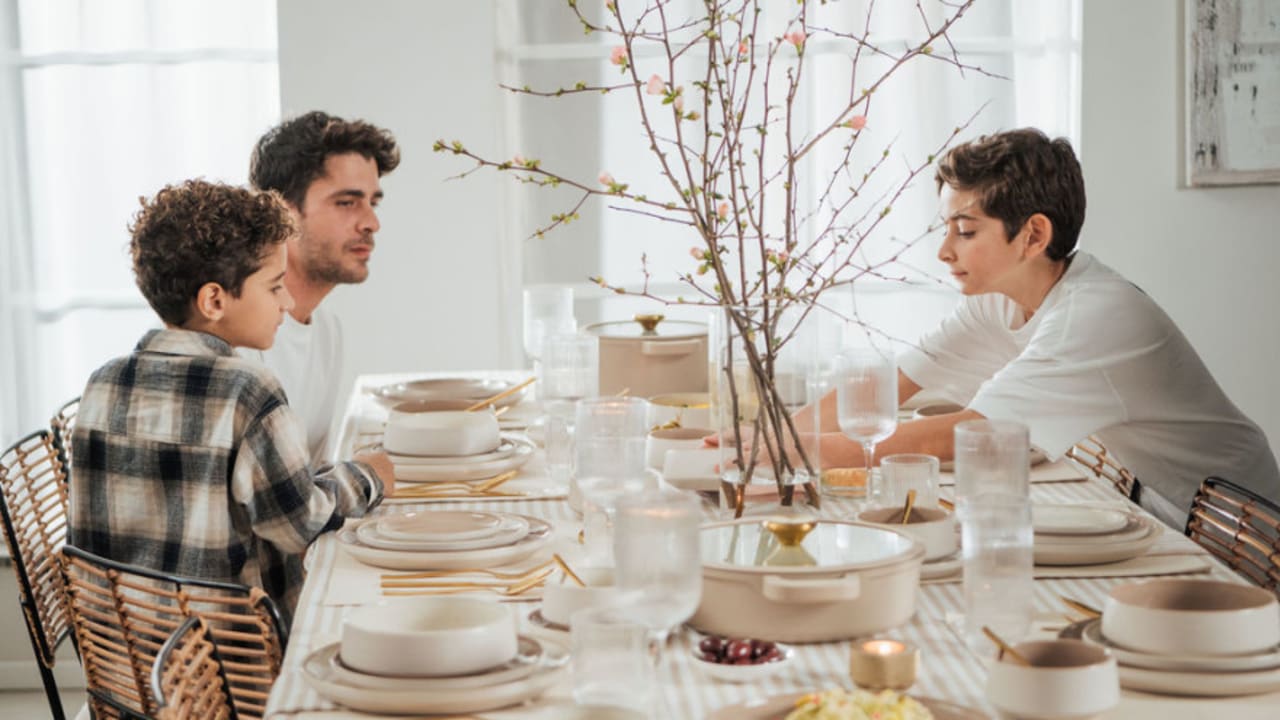
Designing a holiday table at a time like this feels almost therapeutic. Especially when the outside world is noisy and complicated, the home becomes a more intimate, precise stage, one that allows us to control the small details and bring in beauty, intention, and tenderness. This year’s Seder night, in many homes, will be more intimate. Fewer chairs around the table, less noise, more presence. And this is exactly the moment when thoughtful design can transform from an aesthetic experience into a truly emotional one.
One prominent trend of 2026 is a return to natural, effortless materiality. Less store-bought, perfect flowers, and more use of materials from the kitchen itself. Fruits and vegetables become a central design element, not just as decoration but as part of a living table. Whole lemons inside a rough ceramic bowl, cut pomegranates placed between plates, celery stalks or artichokes peeking out of a low vase. There is something very Israeli about it, very unpretentious, and above all, visually rich.

Herbs are also taking a strong place in the composition. A small bundle of rosemary or thyme can easily replace a floral arrangement, and even serve as a personal marker for each guest. It not only looks good, it smells wonderful and connects the table to a full sensory experience. Some choose to place a small potted plant next to each plate, one that can be taken home at the end of the evening - a small gesture that extends the holiday beyond the meal.
This year’s design line leans toward being less “polished” and more authentic. This means mixing is allowed. Plates that are not identical, glasses of different heights, napkins that are not perfectly folded. On the contrary, this imperfect combination creates a sense of depth and home. What is important is to maintain a cohesive color language. If you choose a palette of natural tones - cream, sand, olive green, and touches of gold - make sure all elements speak the same language. This way, even a mix will look intentional rather than random.

One of the most beautiful ideas increasingly entering homes is “edible” design. Not just fruits and vegetables, but also incorporating the dishes themselves as part of the composition. Platters of matzot arranged like a fan, charoset in a transparent dish that highlights its color, bowls of fresh greens that add vitality. Even hard-boiled eggs can become a design element when placed in a beautiful bowl with a few green leaves. The table becomes alive, changing throughout the meal - and that is exactly the magic.
Lighting also plays a more significant role this year. Not only traditional candles, but layers of light. Candles at different heights, delicate candlesticks alongside small glass lanterns, and even soft string lights gently placed along the center of the table. This soft light smooths everything, creates a sense of intimacy, and adds depth to the colors and materials.

Another growing trend is incorporating personal elements into the table. No longer a generic design, but one that tells a story. It can be a vessel passed down through the family, an embroidered napkin, or even small notes with personal words for each guest. In a time when human connection carries deeper meaning, these details are not only beautiful - they are touching.
Those who wish to go a step further can also play with unexpected textures. Combining soft linen with raw ceramic pieces, transparent glass with dark metal, and even touches of unprocessed wood. This interplay between materials creates interest and a sense of depth, even without adding more color.
Alongside all this, it is important to remember the principle that guides contemporary design: Breathing space. Do not fill every centimeter. Leave empty areas, allow the eye to rest. Especially on a smaller table, there is a temptation to fill, add, decorate. But the real power lies precisely in restraint. One well-chosen item instead of three unnecessary ones.

Ultimately, this year’s holiday table is not a showcase. It is a moment. A moment of togetherness, of relative quiet within a complex reality, an attempt to create for ourselves a small bubble of beauty. When it is designed with thought, with emotion, and with the understanding that it does not take much to create an experience, it becomes something far greater than the sum of its parts.
And perhaps this is the most significant trend of 2026. No longer a pursuit of perfection, but a search for meaning. A table that feels, not just looks. One that remains in memory long after the dishes have already returned to the cabinet.