
Drought, groundwater pollution, rising raw material costs, and shrinking landfill space – all of these are forcing the food industry to recalculate its course. The need is not only to produce food, but to do so in more efficient, less polluting ways, while also preserving freshness over time and reducing waste.
“The food industry as we know it today is highly polluting at almost every stage of the chain,” says Tamar Morag Sela, Head of the Life Sciences and Chemistry Department, patent attorney and partner at Reinhold Cohen Group.
“Fields are treated with chemical pesticides that seep into the soil and groundwater, factories use polluting cleaning agents to sanitize containers, plastic packaging is discarded after a single use, and even after food completes its long journey to the supermarket or private home – one third of it will never be eaten, will be thrown away, and will become additional polluting waste. Environmental challenges require not only improving existing processes but rethinking the way we produce, transport, and consume food. Innovation and creativity make it possible to develop solutions that reduce environmental harm, while also creating a competitive advantage for the industry. As part of my work in the field of intellectual property, I support companies developing technologies that are at the core of the transition to a more sustainable food industry, and demonstrate how scientific developments can drive business and environmental change throughout the value chain.”
On the way to pest-free crops – and without chemicals as well
“One of the main problems with biological pest control using natural substances is that it evaporates very quickly,” explains Gilad Yarkoni, CEO and founder of the start-up Platypus. “Think how frustrating it is to put on a perfume that smells great but evaporates after half an hour. That’s roughly the situation with biological pest control – there are quite a few developments of essential oil compounds that can effectively repel pests, but the problem is that they evaporate within a few weeks to at most three months. We in fact did not develop a pesticide at all, but rather what is called a ‘carrier material’ – a kind of gel that integrates with the active ingredient and makes it long-lasting.”
Platypus’s carrier material is made from natural components and can integrate with thousands of different active pesticides, extending the effectiveness of biological pest control agents from a few months to a full year. The breakthrough development won the Bernard Blum Award for innovation in biological pest control from IBMA at the ABIM conference in Basel, Switzerland, as a product that helps promote the adoption of biological solutions in agriculture. Platypus currently markets to several pest control companies in Israel and abroad and is approaching its first funding round to expand its operations in global markets.
Production lines that don’t require traditional cleaning – is that possible?
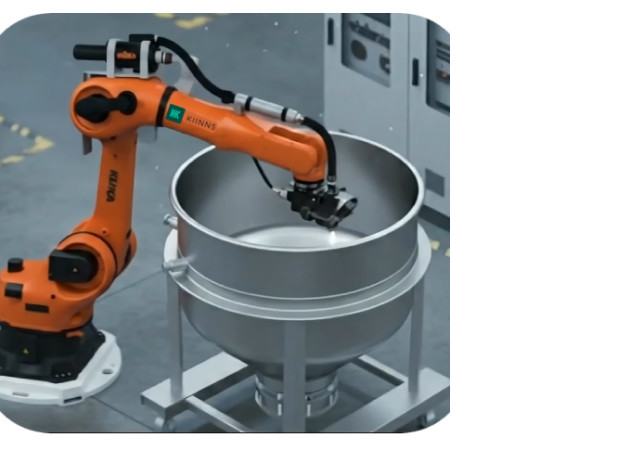
You prepare a salad, a marinade for meat, or cake batter – and after each use of a bowl or mixer, everything must be cleaned before the next round. Now imagine the same challenge, only on an industrial scale. After each food production cycle, production lines, tools, and containers must undergo full cleaning involving water, detergents, downtime, and labor. The Israeli start-up Kiinns presents a completely new approach: Eliminating the need for cleaning altogether.
“In food factories, cleaning production equipment is an expensive process that costs manufacturers a lot of money, causes long factory downtimes, and results in significant water waste, while using polluting cleaning agents and causing environmental damage,” explains Zvika Forman, CEO and founder of Kiinns. “We developed a technology based on a biodegradable polymer coating, sprayed onto the surfaces of production equipment before operation begins and quickly forming a coating layer, so that during production there is no contact between the products and the walls of the container. At the end of production, the coating layer is removed together with the product residues, after which a new coating layer is applied that enables immediate resumption of production without cleaning, without the use of water or chemicals, without human contact, and with minimal downtime.”
The company is also developing smart robotic systems that automatically apply and remove the coating, as part of a complete solution for industrial production lines. Alongside the food industry, the technology is also intended for other sectors where cleaning production lines is a major challenge, including pharmaceuticals, cosmetics, plastic manufacturing, the chemical industry, and more. Following successful pilots in Israel and Europe, Kiinns received its first commercial order, with estimated annual savings of hundreds of thousands of dollars for the client.

The naked package – the company that makes food packaging disappear
The Israeli company NakedPak grew tired of food packaging: The lack of practical solutions, the quantities of chemicals (such as microplastics) that leak from packaging into food and soil, and the inability of consumers to reduce household waste led entrepreneurs Isabel Goldberg and Naama Nicotra to establish a start-up that solves the problem at its root.
NakedPak has developed an edible food package that dissolves during cooking – and thus disappears, leaving nothing behind. The packaging is based on algae and edible materials, and does not affect the taste of the dish. The material behaves like plastic – it is compatible with existing packaging machines and protects the packaged food. And what about hygiene? Just like a tomato, cucumber, or pepper – the packaging can be washed with water (and even soap) before cooking. The company is currently launching its first product in the United States – a lightweight, waste-free meal for hikers – and is also in development processes for armies around the world.

Don’t want your strawberries to spoil? Stick on a label
The Israeli deep-tech company LiVA Bio has developed a technology aimed at helping fruits and vegetables “protect themselves” better – without chemicals and without adding bacteria. Instead of adding external substances, the company’s label releases gentle compounds that nourish the fruit’s natural mechanisms, thereby strengthening its ability to cope with humidity, temperature changes, and mold. In simple terms: Instead of “preserving” the fruit from the outside, it helps it stay fresh from the inside.
The result is extended shelf life, better preservation of taste and texture, and a reduction of up to about 20% in food waste during storage in logistics centers, display in supermarkets, and in the home refrigerator. In addition, the solution integrates with existing packaging and does not change the consumption experience, making it easier to achieve widespread adoption in the industry.