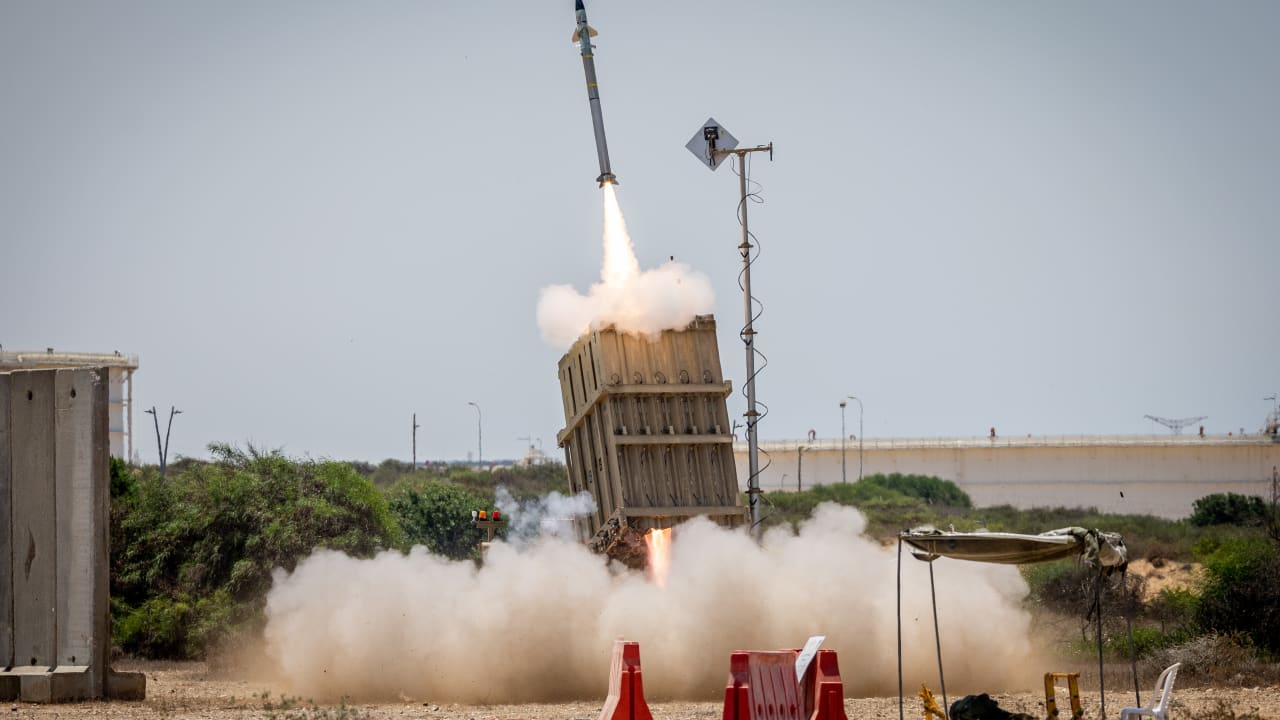
Nukkleus subsidiary Rimon has been awarded a series of multi‑year contracts worth over $4 million to manufacture critical components for Israel’s Iron Dome missile defense system.
The agreements signed with several major Israeli defense OEMs will provide Rimon with stable, long‑term revenue tied to active national security programs. Beyond Iron Dome, the contracts also cover subsystem components for additional platforms used across Israel’s homeland security and missile defense architecture.
Game changer
Israel’s comprehensive protective umbrella, that counters the missile threats includes the Iron Dome, that can intercept multiple threats simultaneously (including high-density salvos) from cruise missiles, ballistic targets, unmanned aerial vehicles (UAVs), rolling airframe guided missiles (RAMs), and precision-guided munitions (PGMs). Other systems include the Arrow (Arrow-2 and Arrow-3) system, the David’s Sling missile-defense system, and the Iron Beam laser defense system.
Rafael Advanced Defense Systems is the prime contractor for the Iron Dome, collaborating with ELTA Systems, a division of Israel Aerospace Industries (IAI), and mPrest.
Israel continuously improves the technology behind the country’s anti-missile systems to expand and improve performance capabilities in the face of a range of threats. According to a senior MAFAT (Israel’s Directorate of Defense Research & Development) official, there have been at least five software upgrades to the Iron Dome after October 7, 2023.
During the Second Lebanon War in 2006, large Israeli cities were struck by missiles for the first time. In response, then-defense minister Amir Peretz decided to develop the Iron Dome, despite opposition from army brass.

After a lengthy development process, and with the financial help of the United States, Iron Dome went into service in April 2011, its first battery placed near the southern Israeli city of Beersheba. It made its first interception of a Grad rocket fired from the Gaza Strip just days later.
The Iron Dome has been used during countless military operations against Hamas since it was first deployed, especially over the past two years when it intercepted 90% of all hostile aerial threats targeting the Jewish state.
A growing role for sub‑tier defense suppliers
The new contract awarded to Rimon underscores a broader shift that is underway in the defense sector, as systems become more complex and operational tempo increases: Tier‑2 and Tier‑3 suppliers are taking on a larger share of mission‑critical work.
These companies, often operating quietly and far from the spotlight, provide the specialized engineering, power systems, and integration capabilities that enable frontline platforms to function reliably.
Rimon, founded in 1988, sits squarely within this execution layer. The company designs and delivers customized platforms combining power generation, communications, sensor infrastructure, mobility solutions, and human-centered work environments into cohesive, field-ready systems. Its long history supporting Israeli defense programs has made it a trusted partner where subsystem reliability is essential.
Nukkleus acquired Rimon as part of its strategy to build a portfolio of high‑value defense suppliers, and the contracts validate its focus on structurally constrained segments of the industrial base. The company aims to scale mission‑critical Tier‑2 and Tier‑3 firms across the US, Israel, and Europe, providing capital and strategic oversight while preserving the specialized expertise that defense customers rely on.
Indispensable role
Nukkleus CEO Menny Shalom said the new agreements highlight the indispensable role of sub‑tier suppliers in sustaining Israel’s defense readiness.
“These agreements highlight the importance of the execution layer in modern defense programs,” he said.
“Systems like the Iron Dome rely not only on prime contractors, but on a network of highly specialized suppliers, capable of delivering critical subsystems reliably and at scale. Rimon’s role in these programs reflects the long-cycle, mission-critical work that defines durable value in the defense industrial base,” Shalom explained.
Nukkleus’ broader portfolio strategy of combining organic expansion with targeted acquisitions aims to modernize and scale the industrial backbone supporting these systems. With defense supply chains under pressure globally, the company is positioning itself as a key consolidator of specialized manufacturing capabilities.