Military history teaches the simple yet piercing truth that there are no endless wars. Every conflict, no matter how vast, ultimately concludes with a political settlement, most commonly a ceasefire, sometimes with a peace treaty, and at times with arms limitations, demilitarization, or systems of control, including nuclear oversight.
Yet contrary to the romantic image of “victory imposing peace,” it is often not a decisive triumph that brings wars to their end but rather a failed military episode or a critical turning point.
This was evident after the Second Lebanon War’s disastrous battle in Wadi Saluki. It was clear following the intense bombardment of Beirut during the First Lebanon War. In each of these cases, it was not total victory that brought the campaign to an end; it was a moment in which the risk of uncontrollable escalation forced major powers and the parties involved to halt the fighting.
It is within this same historical pattern that today’s global gamble surrounding Iran is unfolding.
War or agreement?
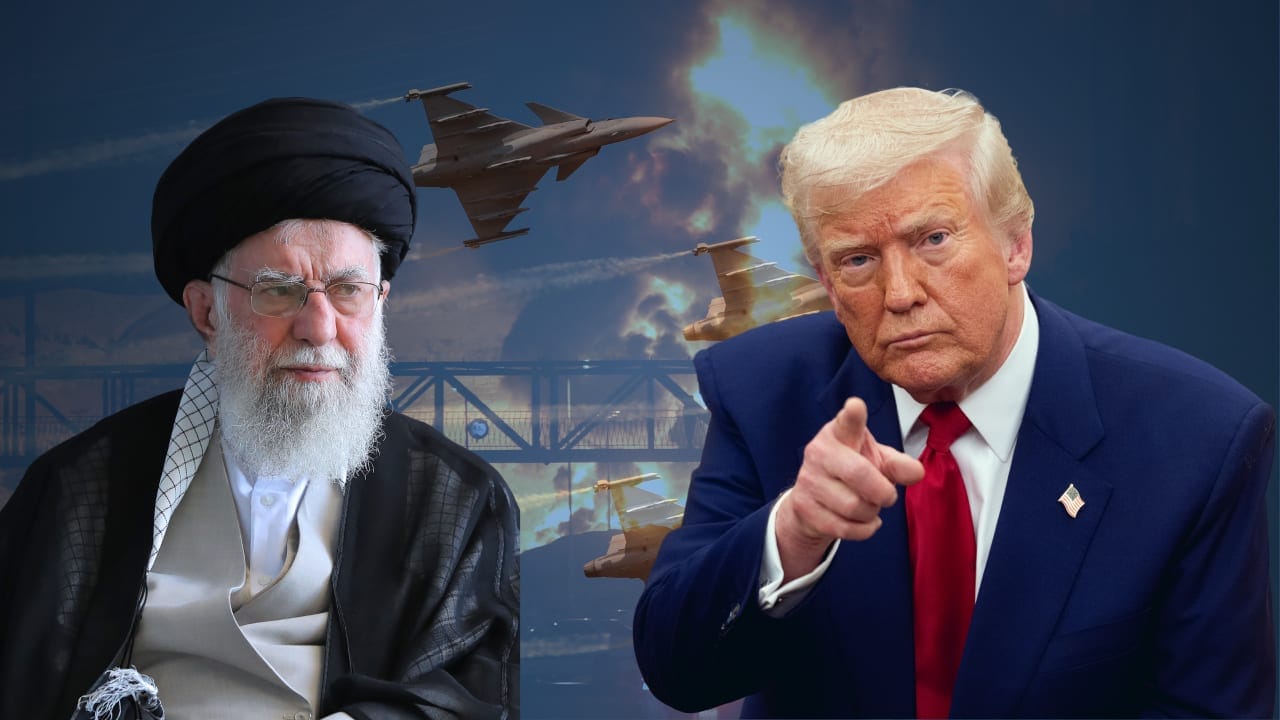
Will the United States, under the leadership of President Donald Trump, choose military confrontation? Or is the current show of force designed to pressure Tehran into a new agreement?

The West’s true objective is not another round of airstrikes; it is regime transformation: encouraging leadership that prioritizes development and life over an ideology of destruction and death.
American experience has repeatedly demonstrated how wars fought against fundamentally different cultures tend to end in strategic failure.
In the Vietnam War, overwhelming military power eroded into public exhaustion and humiliating withdrawal. In the Iraq War, a regime was toppled, only to give birth to costly regional chaos, proving that military force alone does not create a sustainable new order.
American society is not built to absorb prolonged casualties. The moment flag-draped coffins begin returning home, public opinion shifts rapidly. Therefore, a concentration of aircraft carriers with thousands of troops and advanced combat aircraft across the Middle East does not necessarily signal an imminent attack; more often, it represents strategic pressure aimed at diplomatic leverage.
Maximal demands
Trump relishes displays of strength, but he is equally driven by the allure of a “grand deal,” and signs of softening conditions are already visible. The real question is not whether he will retreat from maximal demands, but how he will justify such a move politically.
Here, the profound cultural divide becomes decisive. Iran’s leadership operates within an ideological-religious framework in which compromise is perceived as humiliation, even at the cost of immense civilian suffering.
Iran’s rulers face no meaningful internal opposition, while Trump confronts elections and the democratic constraints of American politics.
Consequently, the most likely scenario is a prolonged show of force, culminating in a negotiated exit – unless a breaking point emerges in the form of a direct Iranian strike or an uncontrolled incident during military maneuvers in the Strait of Hormuz.
Gaza serves as a stark reminder of how agreements without ideological transformation rarely endure. Hamas does not seek stability; it seeks the destruction of the State of Israel, which is why ceasefires repeatedly collapse, even under international mediation.
The central lesson of the modern era emerges from this reality: Strong military power is not a luxury; it is a prerequisite for sovereignty, not only in times of war but especially in times of peace and diplomatic agreement.
In a world of deep uncertainty, leaders do not anchor their future in trust alone. They do so in the accelerated development and acquisition of advanced defensive and offensive technologies: long-range missile systems, multi-layered air defense, cyber-warfare capabilities, artificial intelligence (AI) for battlefield management, space assets, and autonomous drone swarms.
The only true certainty lies in the ability to defend oneself and deter through strength. Alliances and partnerships serve as a secondary option; never as the foundation for survival.
The bottom line is clear: Many wars do not end with a decisive victory, but with a single mistake that generates political pressure for a ceasefire.
Trump likely understands this well and may be moving toward an agreement rather than a bombing campaign. Yet in a world driven by extreme ideologies, cultural divides, and national ego, it takes only one moment of loss of control to ignite a major war.
For any nation seeking to preserve its sovereignty today, continuous military and technological strength remain essential, even when diplomacy appears to smile.
The writer is a retired IDF colonel.