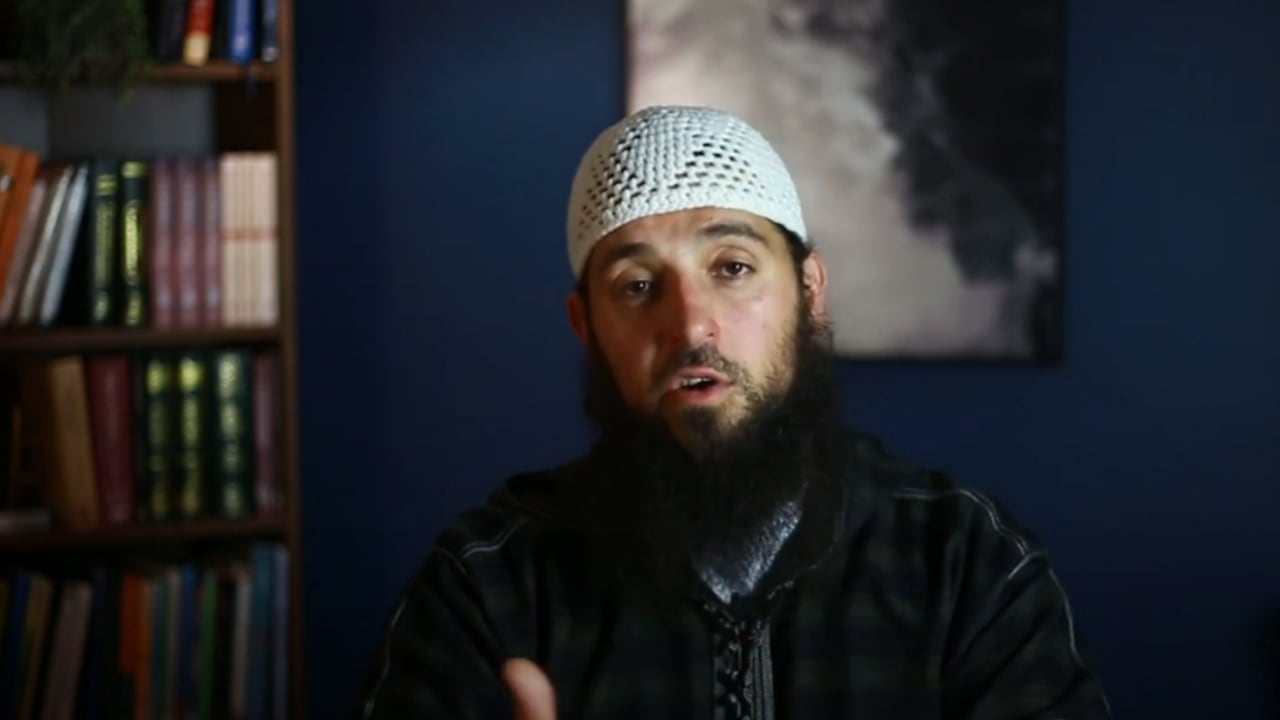
The Executive Council of Australian Jewry has won its landmark case against antisemitic hate preacher Wissam Haddad, with the Australian Federal Court judge ruling on Tuesday that Haddad’s hate-filled sermons must be deleted from the Internet.
Judge Justice Stewart’s ruling, viewed by The Jerusalem Post, states that Haddad contravened Section 18C of Australia’s Racial Discrimination Act 1975 which states that it is illegal to “offend, insult, humiliate, or intimidate another person or a group of people because of race, color, or national or ethnic origin” in public.
For there to be a legal case of contravention of Section 18C, the act must be “reasonably likely to offend, insult, humiliate, or intimidate because of race, color, or ethnic/national origin,” and the insult must have “profound and serious effects.”
ECAJ took Haddad – also known as Abu Ousayd – and the Sydney-based Al Madina Dawah Centre Incorporated to court over sermons made at the center, recordings of which have been uploaded online.
Tuesday’s ruling states that the three sermons “were reasonably likely to offend, insult, or intimidate Jewish people in Australia.” Additionally, the judge found that the religious center contravened 18C by publishing the three lectures.

As a result, the court ordered that all three sermons – and any excerpts of them – be taken down from any internet page or publication under the control of the center or Haddad.
In cases where the sermons are re-published by an external party, the center and Haddad must “take all reasonable steps to... request that the speeches be removed.”
Finally, it ordered that the two parties “not cause words, sounds, or images to be communicated otherwise than in private, which attribute characteristics to Jewish people on the basis of their group membership and which convey any of the imputations identified at paragraph [158] of the reasons for judgment delivered today.”
ECAJ RELEASED a statement shortly after saying the decision to take Haddad to court “has been vindicated by the judgment,” which affirmed “that the days when Jewish communities and the Jewish people can be vilified and targeted, with impunity, are a thing of the past.”
“This case was not about freedom of expression or religious freedom. It was about antisemitism and the abuse of those freedoms in order to promote antisemitism.”
ECAJ added that, while people are free to engage in debate about international conflicts, “that does not include the freedom to mobilize racism as a polemical tool to promote one’s views.”
The Australia/Israel & Jewish Affairs Council also celebrated the ruling. AIJAC Executive Director Colin Rubenstein said, “Judge Stewart’s ruling is a welcome and encouraging precedent – one that can now hopefully be extended to pursue a number of other radical Islamist clerics who have demonized Jews while hiding behind ostensible religious freedom.
“This judgment shows that Section 18C of the Racial Discrimination Act has teeth and can be used remedially when police refuse to take any action, as occurred in this case.”
Background to the case
The legal action began in the Federal Court of Australia in October 2024, when ECAJ co-CEO Peter Wertheim and deputy president Robert Goot said Haddad had violated Section 18C of the Racial Discrimination Act.
According to court filings, Haddad described Jews as “vile” and “treacherous,” with their “hands in businesses, in the media.”
In one sermon from November 2023 viewed by the Post, Haddad quotes Sahih al-Bukhari, Book 52, Hadith Number 176, which reads, “Toward the end of times, when the Muslims will be fighting the Jews, the trees will speak, the stones will speak, and they will say, ‘O Muslim, O believer, there is a yahudi [Jew] behind me, come and kill him.’”
This passage is famously quoted in Article 7 of the Hamas charter.
Later in the sermon, Haddad says, “Muslims are starving for jihad; they can’t wait to be amongst the mujahideen [jihadists].”
Additionally, Goot and Wertheim sought injunctions to remove the speeches from the Internet and to restrain the respondents from publishing similar content in the future.
Al Madina Dawah Centre published a statement in November 2024 expressing “unwavering commitment” to Haddad and asking for help with the “significant financial cost” of the trial.
It called for support in what it said was a demonstration to “Zionist forces that our community stands united behind us.”
ECAJ’s previous attempt to lodge the case with the Australian Human Rights Commission did not succeed, resulting in the current action at the Federal Court.
“Accordingly, we have commenced proceedings in the Federal Court to defend the honor of our community, and as a warning to deter others seeking to mobilize racism in order to promote their political views,” Wertheim said.
“Australia has long enjoyed a reputation as a multicultural success story where people of many different faiths and ethnic backgrounds have, for the most part, lived in harmony and mutual respect,” he added.
“We are all free to observe our faith and traditions within the bounds of Australian law, and that should mean we do not bring the hatreds, prejudices, and bigotry of overseas conflicts and societies into Australia.”
Previous incidents relating to the case
THE CASE attracted significant media attention in April when a former Australian Security Intelligence Organisation (ASIO) spy broke his cover to expose Haddad’s activities, saying the cleric was at the center of Australia’s resurgent pro-Islamic State network.
The former secret agent, codenamed Marcus, risked prosecution by providing the first inside accounts of Haddad’s operations and the undercover counterterrorism work done during an interview with Four Corners, an Australian investigative TV program.
According to the Australian Broadcasting Corporation (ABC), Haddad has never been charged with any terrorism-related offense, despite known ties to global terrorist leaders.
Marcus – an imam and teacher recruited by the ASIO to infiltrate Haddad’s Sydney network – told Four Corners that the preacher is the spiritual leader of a network of Islamic State sympathizers.
He said that Haddad was mentored by now-jailed British extremist Anjem Choudary.
The ASIO sees Haddad “as the most important jihadist, extremist preacher in Sydney,” Marcus told Four Corners. In a second recent development, the Supreme Court of Victoria revealed in May that Australian terrorist leader Abdul Nacer Benbrika had organized funding for Haddad’s defense in the upcoming ECAJ case.
Benbrika, who spent 18 years in jail for leading a terrorism cell, met Haddad in December to discuss funding for the trial.
John Coyne, a former Australian Federal Police officer who was involved in the 2005 investigation that led to Benbrika’s conviction, told ABC that Benbrika’s behavior was not that “of someone who has been deradicalized.”
“One of his first acts [after his restrictions were eased] was to make contact with someone who is a renowned firebrand speaker. This, in terms of extremist Islam, is extraordinary,” Coyne said.