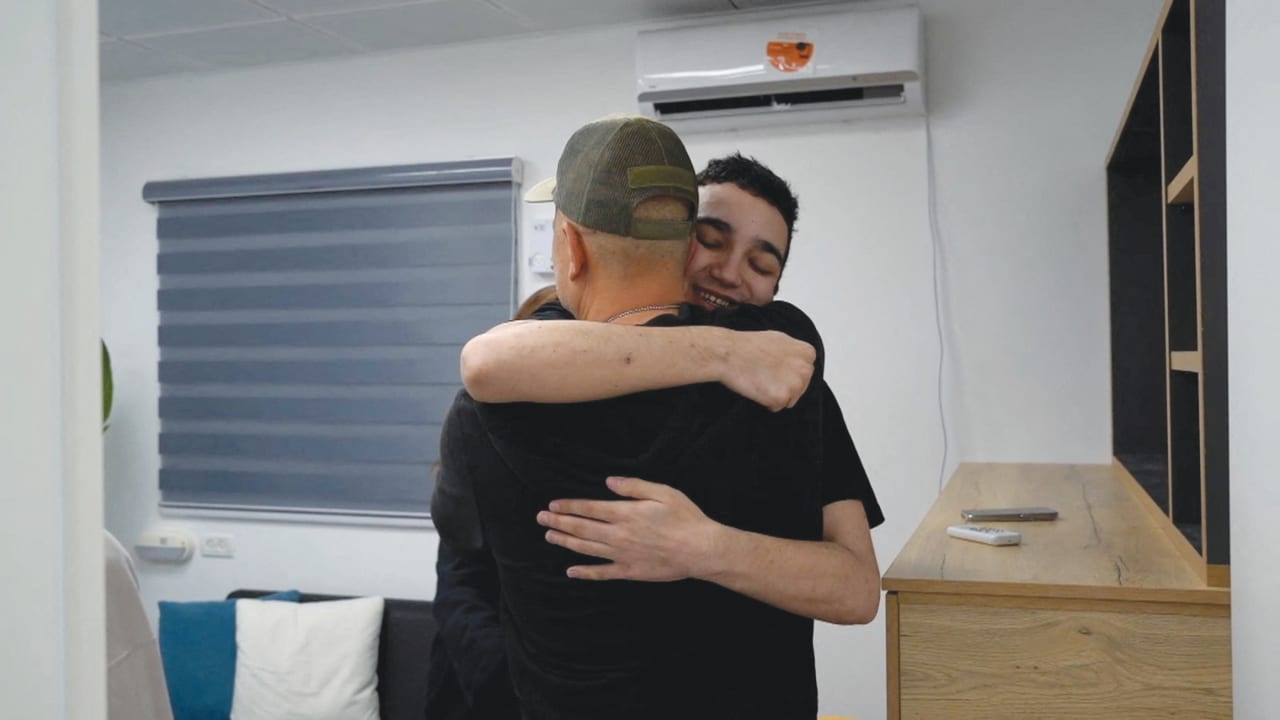
Released hostage Edan Alexander arrived in the US for the first time on Thursday since he was released by the Hamas terrorist organization, which held him for 19 months in the Gaza Strip.
Alexander was believed to be the last living hostage with US citizenship to be held by the terrorist organization.
Video documentation of Alexander showed him arriving at Newark International Airport in New Jersey, his home state.
Alexander was released last month due to brokered deal by Trump administration
Alexander was released last month in a deal brokered between Hamas and the Trump administration. Alexander received an apology from former Shin Bet chief Ronen Bar, who said that Israel failed to secure his release and that he was freed due to the efforts of White House Middle East envoy Steve Witkoff.
Alexander told his family that he was transferred across the Palestinian enclave alongside a terrorist disguised as a woman, N12 reported last month. He also said that he was kept briefly alongside hostage Matan Zangauker.
Witkoff gifted Alexander with a Star of David necklace that had belonged to his late son, Andrew, during a visit to Tel Aviv Sourasky Medical Center, where Alexander was being treated. While at the hospital, Alexander spoke with US President Donald Trump over the phone.

James Morrison, the principal of Alexander's high school in New Jersey, said last month that his return brought a wave of relief to his community in Tenafly. The principal said he didn't know the released hostage when he was a student, but became closely connected to the family through Edan’s younger sister, who was in the class of 2024.
After finishing high school, Alexander made aliyah at 18 to serve in the IDF's Golani Brigade, and volunteered to stay on base during the weekend when Hamas's invasion of the Gaza border communities occurred.
Rebecca Szlechter contributed to this report.