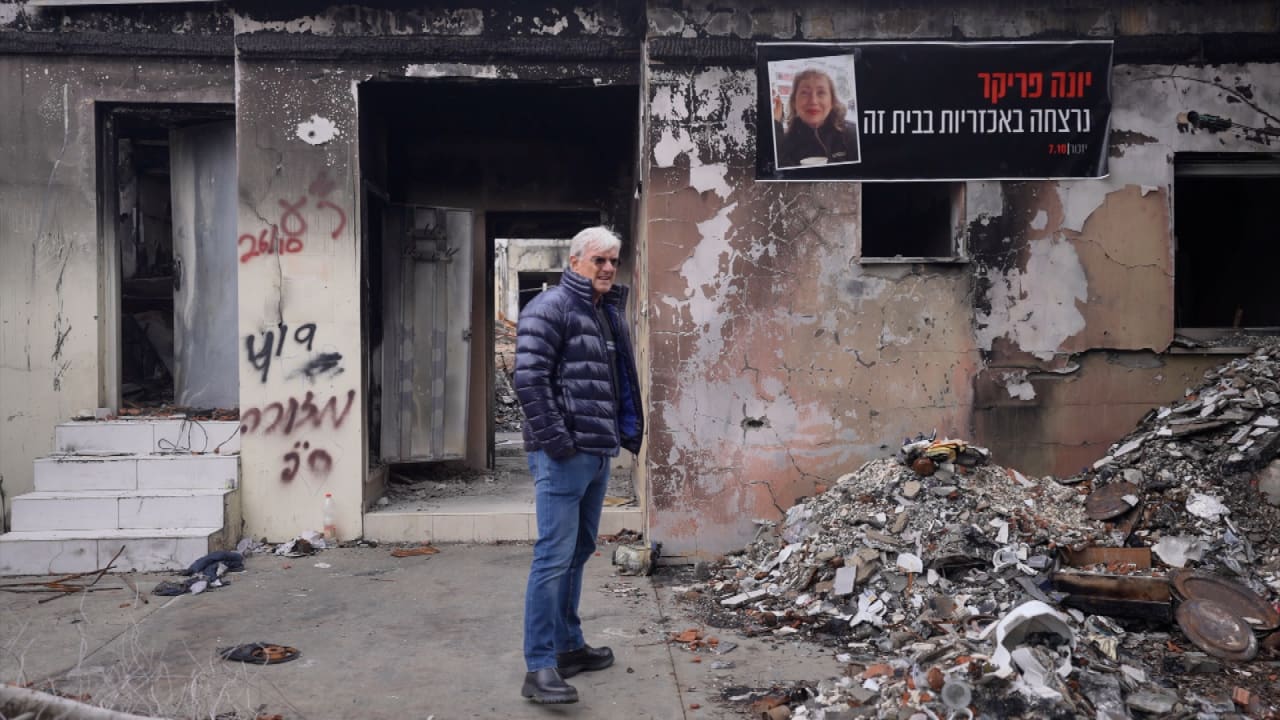
Steven Lowy tries to live his life “in a normal way.”
But in Sydney, Australia, where antisemitic incidents surged by 316% in 2024 compared to the previous year and remained at levels in 2025 three times higher than in any year before 2023, living normally has become increasingly difficult for many Jews.
Lowy is the first to admit that many Australian Jews no longer feel safe. A proud Zionist, he has received plenty of threats himself, although he said the vast majority have been online.
“But there’s no doubt there’s a pattern from online to physical threats,” Lowy told The Jerusalem Post. “Harm is being done, and so one has to be very, very cautious of certain activities.”
Still, Lowy – who is the immediate past world chair of the trustees of Keren Hayesod-United Israel Appeal – said the situation does not change his day-to-day life.
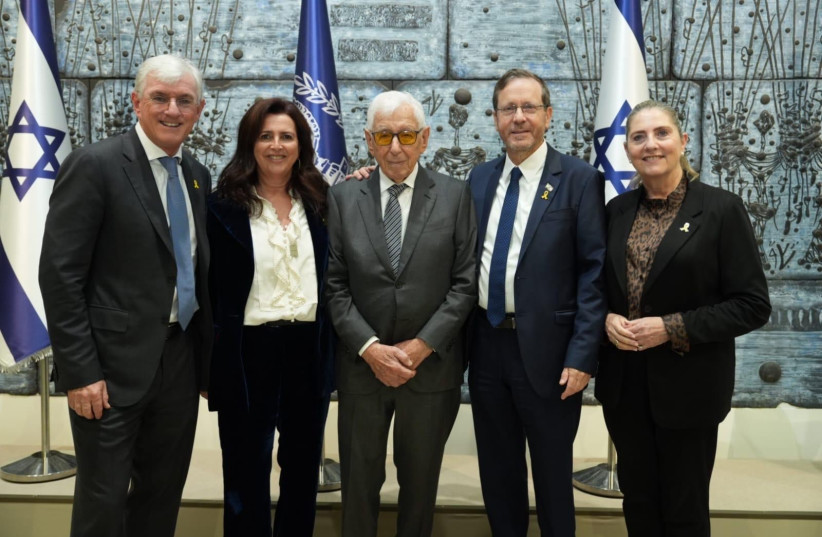
He acknowledges, however, that his prominence gives him a degree of freedom that many other Australian Jews do not enjoy. People working in professions such as the arts, hospitality and academia are often afraid to speak out, fearing they will be threatened or judged, potentially putting their livelihoods and families at risk.
“There have been many examples where Jews have been sidelined, and businesses have been interrupted,” Lowy said.
Lowy, who will be the keynote speaker at The Jerusalem Post Australia Summit on November 19 in Sydney, the newspaper’s first-ever conference of its kind in the city, is also working to strengthen the Jewish community at a time when many of its members feel increasingly vulnerable.
Against this backdrop, he is leading an effort to establish a new Jewish community center called Hakoah, meaning “the strength” in English.
The project revives the historic Hakoah sporting club, which closed in 2009. Lowy is now working to rebuild it as a central hub for Sydney’s Jewish community, serving both religious and secular Jews. The goal is to create an apolitical space that feels like a second home, where Jews can gather, socialize, and feel secure.
The center will also welcome members of the non-Jewish community, provided they appreciate the Jewish community and Israel.
“It will basically be a massive complex of social cohesion,” Lowy explained. “We’re hugely excited about it. It’s being opened at a very important time, next May or June, to provide a home for the Jewish community where people feel safe, secure, and together.”
Lowy said Hakoah’s theme song is “Hinei Ma Tov,” a Hebrew song celebrating the goodness of people coming together. The idea behind the center, he explained, is that whatever people want to do, they should be able to do it together.
“So the Jews will be doing things together, and this is really to promote and strengthen sustainability of the Jewish community going forward,” Lowy said.
There was a time when Lowy could hardly have imagined that Sydney’s Jewish community would need a place like Hakoah to feel safe.
Growing up in Australia, he recalled, “was a really wonderful” experience. The country welcomed people from many different cultures and religions, including large numbers of Jews who arrived after World War II. Australia became home to one of the largest populations of Holocaust survivors per capita outside Israel.
“Australia was welcoming huge amounts of immigrants, and what mattered is that they sort of were expected to embrace Australian values of fairness and friendship and tolerance and these are very Australian values,” Lowy said. “We use the word mateship in Australia, mates as in friends.”
His father, a Holocaust survivor, was embraced by Australian society. Later, Lowy and his brothers, who were all born in Australia, experienced that same acceptance.
Lowy attended a non-Jewish private grammar school and said he rarely, if ever, encountered even low-level antisemitism.
Although Jews made up only about half of 1% of Australia’s population, he said their contributions to the country were widely recognized. Jewish Australians had played important roles in business, philanthropy, the arts, medicine and academia.
“Effectively all parts of Australian society have been enhanced by the Jewish population, most of whom came post World War II,” Lowy told the Post. “There were also Jews, mainly from English and Irish origin, that came well before World War II, and so the Jewish community is very well regarded as major contributors to society in all forms.”
Lowy himself joined the family business, Westfield, and played a key role in transforming it into one of Australia’s great corporate success stories and one of the world’s largest shopping mall companies.
For much of his life, Lowy’s experience reflected the Australia he had grown up believing in: a country where Jews could be proud of their identity, contribute to society and feel fully at home.
But everything changed for Lowy and the Jewish community after October 7, 2023.
“Suddenly there were systemized, organized, well-funded organizations that were driving social behavior that we’d never seen in our country before,” Lowy explained.
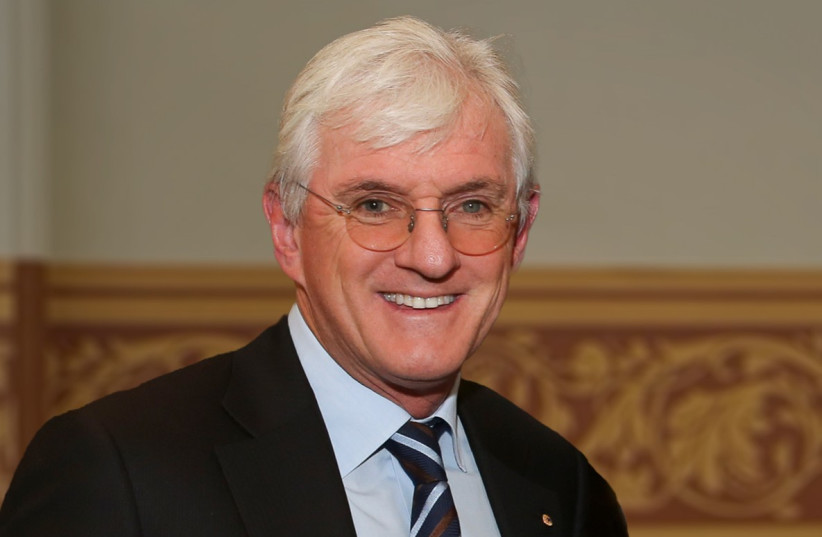
The most obvious example, he said, was the protest at the Sydney Opera House on October 9, 2023, which “lit a fuse that was probably under the surface for a long time. It definitely was systematized. It definitely was organized, and it definitely was well funded.”
Since then, the rise in antisemitism has been documented not only in statistics but also in a series of increasingly violent incidents. There was the firebombing of a synagogue in Melbourne, a string of car arson attacks, an attack on a kindergarten in Sydney, and widespread antisemitic graffiti.
The violence ultimately culminated in a terrorist shooting during a Hanukkah celebration last year, in which 15 people were murdered. A 16th victim died of her wounds last week.
“Whether the attack was preventable remains an open question,” Lowy said. “The warning signs weren’t subtle. They were screaming.”
A royal commission, Australia’s highest form of public inquiry, is now investigating the circumstances surrounding the attack and the broader problem of antisemitism. It is expected to release its findings on December 18.
Despite everything that has happened, Lowy has not given up on Australian society.
He believes that “the vast majority of Australians are very decent, fair-minded people. They would prefer not to be brought into the Middle Eastern conflict.”
He also said he has “enormous respect” for Australian authorities, including intelligence and police officials, whom he believes are working tirelessly to mitigate the threats.
“They were probably surprised, like our entire society would have been surprised, and they’re probably ill-prepared to deal with the volume of hate that we’ve seen,” he said.
However, Lowy acknowledged that even with those efforts, Jews still do not feel safe.
The Australian Security Intelligence Organization (ASIO), the country’s domestic intelligence agency, has warned that further terrorist attacks are probable. Authorities have also raised concerns about Iranian-backed plots targeting Jewish leaders.
“No doubt the government and the policing and intelligence authorities are trying to deal with the massive increase in volume of problems, but it doesn’t give you a warm, fuzzy feeling that the threat has gone away,” he said.
Lowy said it is unacceptable for Jewish students to feel threatened on university campuses, for Jewish doctors or nurses to feel unsafe in hospitals, or for Jewish artists and writers to be excluded from exhibitions, literary events and competitions.
“But I believe most Australians understand that and share those values,” he continued. “That’s where I’m coming from in terms of a sense of hope and optimism. But it won’t happen on its own. It will only happen if there is strong leadership from political, legal, and civil society organizations.”
For Lowy, addressing antisemitism also means confronting a broader problem in Australian society: the growing influence of social media and the erosion of fact-based education.
He expressed concern that young people are increasingly getting their information from social media platforms, where anti-Israel and antisemitic content is widespread.
“We know that social media is hugely infiltrated by those that have an agenda against Israel or the Jews’ interests. My understanding is, for every positive Zionist and pro-Jewish piece of information on social media, there’s more than 15 times against that… All of that has to change for younger people to be properly educated on the matters.”
But education alone will not be enough, he said. Nor will a royal commission make a difference unless its findings lead to meaningful change.
“We must be clear-eyed about what this moment demands of us,” Lowy said. “Tolerance is not passive acceptance but active engagement with difference. Democracy requires not just voters but citizens… Persecution of any minority cannot be tolerated and is simply un-Australian. It may start with the Jews, but it won’t end there.”
Lowy said he is saddened that Australia “might be sleepwalking its way into extreme left-wing influence on the country’s economic, social and foreign policy agenda.”
Still, he believes that with renewed urgency and enterprise, the country can reverse course. For Lowy, that means both standing up against antisemitism and building places like Hakoah, where Jews can once again feel comfortable coming together.
He still believes in the Australia he grew up in, and he hopes that one day, living a normal Jewish life there will no longer require so much caution.
“We will need to think big and act fast,” Lowy said.
This article is part of a special series leading up to The Jerusalem Post Australia Summit, taking place in Sydney on Nov. 19. To buy tickets: www.jpost.com/australia2026.
Written in collaboration with Steven Lowy.