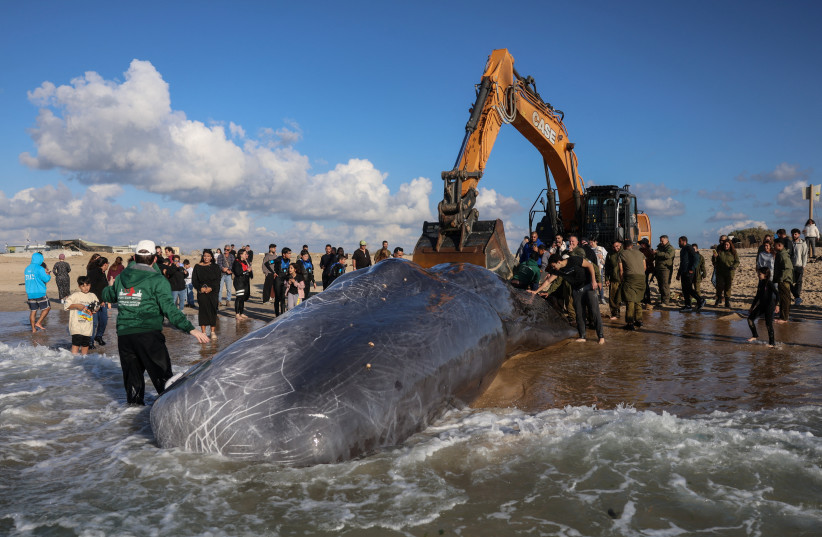
A sperm whale was found dead on the beach in Zikim on Tuesday morning, according to Israel's Nature and Parks Authority.
The cause of death has yet to be determined; experts from the University of Haifa and the Delphis Association for Marine Animals are expected to conduct an autopsy in the coming days.
Sperm whales, according to Delphis, are the largest of the toothed whales and are found all over the world. Their population, however, has begun to decline in recent years.
Mediterranean sperm whales are genetically distinct from the sperm whale population that lives in the Atlantic Ocean, and even have their own dialect of whale song, according to Dr. Aviad Sheinen of the Delphis Association.
Sheinen added that nets designed to catch swordfish and tuna pose the most significant threat to sperm whales, followed by gas and oil surveyors, which can damage their hearing or destroy their habitats, and plastic waste.
Scientists warn great white sharks in danger of disappearing from Mediterranean
Illegal fishing is rapidly contributing to the disappearance of great white sharks from the Mediterranean Sea, scientists working in partnership with the Blue Marine Foundation warned the BBC in an article published in December.
American scientists warned that threatened shark species, along with several other at-risk species, were being trafficked to fish markets in North Africa.
The Mediterranean white shark population is classified as Critically Endangered by the International Union for the Conservation of Nature.
The Environment and Climate Change portal is produced in cooperation with the Goldman Sonnenfeldt School of Sustainability and Climate Change at Ben-Gurion University of the Negev. The Jerusalem Post maintains all editorial decisions related to the content.