Two sperm whales were documented off the coast of Ashdod for the first time since 2022 during a deep-sea survey on Monday, which also coincided with International Ocean Day.
Just before the University of Haifa’s Morris Kahn Marine Research Station team was set to return to shore, the two sperm whales, one of the Mediterranean’s rarest species, were spotted.
“We received an exciting glimpse of their presence here, and also a reminder of the importance of protecting them,” said project leader Yali Mevorach.
The team was originally slated to perform surveys over the course of six days, but instead were called to shore after one day due to Iranian missile strikes.
“Just moments before we lifted the hydrophone (an acoustic system used to locate dolphins and whales) from the water, about 35 km west of Ashdod, at a depth of 700 meters, we suddenly heard familiar clicks,” said Dr. Aviad Scheinin, principal investigator of the project and head of the Apex Predators Division at the Morris Kahn Marine Research Station.
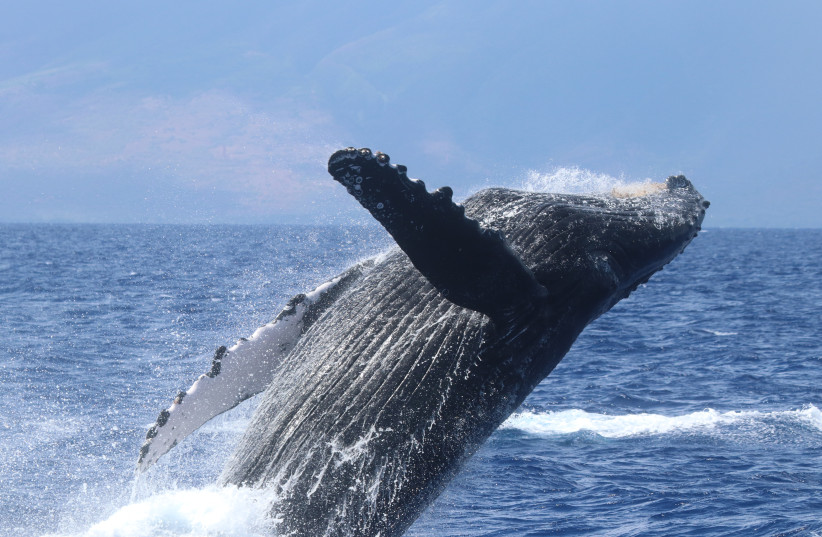
Fifth time sperm whales have been spotted with hydrophone
In addition to being the second time researchers have seen the whales since 2022, this is only the fifth time the species has been spotted via the hydrophone.
The Mediterranean Sea is estimated to be home to a few hundred sperm whales, which are considered an endangered species. Israelis are only lucky to spot the whales a few times each year, as evidence from ongoing research conducted by the Morris Kahn Marine Research Station shows that the whales spend a large portion of the year in Israel’s deep waters.
In February, a sperm whale was found dead on the beach in Zikim, which highlighted just how vulnerable the Mediterranean sperm whale population is.
“The Israeli Mediterranean suffers from many human impacts, limited food availability, and a complex climate, making it difficult for species like these to survive in our region,” Mevorach said.
“We have been researching them for several years, with sightings remaining relatively rare. Today, we received such an exciting glimpse of their presence here - healthy, beautiful, and actively hunting. It is proof that we have Israeli sperm whales that need us to study them and protect them.”
The Environment and Climate Change portal is produced in cooperation with the Goldman Sonnenfeldt School of Sustainability and Climate Change at Ben-Gurion University of the Negev. The Jerusalem Post maintains all editorial decisions related to the content.