What is memory? Is it an electric spark or a chemical product? Is it deposited in one place? All that you have learned, felt, and experienced in your life is memory, but it’s not like books stored unchanged on a library shelf.
Scientists and psychiatrists agree that memory is the brain’s ability to encode, store, and retrieve information from experience. Memories are always edited by the brain before storage, causing the brain itself to change constantly. At the biological level, memory involves changes in connections among neurons. It’s what makes us “us.”
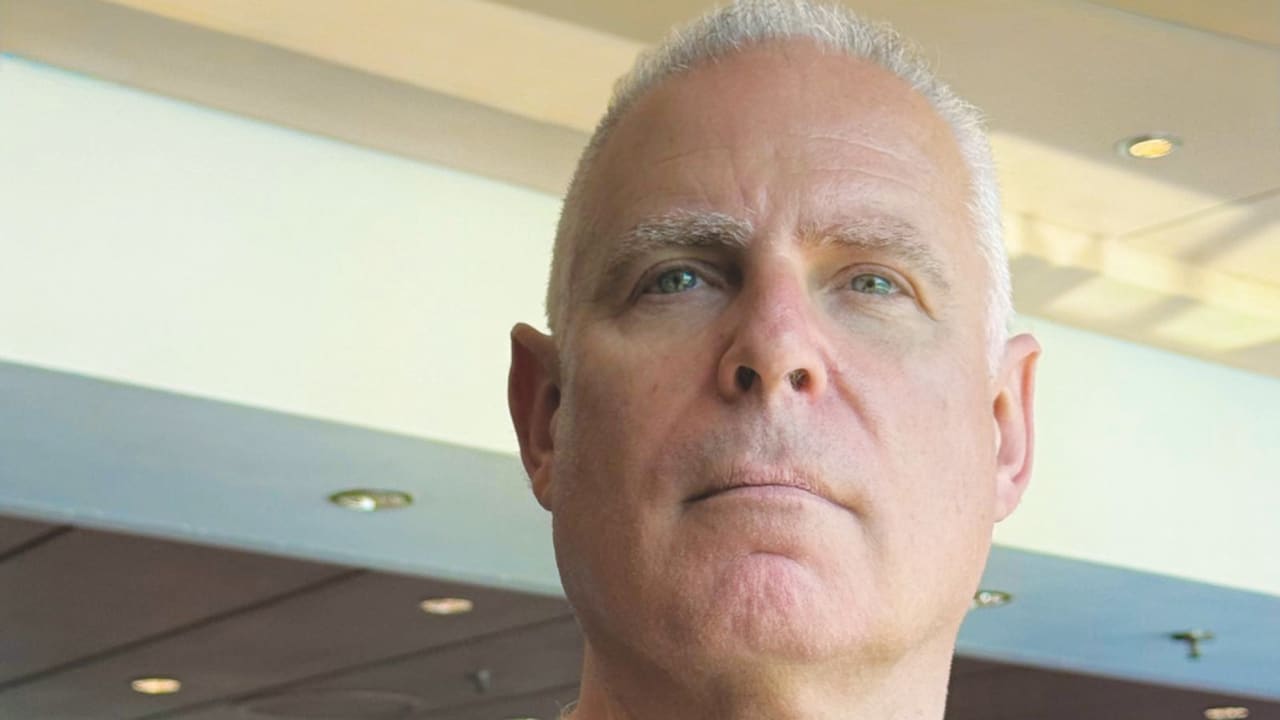
Jerusalem District Health Office chief psychiatrist Dr. Ya’akov (Koby) Chernes has spent more than three decades studying the brain, memory, emotions, neurological diseases, and the effects of trauma.
In an extensive interview with The Jerusalem Post at his office in the 144-year-old building in downtown Jerusalem, Chernes said: “What would life be without memory – if all the things you know, did, and recognize were deleted from your brain? Suppose in a single moment that all of our memories were erased at once – like a file deleted on a computer.
You wouldn’t know where you live, whom you married, if you had children, what you have done with your life until then, what’s your profession, or how to write with a pen or open the refrigerator. An individual without memory is lost. They have lost their existence. In essence, such a person would be left only with the basic instinct for survival.”

The famed Colombian Nobel Prize-winning author Gabriel García Márquez said it eloquently: “Life is not what one lived, but what one remembers and how one remembers it in order to recount it,” quoted Chernes. “Every activity, without exception, depends on memory.”
“Despite thousands of studies around the world, experts still find it difficult to say clearly what memory is, especially anatomically. We are still missing some puzzle pieces. It isn’t located in one place. Other organs can explain it. The billions of neurons in the body serve as electronic circuits with synapses between them. And if you don’t use them, they can unravel, making us forget,” added the psychiatrist.
“We rarely think about memory at all, just as we do not think about our breathing, the blinking of our eyes, or the beating of our heart.”
All emotions – love, fear, wonder, pleasure, sadness, anger, shame, terror, hope, and more – are tied to memory. How could someone react to something or become angry if he lost his memory?
“Through memory, we connect the past to the present. It’s the most important cognitive ability we have in life. We can imagine only because the brain constructs scenes by relying on memories of similar situations in which one has been before,” Chernes continued.
“Human memory is dynamic in that it is formed and erased, changing along the way. Once created and stored in the brain, they don’t necessarily remain as they were. Memories are actually reshaped and rewritten every time we recall an event. It’s almost magical – the original memory disappears, and what remains in its place is the memory of the act of remembering, like a negative of a negative of a negative. Sometimes, what people remember records a false past – so when a witness to a crime testifies, he may not be telling what really happened. They can be created in situations in which information was lacking and the brain fills in the gaps.”
Anatomically, what exactly does memory look like? “Scientists and doctors are not sure, but they do know that memories are created via electrical circuits or sequences of connections between nerve cells,” Chernes continued.
“They also don’t know exactly how much capacity for memory the brain has. Does a newly formed, detailed memory require more storage space, or is it folded, like our DNA inside the cell nucleus, thousands of times? The prevailing view in memory research today suggests that our experiential memories are fewer than we assume – perhaps only a few thousand memories – and the rest we fill in ourselves.”
CHERNES, WHO volunteers at Jerusalem’s Herzog Medical Center to treat soldiers who developed post-traumatic stress disorder due to what they saw and experienced on the battlefield, asserted that “traumatic memories remain involuntary and distressing in such patients.”
He explained, “The brain’s danger-detection systems – primarily the amygdala (a pair of small, almond-shaped nuclei located deep within the temporal lobes that act as the brain’s ‘smoke detector’ for danger) – become highly reactive. At the same time, the regulatory/inhibitory systems of the prefrontal cortex function less efficiently. The result is that internal or external stimuli that resemble the trauma trigger an alarm – as if the danger is happening again, here and now.”
Some of the soldiers who come to him for help are apathetic and barely say a word. Others have a panic attack in the hospital clinic. He tries to ease their pain and fear, but it’s very difficult, because the amygdala is overactive and senses constant danger.
“PTSD creates changes in neural circuits; the hippocampus struggles to place memory in the past, and the prefrontal cortex can’t calm the alarm. The result is flashbacks: body memories and feeling the event is happening now. There is a persistent experience of the world as alarming. Thus, memories of the past are felt by victims as an ongoing event,” he explained.
There is difficulty in the inhibitory process – the brain does not learn that the danger has ended, and therefore the present cannot correct the past.
“Memory is the most human thing about us. Yet the same system that preserves a child’s first day at school can also trap a person inside the worst moment of their life. Trauma is not just remembering something bad – it is the brain failing to recognize that the danger is over.”
Memory research shows that when a memory is reactivated, it can reenter a flexible state and undergo updating/reconsolidation.
“This explains why touching the memory without proper processing may leave it strong and threatening and why trauma-focused therapy can update its meaning and emotional response. The body lives in a chronic state of emergency; the world is perceived as unpredictable; other people are regarded as potentially dangerous. In PTSD, the past does not close. The victim doesn’t only suffer from the memory; he lives inside the memory,” Chernes said.
The tragic condition was officially recognized as a mental health condition in 1980 by the American Psychiatric Association (APA) in the third edition of the Diagnostic and Statistical Manual of Mental Disorders, but it became widely known when veterans of the Vietnam War presented the symptoms.
Born in Petah Tikva to two Holocaust survivors, married, and the father of three, Chernes studied medicine in Hungary and trained and worked at the Rabin, Sheba, and Geha Medical Centers. He was appointed deputy chief psychiatrist in Tel Aviv and then chief psychiatrist in Jerusalem in 2014. Chernes has numerous hobbies to wind down from his onerous encounters with patients, including raising bullmastiffs, playing jazz, biking, and restoring clocks.
The fact that people forget memories is healthy, because much of what one experiences, such as a line in the supermarket or an encounter with an angry driver over a parking space, should be forgotten instead of stored. “Forgetting,” he explained, “is part of effective learning of new things – to make room for them.”
Regularly getting enough sleep – especially rapid-eye-movement (REM) sleep that causes dreaming – for humans and for dogs – is vital because the DNA in the brain is cleaned of the “waste” collected on that day. As PTSD sufferers usually are unable to sleep well, this is an additional problem.
“One can’t really erase traumatic events, but one can silence it by reducing the emotional cargo through reconsolidation. Psychiatric medications and psychotherapy can help reduce the burden of traumatic emotions.”
Researchers are working feverishly to discover new treatments to effectively treat PTSD and dementia.
Approximately 10-15% of people exposed to traumatic events develop PTSD
About 10% to 15% of people who have been exposed to traumatic events develop PTSD. Israeli government statistics say there are some 30,000 new patients, but Chernes said that the number is much larger – maybe hundreds of thousands, because not all have been diagnosed, and family members – even grandchildren in the third generation – can be affected as well.
Another neurological/psychiatric problem is dementia. In Alzheimer’s disease – the most common of the 11 types – there is a loss of synapses and shrinkage of the hippocampus, “making the brain look like a shriveled apple.” There is hardly an Israeli who doesn’t know of someone who has been afflicted with dementia. Five percent of people at 65 suffer from it, with the figure rising to 20% over the age of 80.
“It’s one of the most degrading diseases for the patient and painful and exhausting for his family,” said Chernes. It is hoped that two new experimental drugs may be more beneficial than others used today to slow the mental decline.
The first case was diagnosed by German psychiatrist Alois Alzheimer – 51-year-old Auguste Deter, who was admitted to the Frankfurt Asylum in 1901 and died five years later. This psychiatrist identified brain plaques and tangles after her death, causing the disease to be named for him.
Precious memories provide identity, knowledge, and connection. But the brain’s quiet ability to loosen the grip of the past may be just as vital. Between remembering and forgetting lies the delicate balance that allows human beings not only to survive their experiences but to continue living beyond them.