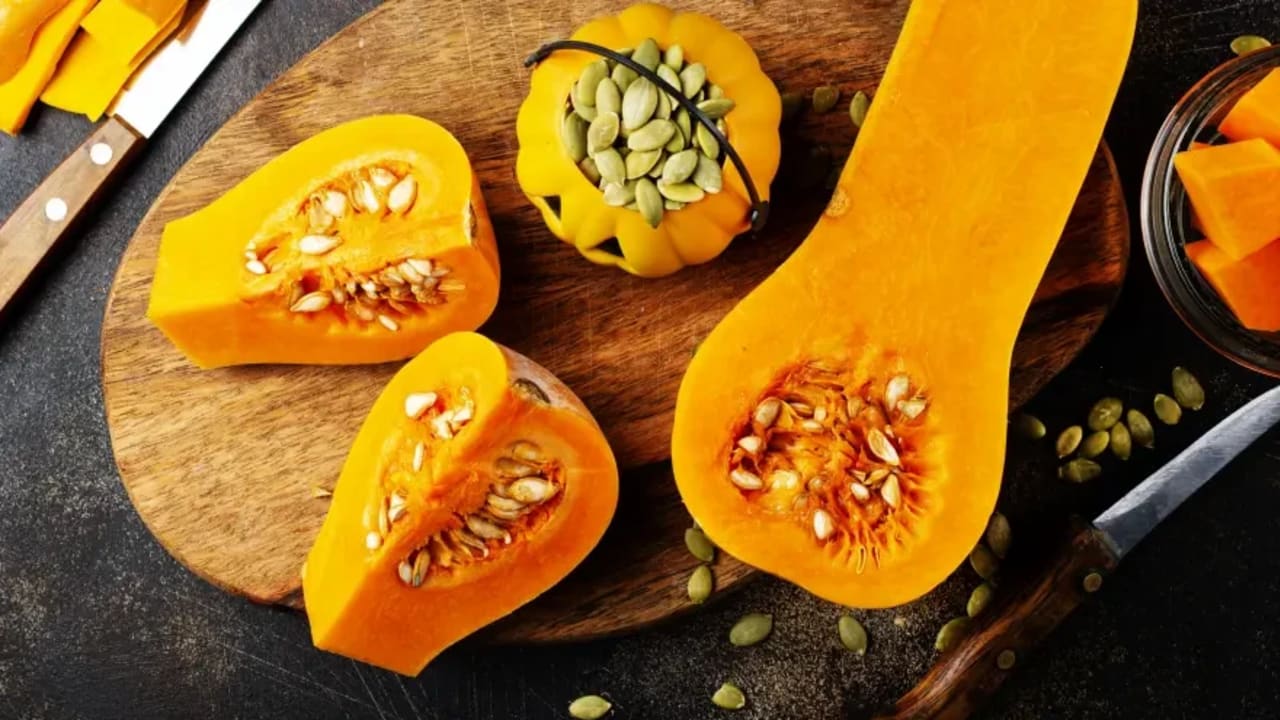
The practical guide to common types of pumpkin – regular pumpkin, butternut squash and chestnut squash. We will talk about calories, and then about vitamins and minerals.
The most diet-friendly
Their names are a bit misleading, and in the end they all belong to the "vegetables" that can be consumed freely during a diet, but there is still a difference between the types. To know which pumpkin to include in the menu, it is not enough to look at the calorie table per 100 grams. The real difference lies in the way we eat them and in the average weight of a single unit.
1. Chestnut squash: The personal portion that can be misleading
Chestnut squash is the most unique of them all because it comes in a "personal portion". Usually a whole unit is prepared in the oven and eaten as it is. Unit weight: An average unit weighs between 350 and 500 grams (before cleaning the seeds). How many calories is that really? Although in 100 grams there are only about 40 calories, eating a whole unit brings us to 140 to 200 calories per unit.
2. Butternut squash: 2 times the calories of pumpkin
Butternut squash is the "bigger" and sweeter sister. It contains about 45 calories per 100 grams, despite the misleading name that sounds like "calorie" it is not more diet-friendly, and actually contains almost 2 times the calories compared to regular pumpkin.
3. The classic pumpkin: The winner
It contains only 26 calories per 100 grams and is characterized by a very high water percentage (92%). It is actually in the end the real "calorie".
The vitamin test: Are they all equal in health?
When it comes to vitamin A (beta-carotene), there is a big difference between the different types.
Butternut squash is the winner:
Although it is more caloric, it contains the highest concentration of vitamin A – 2.5 times more than in regular pumpkin. It provides a huge amount of antioxidants essential for skin health, the immune system and proper vision. Butternut squash: About 530 mcg vitamin A (the richest).
Regular pumpkin:
Ranks second. It is an excellent source of vitamin A, but because of its high water percentage, the concentration of the vitamin per 100 grams is lower than that of butternut squash. Regular pumpkin: About 420 mcg vitamin A.
Chestnut squash:
In third place in this category. Because its interior tends to be lighter (yellowish and not deep orange), the amount of vitamin A in it is significantly lower – it contains only about 15% of the amount found in butternut squash. In chestnut squash: Only about 18 mcg. The difference is dramatic – in butternut squash there is 30 times (!!!) vitamin A than in chestnut squash.
The minerals battle: Who provides the most potassium and magnesium?
If in vitamins the butternut squash won, when diving into minerals the picture changes – and specifically chestnut squash does the work:
Potassium (which is required for normal blood pressure)
Chestnut squash is the undisputed winner with about 440 mg potassium per 100 grams. Butternut squash provides about 350 mg, and regular pumpkin trails behind with only about 230 mg.
Magnesium (which is important for muscle and bone health)
Again, chestnut squash leads with an amount almost double the others (about 33 mg compared to about 12–14 mg in butternut squash and pumpkin).
Iron
Here the differences are less dramatic, but still chestnut squash and butternut squash provide about 0.7 mg, slightly more than regular pumpkin (0.8 mg in its cooked state, but less because of the water volume).
The bottom line
If you are looking for an anti-aging bomb for the skin and vision – go for butternut squash. If you want support for the heart, blood pressure and muscles – chestnut squash is your choice. In terms of calories... regular pumpkin is the most diet-friendly in the end, but all of them are suitable for integration in menus for weight loss and improving health, and if possible – on a daily basis.
Recipes with pumpkin
Recipes by Shlomit from my diet course on Facebook who has already lost 30 kg and has been maintaining amazingly for over 4 years.
Chestnut squash chips
Cut into slices, oil spray, salt and pepper and place in a hot air fryer

Regular pumpkin chips
1/2 kilo pumpkin
A teaspoon sweet chili
Olive oil spray
Salt
Cut the pumpkin into strips, transfer to a bowl spray a little oil spray, a teaspoon sauce
Sweet chili, salt and mix.
Transfer to an oil-free frying pot or bake in the oven 15-20 minutes

A tablespoon soy sauce
A teaspoon natural maple
Black pepper
Mix soy, maple and black pepper and brush the inside of the squash with the sauce.
Bake in the oven 15 minutes take out and add a rosemary branch and place on the squash
Return to the oven for 5 minutes.
