
With a population of 10 million, Israel has 2,289 active nongovernmental organizations providing food assistance to its residents. For comparison, the UK has 2,500 food banks for 68 million residents, and Germany has 970 local food banks for 84 million people.
These numbers indicate significant structural issues within Israel’s system.
Germany’s Tafel food bank network operates as a unified nationwide model. In contrast, Israel’s network relies on thousands of community-driven nonprofits whose food distribution is often a secondary or informal activity alongside other social welfare support.
The UK organizes its food banks through a combination of large charitable networks mostly via public food donations, a professional referral voucher system, and volunteer-led sorting and distribution centers.
In Israel, food insecurity remains widespread. In 2024, 27.1% – or nearly one million households, including over one million children – experienced food insecurity, according to the National Insurance Institute. The figures are roughly one NGO per 1,000 food-insecure people.
Critics argue the government has increasingly shifted the vital responsibility to philanthropic organizations. Only 13% of Israeli food aid NGOs’ budgets come from government funding, forcing the sector to stay heavily reliant on private philanthropy and local fundraising. These findings come from a new study by researchers at the Hebrew University of Jerusalem (HUJI), in cooperation with Sheba Medical Center at Tel Hashomer, published in the journal Food Policy under the title “Philanthropic food assistance in high-income countries: Lessons from Israel’s food-aid network.”
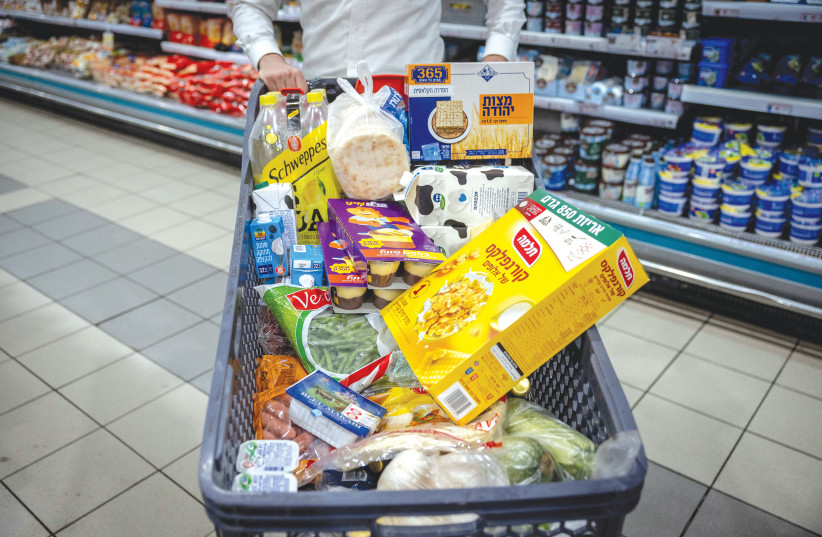
Israel’s food-aid network is vast, but deeply fragmented
Although the system plays a critical role in addressing food insecurity, the research reveals major gaps in equity, coordination, and oversight. The authors declare that charity alone cannot substitute for a comprehensive national food security policy.
While philanthropic food aid plays a critical role, it can’t replace coherent, equitable, and accountable public policy, said HUJI’s Moran Accos and Prof. Aron M. Troen and Sheba’s Dr. Orly Tamir – who have been conducting the research for nearly four years.
The first comprehensive national mapping of Israel’s food-aid NGO system, the study collected and examined administrative data and records from major food banks and found a rapidly expanding but highly fragmented system.
Troen told The Jerusalem Post that the scale of Israel’s food-aid network is huge. The NGOs report an annual turnover of NIS 6.18 billion, supported by over 28,000 employees and 170,000 volunteers. However, with minimal funding coming from state coffers, the system relies overwhelmingly on donations.
“This issue should have been on the platform of every political party running for the Knesset, and they must make a commitment to action if elected. Rosh Hashanah is the perfect time to take the issue seriously,” he said.
Most organizations operate locally and distribute food products rather than vouchers, often without standardized reporting on what is provided or its nutritional value.
The study highlights significant disparities in who receives aid. “Although Arab households experience higher rates of food insecurity, only 4% of food-aid NGOs are located in Arab communities,” he said, noting, though, that nationwide NGOs like Latet and Leket also give to Arab families suffering from food insecurity.
Regional gaps are also pronounced: 29% of NGOs operate in the Jerusalem district, compared to just 9% in the North, despite similar levels of need. “This is partly due to the fact that Jerusalem has the most religion-based voluntary bodies,” he said.
There is little systematic data on food quality, basket composition, or nutritional standards. At the same time, the fragmented structure may reduce the overall impact of significant financial and human resources, said Troen, who directs HUJI’s Nutrition and Brain Health Laboratory and teaches in the School of Nutrition Science and the Braun School of Public Health and Community Medicine.
Much of his research is concerned with clarifying the basic biological connection between dietary quality and brain health. For many people, putting nutritional insight into practice is not simply a matter of lifestyle choices, but a matter of life circumstances. “Prevalent food insecurity is a key driver of ill health, deprivation and economic harm worldwide, including in high-income countries like Israel.”
Researchers say charity cannot replace government responsibility
TROEN SAID policy solutions must be based on real data rather than political interests.
There are “principled debates on what to do, but the chosen policies and solutions have to be based on real data, not spin for political reasons or vested interests. You can mobilize human capital in the community to give solutions, taking into account the wisdom and needs of those coping with difficulties. But that can’t be the primary response. There needs to be more oversight, particularly by the government.”
Citizens “are entitled to food and welfare services provided by the central government rather than private organizations that don’t necessarily save money and can’t ensure that appropriate help is fairly reaching all citizens in need,” he said.
The state budget dedicates NIS 49 million per year for a national food security initiative of the Welfare Ministry that feeds only a fraction of those in need.
While Shas leader Aryeh Deri campaigned on a promise of a billion shekels annually in food vouchers for 350,000 families, the eligibility criteria were criticized for targeting his political base and ultimately reached a population substantially smaller than the estimated number of food-insecure households.
“Public money, including philanthropy and taxes. should deliver the outcome we want,” he said. “Food insecurity is not just social welfare. We need a holistic approach, which considers production, accessibility to food that is healthful, not just calories, and suitable for people of different ages and medical conditions. We need a strategy, but there isn’t one.”
Operational challenges also plague the fragmented system. Some elderly residents prefer home-delivered cooked meals due to the difficulties of shopping and cooking. But while large food banks do safety and quality checks, smaller local partner organizations struggle to maintain the safety, heating, or refrigeration required for donated food collected from hotels and large venues.
Approximately 1.6 million Israelis reportedly receive a small sum of money or food (“Kimha le’Pischa”) from the Social Welfare Ministry before Passover and Rosh Hashanah, but critics say the number stretches credulity.
The ministry allocates a small subsidy to dozens of NGOs which in turn deliver one-time benefits to people struggling with chronic need. While the NGOs are supposed to document individual recipients and the aid delivered, there is little independent oversight or evaluation.
“Food security policy is fragmented, privatized, ad hoc, and piecemeal, and so the problem persists and is perpetuated. The fault is shifted to individual choices, and the problem and its solution are left to charity.”
Troen said the root causes are structural and can not be solved by goodwill alone. “Public and private resources should be allocated based on evidence and rational policy. We, as a country, have to organize ourselves so the skyrocketing cost of living is lowered, people get the education they need to be employed, to be productive, and have good lives. We’re not doing this.”
Troen said that nutritional security is not synonymous with poverty, and mitigating its harms requires expertise. Previous studies show a very high burden of serious diet-related diseases among food-insecure people, and some foods being distributed could actually be inappropriate for people with diabetes, hypertension, kidney disease, or other common conditions.
“Given the scale of the financial activity that we documented, the problem is not simply a shortage of resources, but of ensuring that they are being used well.”
He and his team are now doing more research to determine whether improved food security could reduce pressure on Israel’s healthcare system and save money for the health funds and hospitals,
Troen advocates for consolidating and professionalizing food banks to ensure equitable distribution, particularly for those who are ashamed to ask for help.
When a person falls between the cracks, accountability is split across numerous bodies, including NGOs, the municipality, the National Insurance Institute, and the Health and Social Welfare ministries.
“There are many people who can’t go online in Hebrew to get help. They have to go through hell to get what they need,” the professor said. “But the key issue to be addressed is structural – why do the cracks in the system exist, and who is falling through them? The NGOs fill a vacuum caused by the abandonment and privatization of welfare by the government. This is not fate. It is policy.”
Asked for one thing he would like the Israeli public to understand about food insecurity is that “it exists and is causing hunger. There are solutions, and the government has to be accountable. If not, we are paying a tremendous cost in the short term due to needs that are not met and long-term perpetuation of stunted human and social development across generations that feed social disparities and unrest and hold everybody back. Elected representatives have to be held accountable. Israel built a system that manifestly doesn’t work; it must be fixed, with mutual responsibility and solidarity, and leadership from the top. We can’t have hi-tech if people are hungry, lack basic education, and public services are funded from taxes and then diverted for narrow political reasons,” he said.
“Our findings show both the strength and the limits of philanthropy,” said Troen. “Civil society does extraordinary work, but a modern state cannot rely on charity alone to ensure access to healthy food. The real question is whether aid is being delivered equitably, effectively, and transparently – and whether philanthropy is complementing public responsibility or being asked to replace it.”
Co-researcher Accos echoed Troen, saying helping families facing food insecurity is an immediate moral imperative,
“But the policy challenge is year-round. A country cannot treat food security only as a temporary or seasonal act of generosity. It must also ask whether the system is fair, whether it reaches those most in need, and whether public institutions are taking sufficient responsibility.”