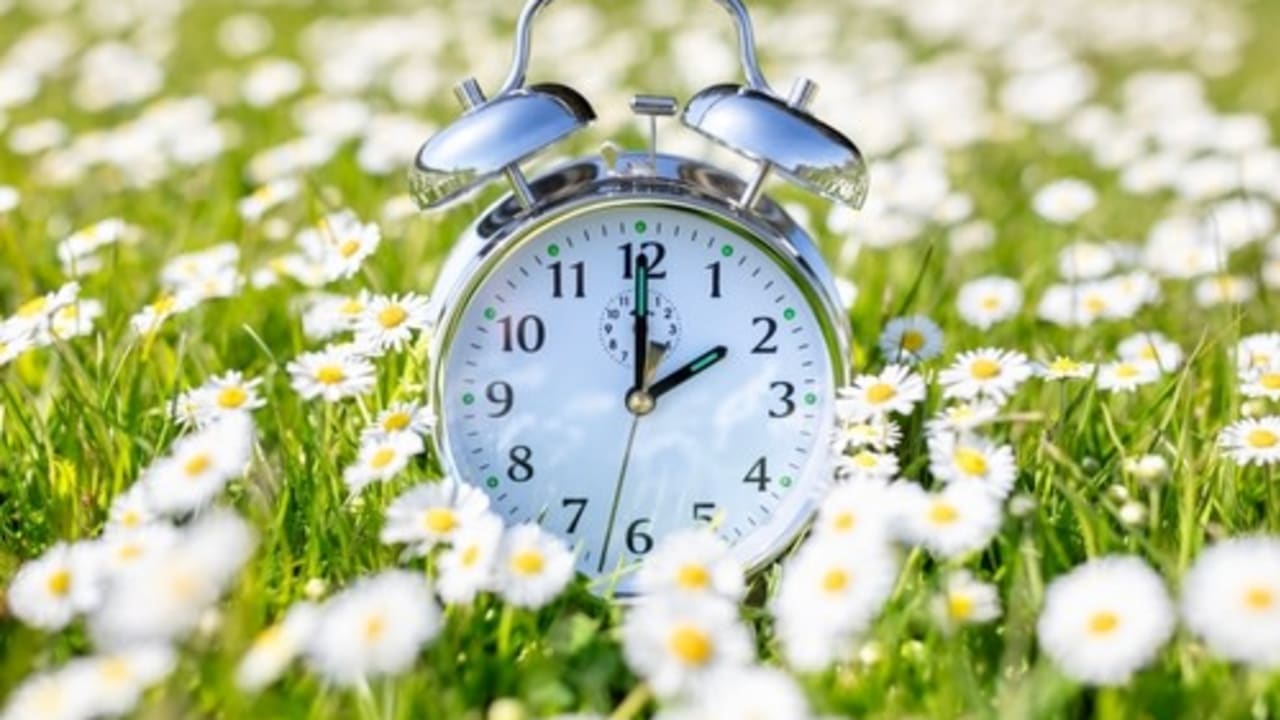
The transition to daylight saving time this year is taking place against the backdrop of a tense security reality, in which many are already experiencing fragmented sleep, heightened alertness and frequent awakenings. In such a situation, even the loss of a single hour can deepen the feeling of fatigue, impair concentration and increase irritability. When the nervous system is already under strain, any additional disruption to routine is felt more strongly. Precisely during this period, it is doubly important to maintain sleep hygiene, reduce exposure to news at night and preserve routine as much as possible.
On paper, in one night we "gain light" and lose an hour of sleep. For many, this feels like merely a technical matter, but science tells a more complex story. The transition to daylight saving time is not just a change of the hands on the clock, it is a small shake to our biological clock, and sometimes also to the heart, concentration and mood. So what actually happens to the body in the days after moving the clock forward?
The body does not recognize a government decision
The biological clock, or circadian clock, is regulated by daylight and darkness. When the time is advanced sharply, the body does not manage to adjust overnight. The result is a kind of social jet lag. We wake up earlier according to the clock, but the brain is still functioning according to the old time.
According to a review published in the medical journal New England Journal of Medicine, a small but significant increase in the rate of heart attacks was found in the days following the transition to daylight saving time. This is a relatively moderate increase, but consistent across a number of epidemiological studies.
Road accident data also do not ignore the phenomenon. A recent study published in the National Library of Medicine found an increase in the rate of road accidents in the days following the transition, apparently due to sleep deprivation and reduced alertness.
A temporary disruption to sleep cycles can also affect the nervous system and mood. Researchers from Johns Hopkins Bloomberg School of Public Health note that circadian disruption is associated with a temporary increase in symptoms of depression and anxiety, especially among people sensitive to changes in sleep.
The reassuring news is that the effect usually passes within a few days to a week, but for at-risk populations – heart patients, people with mood disorders, shift workers and professional drivers – this period requires extra awareness.

Why is the transition to spring more difficult?
In autumn we gain an extra hour of sleep. In spring we lose it. Studies in sleep medicine show that losing even one hour of sleep can affect cognitive function, emotional regulation and physiological responsiveness. It sounds negligible, but at the population level it is a measurable effect.
So what do we do? This is how you will get through the week safely
- Gradually move your bedtime earlier by about 15 minutes each evening a few days before the transition
- Make sure to get exposure to natural morning light starting on the first day
- Reduce screens and blue light in the evening
- Avoid long driving if you feel tired
- Pay particular attention to sufficient sleep among teenagers and shift workers
These small steps help shorten the adaptation period and reduce the burden on the body.
<br>Will the transition to daylight saving time improve mood?
In the short term, no. In the first days after the transition, fatigue, a temporary decrease in alertness and a mild effect on mood may occur, mainly due to sleep deprivation and disruption of the biological clock. However, in the medium term, the extension of daylight hours in the evening can contribute to improved mood, mainly thanks to more time for physical activity, social interactions and exposure to natural light. The clock itself does not "make us happy", but the way we use the additional daylight hours can contribute to a more positive feeling.
Daylight saving time is not a medical drama, but it is also not a meaningless technical detail. One hour less of sleep can have more impact than we think, especially in the first days. With awareness and simple preparation, it is possible to get through the transition more smoothly and truly enjoy the light at the end of the day.
Dr. Kay Alkara, Family physician, Maccabi Healthcare Services, Northern District