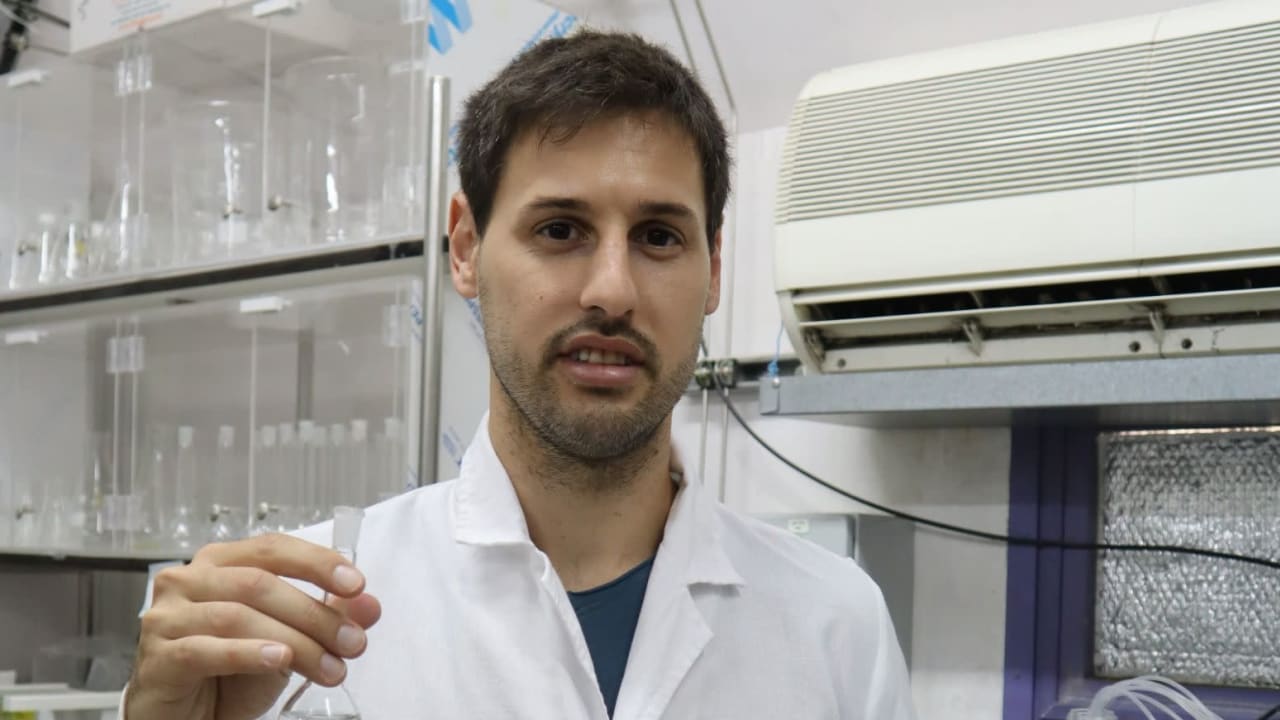
Inbar explained, “the study showed that wind direction greatly affects water quality, so for example, when the wind comes from the desert we find more calcium and sulfur, that is, residues of desert dust aerosols, in the water. However, when the wind comes from direction of the sea, we find higher concentrations of chlorine and sodium, which are found in the sea ... water produced from air coming from the Sahara region differs in composition from water produced from air coming from Europe.”
A big advantage of using atmospheric water is that there's no need to build a water-transport infrastructure that is needed for processes like desalinating seawater, which Israel uses in order to produce a large amount of its clean water.
“In order to desalinate seawater, you need a sea, and there isn’t access to the sea from every place in the world,” says Inbar.
“After desalination, a complete infrastructure must be built that will carry the desalinated water from the waterfront to the various towns, and large parts of the world don’t possess the engineering and economic means to build and maintain such infrastructure. Water from the air, however, can be produced anywhere, with no need for expensive transport infrastructure and regardless of the amount of precipitation. From an economic perspective, the higher the temperature and humidity, the more cost-effective the production of water from the air is.”
Many countries already have the technology for generating water from the air, including purification and treatment.
“The concern was that water produced from air in the heart of an urban area would not be suitable for drinking - and we proved that this is not the case,” Inbar concluded. “We are currently expanding our research to other areas in Israel, including Haifa Bay and agricultural areas, in order to investigate in depth the impact of various pollutants on the quality of water extracted from the air."