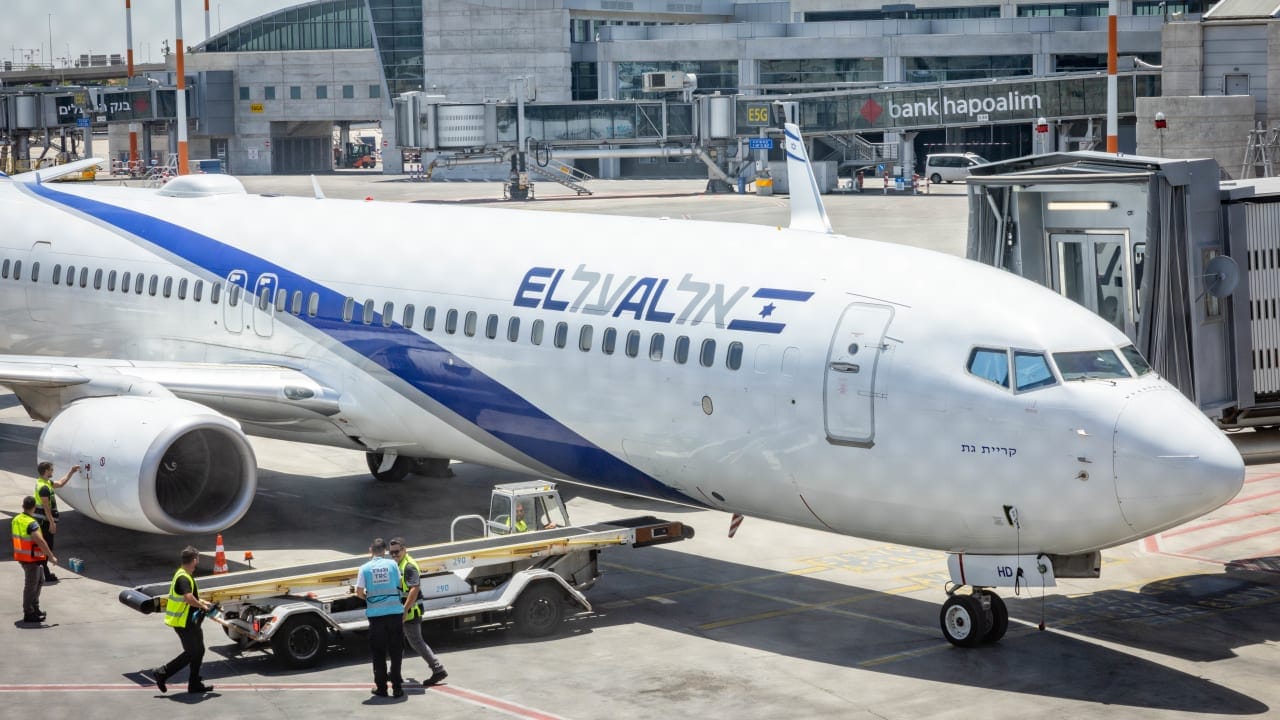
Visitors to Israel have been unable to leave after Israeli airspace was closed early Friday morning, canceling thousands of flights and leaving people across the country stranded with no departure date nor assistance to make further arrangements.
International and Israeli airlines alike canceled thousands of flights, offering refunds and credits where applicable, but provided no real solution for accommodation or onward travel to those stuck in Israel amid continued aggression between the Jewish state and Iran.
Mira Tash, 27, had long planned for a specific timeline. She was set to leave Israel on June 17 to attend her brother’s wedding and spend time at home in Washington, DC, before making aliyah.
But as fate would have it, her flight was canceled. This left her stuck in Jerusalem, caught between missing out on a family celebration and an important professional role that she had invested much of her year in.
“I am [stuck] now, right? I’ve been working for an entire year towards this summer with camp, and all I’m doing now is sitting around waiting for a siren,” she reflects, speaking of the disorientation that comes with having no control over the situation.
For Tash, the emotional toll was heavy, not only because she was unable to attend her brother’s wedding but also because she felt the strain of a sense of limbo.
“I’m planning to make aliyah and to move in the future, but not before I had these two months home to get my life in order, and instead, I just feel completely in limbo.”
Being stuck also meant that she would not make it back in time for staff week at the summer camp she works with, a Washington, DC-area day camp in the Ramah camp system.

Her sense of frustration was compounded by the constant sirens and alerts, sounds that have become a normalized, almost haunting part of daily life in Israel amid the ongoing conflict.
“I’ve been here for 10 months, and this is by far the longest I’ve ever been away from my family,” she says, her voice tinged with sadness. “I feel completely gutted to be missing my family for this.”
Tash describes how her identity as someone who thrives on control was challenged by the unpredictability of the situation. “I am someone who really likes to have control of situations... and right now, I feel like I have none.”
In the face of continuous uncertainty, she has had to adjust her expectations and cope with the lack of stability in her life.
RICKY FLOWERS Jr., a Los Angeles-based actor and influencer, had set an end date to his itinerary after extending an extra five days following his trip with Israel’s Foreign Ministry.
Flowers Jr. had a departure ticket but after his flight was canceled due to the escalating violence, he was forced to reassess his situation.
“The first day [of hearing the alarms], I was terrified,” he admitted to The Jerusalem Post, describing his initial reaction to the missile warnings.
“I was trying to keep it cool, but I was freaking out because, like, I’m not used to that. I made jokes with my homies back home, like, ‘I’m used to hearing gunshots in the hood, but I’m not used to bombs.’”
Adapting to the situation
Despite the shock, Flowers Jr. soon began adapting to the situation.
“By the third night, though, I wasn’t used to it, but I felt more safe... as long as I made it to the shelter, I was okay.”
Still, he couldn’t avoid the fear that came with the proximity of the attacks, especially when one missile struck a building only seven minutes from his location.
“It felt like I was looking at a movie set,” Flowers Jr. recalls, reflecting on how surreal the experience seemed when juxtaposed with the everyday scenes of people enjoying life in the city.
For Flowers Jr., the constant sirens and alerts began to weigh heavily. “I’ve never really slept more than four hours since I got here,” he says, describing how the disruption to his routine, coupled with the strain of working remotely, has left him exhausted.
According to Flowers Jr., the earliest possible date he was offered to return to the states was June 30.
However, he rolled with the punches. “I’m just planning for the worst but hoping for the best,” he says. “I’m going to work on my music, work on my scripts, finish writing my book... It’s like I finally have time to focus on things I want to do, rather than things I have to do.”
What would Flowers Jr. have done if he didn’t know people through Instagram?
“But I didn’t know anyone here personally,” he admits, adding how fortunate he felt to be with his girlfriend, who has family in Israel. “If I didn’t have her, I’d be completely alone, and I don’t know what I would do.”
He was able to draw strength from those around him. “I’ve never seen a more strong and family-oriented group of people,” he says, describing the outpouring of support he’s received from Israelis during the conflict.
“People are getting up and going to work, continuing their daily lives, even with the bombs falling. It’s unlike anything I’ve ever seen. It makes sense why Israelis are so strong.”
The experiences of both Tash and Flowers Jr. are a testament to the resilience of individuals facing overwhelming circumstances, particularly when it comes to life in Israel, whether visiting or residing here.
For them, the sense of being stranded, while frustrating and emotionally exhausting, has also become an opportunity to reassess their priorities and embrace the uncertainty with a sense of purpose.
“I’m still happy to be here. I don’t think I would have wanted to be anywhere else,” Tash stated. Similarly, Flowers Jr. found strength in forced adaptability.
“Sometimes in life, we get scared about things that can’t even happen. But here, I’m learning how to make the best of a situation I didn’t expect.”