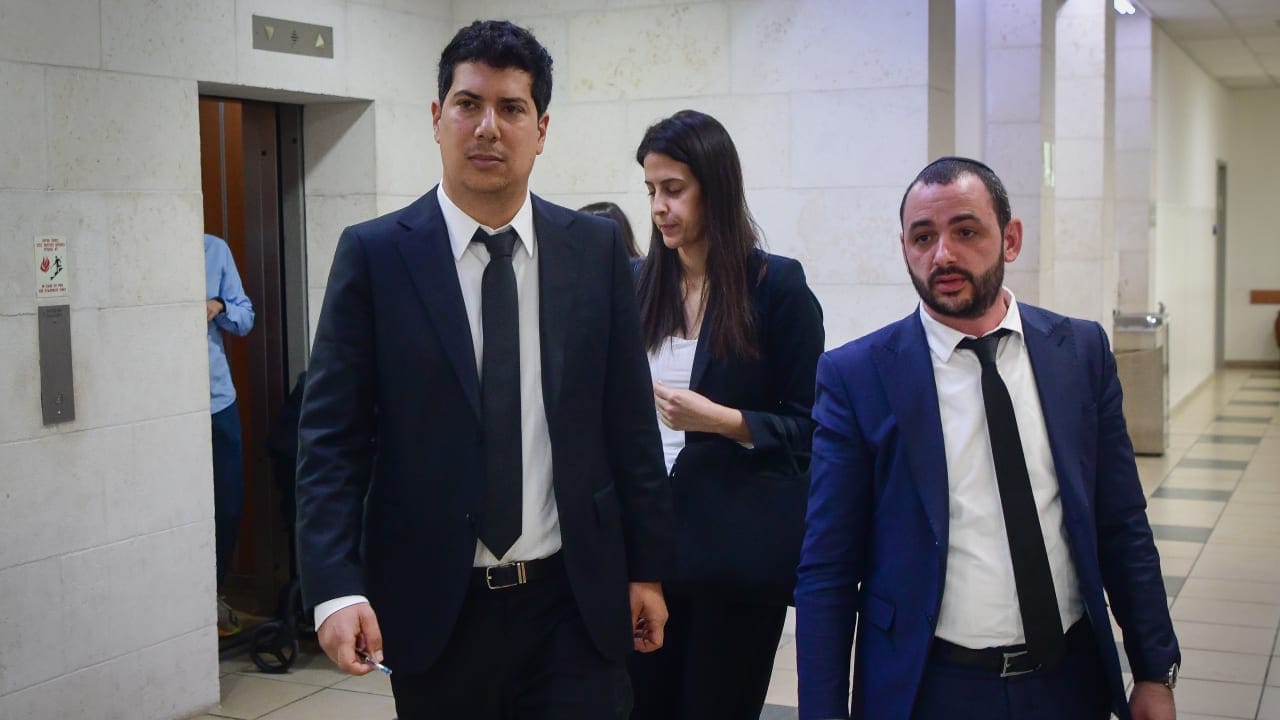
Israel Police requested on Sunday that the relaxed arrest conditions of Yonatan Urich, an aide to Prime Minister Benjamin Netanyahu and one of the main suspects in the “Qatargate” investigations, be extended for another month.
Urich’s detention terms expired on Sunday – that he was required to appear for questioning if called, that he was forbidden from leaving the country until August 12, and that he could not contact anyone involved with the case. He was released to 10 days of house arrest on May 12.
On May 21, Rishon Lezion Magistrate’s Court Judge Menahem Mizrahi terminated his house arrest but ruled that Urich would still be under surveillance, where he would be allowed to walk freely with someone who had signed as a guarantor for him until June 1.
Mizrahi requested on Sunday that police resubmit the request and that the position of Urich’s lawyer, Amit Hadad, be submitted as well; only after that would a hearing be scheduled. Hadad completely opposed banning Urich from leaving the country and contacting those who investigators deem “close to the case.”
He also noted that the police’s intent to extend Urich’s conditions was only made known to him on Sunday, despite the deadline on the detention terms being known from May. He added that the extension request is “extremely laconic” and doesn’t provide specific reasons for extending it.

Why is Yonatan Urich being investigated?
Urich and former Prime Minister’s Office military spokesman Eli Feldstein are two of the main suspects in Qatargate. They were investigated for alleged Qatari connections and influences on figures close to the prime minister in efforts by the Gulf state to improve its image.
In the more current context, this was reportedly done to boost Qatar’s image in its mediator role in the Gaza hostage and ceasefire deal negotiations and to downplay Egypt’s involvement. Yisrael Einhorn, another of Netanyahu’s close advisers, was questioned last month from where he resides in Serbia. He is suspected of fraudulently receiving money from Qatar as part of the public relations campaign.
Urich was arrested on March 30 and was detained until April 7, after which the fight for extensions and terms began. He is suspected of contact with a foreign agent, bribery, fraud, breach of trust, and money laundering. Hadad noted that since his arrest in March, he had not been in touch with anyone connected to the case – which includes a wildly extensive list, he said – and “there is no indication of tampering on Urich’s end.”
He added that the order to not contact anyone from the Prime Minister’s Office or any staff from Perception – the company allegedly at the center of the Qatargate affairs – is “dramatic, draconic, and damaging,” as it meant that Urich has been unable to work and provide for himself for nearly six months now.
The court decided that the hearing will take place on Thursday afternoon and that Urich’s conditions are to remain as they are until then.
Jerusalem Post Staff contributed to this report.