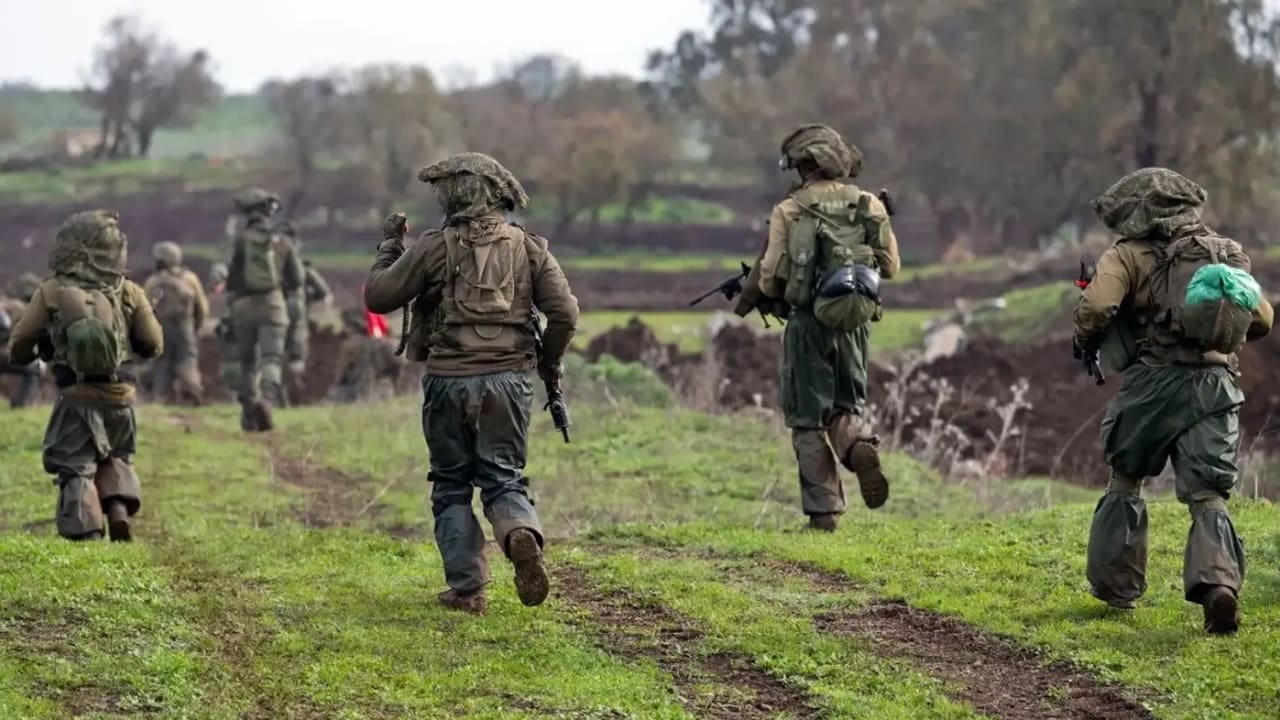
The vote in the Knesset’s Foreign Affairs and Defense Committee on extending emergency call-up orders (known as Tzav 8 orders) for reservists was postponed on Wednesday because the coalition was unable to come up with a majority.
Politicians from the opposition slammed the postponement of the vote to extend emergency call-up orders for reservists.
Opposition leader Yair Lapid (Yesh Atid) criticized the government for allowing it to “increase the burden on reservists by blocking the proposal to extend emergency call-up orders.”
“The coalition once again has no majority. In Israel, there is a non-functioning and illegitimate minority government,” Lapid added.
Avigdor Liberman (Yisrael Beytenu) stated, “We will not allow, on the one hand, hundreds of thousands of reservists to be called up again and again under emergency call-up orders (Tzav 8), and on the other hand, for the government to promote mass draft-dodging.”

The issue of haredi conscription is causing high tensions throughout Israel
The postponement of the vote comes amid high tensions throughout the country on the issue of haredi (ultra-Orthodox) conscription to the IDF.
The two haredi parties, Shas and United Torah Judaism, left the government in mid-July due to the fallout in negotiations over the previous proposal of a haredi conscription law.
The timing of the postponement of the vote also comes after a heated meeting discussing the new direction for the haredi conscription law at the Knesset’s Foreign Affairs and Defense Committee on Tuesday.
Brig.-Gen. Shai Tayeb, the IDF’s representative at the meeting, spoke on the military’s lack of man-power.
Tayeb noted that even if the army's current goal of 4,800 new haredi recruits was met, this would still not suffice in terms of the army’s needs.
“Unfortunately, the rate of cooperation among the [haredi] population is very low,” he said.