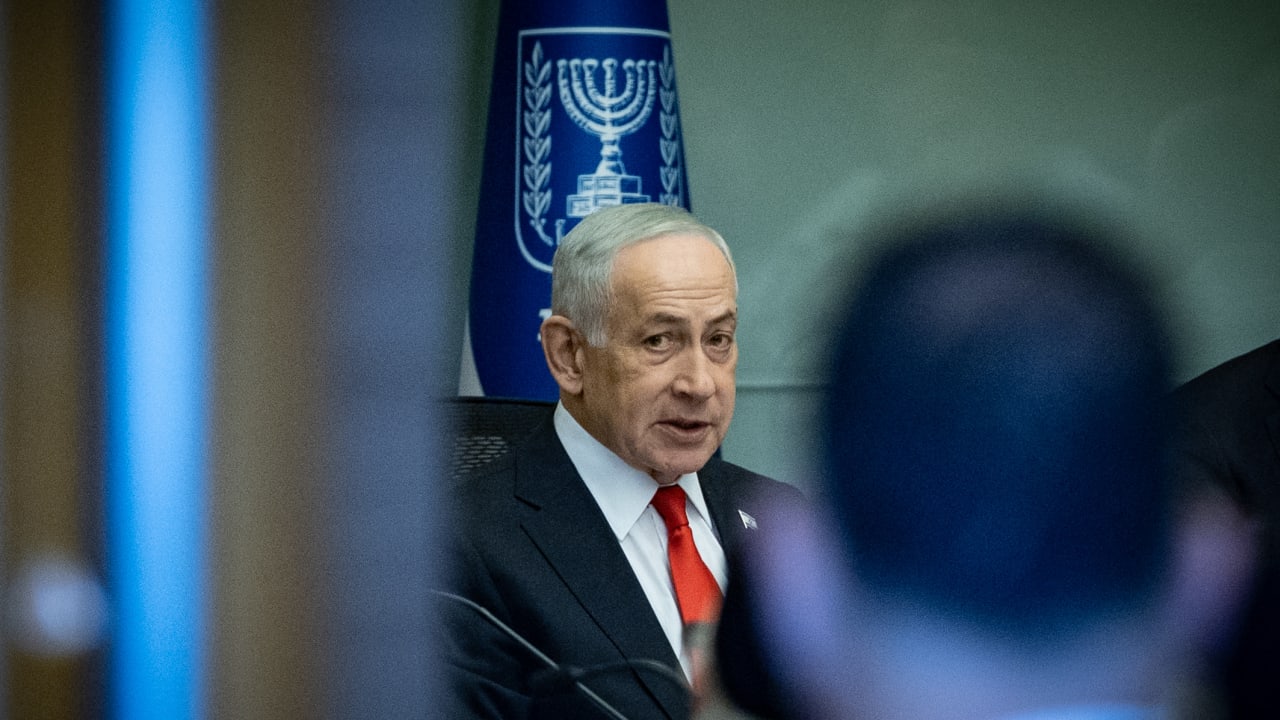
Questioning resumed Monday in the criminal trial of Prime Minister Benjamin Netanyahu at the Tel Aviv District Court, as prosecutors continued their cross-examination in Case 4000, the Bezeq-Walla affair.
The case centers on allegations that Netanyahu advanced regulatory benefits to Bezeq while serving as communications minister in exchange for positive and selective coverage on the Walla news site, then controlled by Bezeq’s controlling shareholder, Shaul Elovitch.
The prime minister is charged with bribery, fraud, and breach of trust. He denies all wrongdoing.
Monday’s hearing focused on Netanyahu’s relationship with Shlomo Filber, whom he appointed as director-general of the Communications Ministry in June 2015 and who later testified as a state witness before his cooperation agreement was revoked.
At the heart of the prosecution’s case is what has become known as the alleged “directive meeting” – a conversation that Filber said took place shortly after his appointment, during which Netanyahu allegedly instructed him to “take care of” Elovitch and avoid harming Bezeq’s interests.

Netanyahu disputes Filber testimony as Case 4000 continues
The prosecution argues that such a meeting would support its contention that the prime minister personally orchestrated regulatory decisions in Bezeq’s favor as part of a quid pro quo.
Netanyahu again categorically denied that such a meeting ever occurred.
“There was no directive meeting. That’s a lie,” he said on the stand. “There is no situation in which a meeting of a prime minister disappears. It’s impossible. I didn’t speak a word with him about Elovitch.”
Filber testified that the meeting took place on June 8, 2015, but the defense has presented cellphone location data indicating the meeting could not have occurred on that date.
While the prosecution has suggested the meeting may have taken place at a different time, Filber rejected that possibility during his testimony – a key factor in the state’s decision to cancel his witness agreement and consider prosecuting him.
Prosecutor Yehudit Tirosh sought to establish that Netanyahu’s close working relationship with Filber and the high level of trust between them made it plausible that the prime minister used Filber as a conduit to advance regulatory outcomes
“You had a high level of trust in Filber, and that is why you put him there,” Tirosh said, citing findings by the state comptroller that pointed to trust as a central consideration in Filber’s appointment.
Netanyahu countered that Filber was not his first choice. “He was my fourth option,” the prime minister said. “I had sufficient trust in him to do the job, but it wasn’t the highest level of trust in my inner circle.”
Tirosh pressed Netanyahu on a series of meetings between the two in May 2015, prior to Filber’s formal entry into office, including meetings on May 22 and May 27, some of which also included then-minister Ofir Akunis. She suggested that these meetings dealt with ministry affairs and were part of Filber’s de facto assumption of the role.
Netanyahu repeatedly said he did not remember the meetings or denied that telecommunications matters were discussed.
“We talked about media, not telecoms,” Netanyahu said, adding that discussions regarding media diversity and public broadcasting had occupied him for years. He acknowledged that it appeared that he spoke with Filber about media issues as the incoming director-general, but denied any professional discussions relating to Bezeq or the Bezeq-yes merger.
Tirosh argued that Netanyahu was not denying the existence of meetings but rather their content and told the judges that the prosecution would ask the court to determine that the directive meeting occurred prior to Filber’s formal appointment. She said Filber’s placement of the meeting after his appointment may have stemmed from his insistence that no professional discussions took place beforehand – a claim contradicted, she noted, by Netanyahu’s official calendar.
The prime minister rejected that characterization, saying Filber’s original account – before what he described as pressure by investigators – did not include a directive meeting.
“I said what he said in his first version, before they properly threatened him,” Netanyahu said. “They’re trying to manufacture meetings that didn’t happen. I didn’t meet with him and didn’t talk to him about the ministry before he entered the position.”
During the hearing, Likud MK Tally Gotliv appeared in the courtroom gallery, stating she was there to “defend the honor of the prime minister.” She repeatedly interrupted proceedings, in violation of courtroom protocol, but was not removed.
The hearing ended unexpectedly at around 1:30 p.m., rather than the scheduled 4 p.m. conclusion. No formal request to shorten the session was submitted; presiding Judge Rivka Friedman-Feldman announced the early adjournment after the court reconvened following a midday break.
Cross-examination is set to continue at the next scheduled hearing, set for the start of next week, as the prime minister is due to fly to the United States.