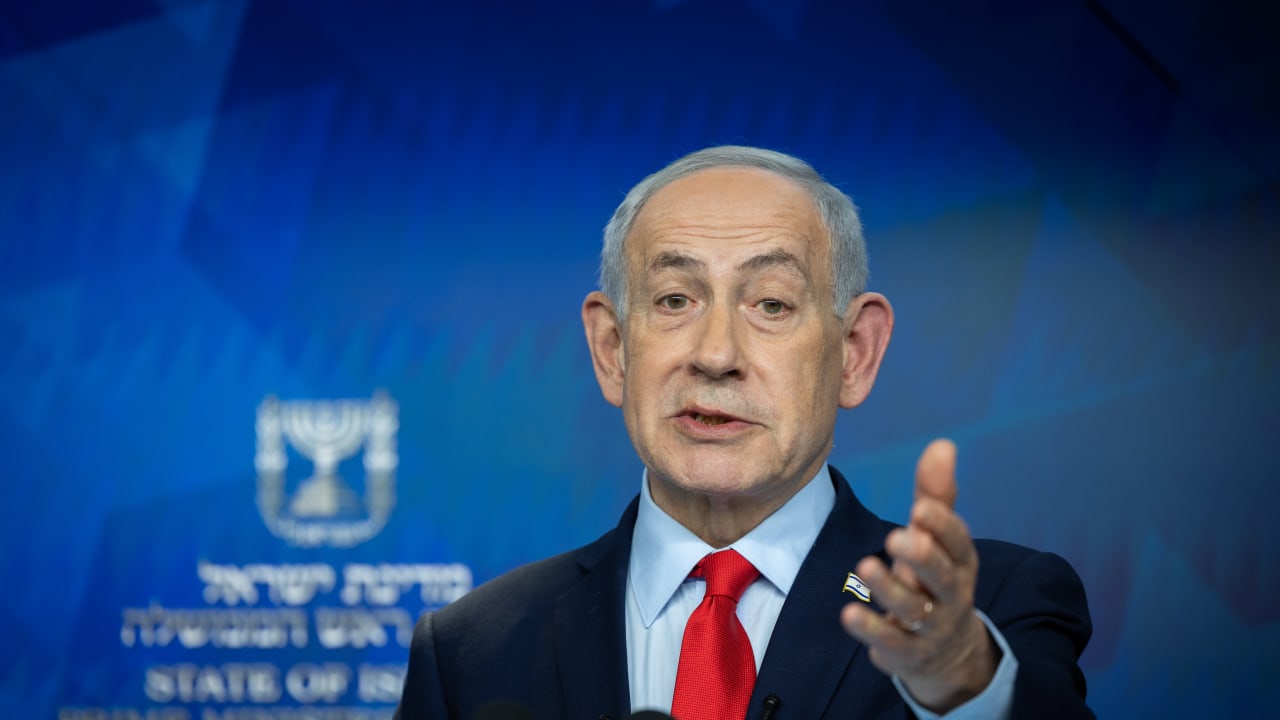
In his first press conference to the nation since the start of Operation Roaring Lion, Prime Minister Benjamin Netanyahu on Thursday night did more than outline the war’s objectives, update the public on Israel’s unprecedented cooperation with the US, and again call for an end to his trial.
He also provided a peek into the intellectual – and even spiritual – framework through which he now appears to view the conflict.
For nearly 40 minutes, first in prepared remarks and then during a question-and-answer session, Netanyahu spoke not only about missiles, nuclear infrastructure, and regime change, but also about Jewish history, the resilience and endurance of the Jewish people, and the idea that enemies rarely disappear permanently.
Using language occasionally imbued with religious symbolism, he even alluded to the messianic age – something he rarely does – before quickly adding that it would not arrive “next Thursday.”
Shaped by three forces
Taken together, the remarks revealed a worldview shaped by three forces: strategic realism about the persistence of conflict, a deep sense of Jewish historical memory, and the belief that Israel’s survival ultimately rests on the resilience and faith of its people.
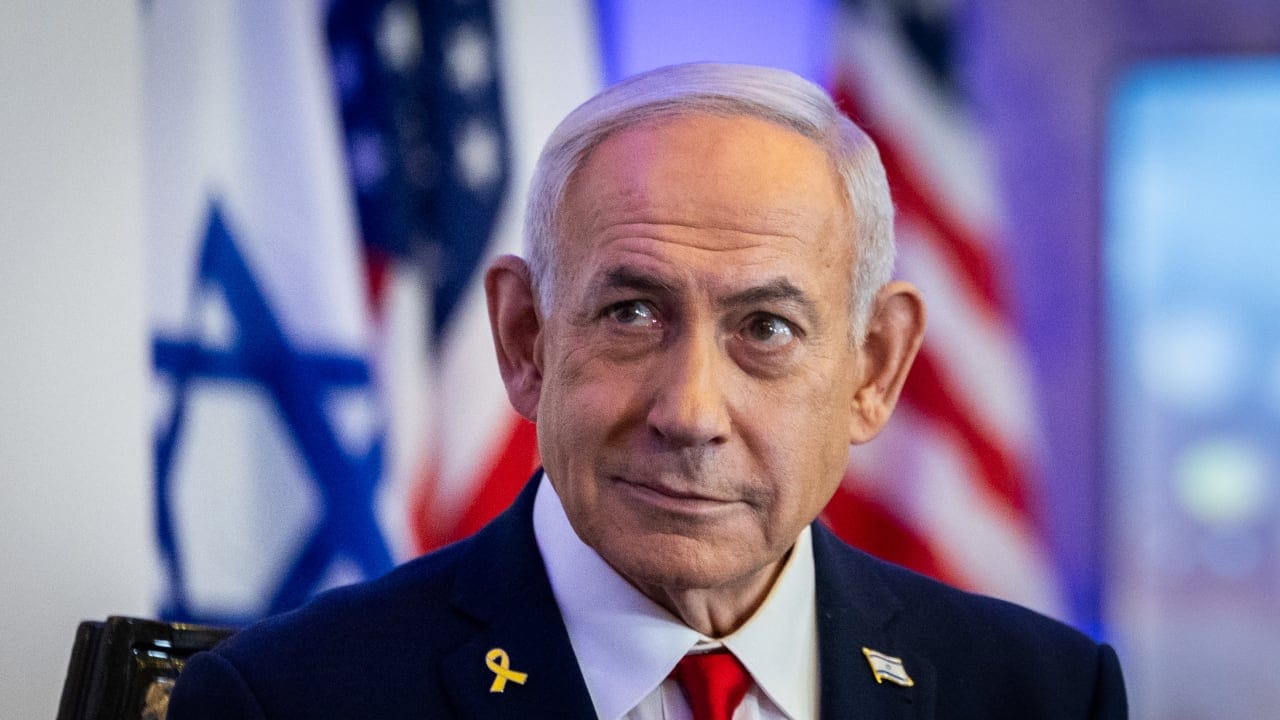
The first of these – strategic realism – was evident in his repeated insistence that history rarely offers permanent victories. Netanyahu kept returning to the idea that while enemies can be weakened, they seldom disappear altogether.
“The blows weaken our enemies enormously,” he said. “They may not disappear overnight.”
This view both answers critics and grounds the public in sober reality: There will not be one final victory that secures Israel – or the Jewish people – forever. Enemies arise, are defeated, and fade away, only for new ones to later emerge.
In this view, for example, Hezbollah may have been weakened, even significantly, in 2024 – the year of the pager attack and the killing of Hassan Nasrallah – and it may be weakened further now. But that does not mean the threat disappears entirely.
This perspective also serves as a reply to those arguing that because Hezbollah was not completely destroyed in 2024, or Iran’s ballistic missiles were not completely obliterated in the 12 Day War in 2025, Israel somehow failed.
Netanyahu’s argument is different: Weakening enemies matters, even if they are not permanently eliminated.
The bad news in this worldview is that threats do not vanish for good. It will take blow after blow, confrontation after confrontation, to deal with those who seek Israel’s destruction.
The good news, however, is that Israel is stronger today than it has ever been and, therefore, better positioned to withstand and defeat those enemies.
“Threats rise, and threats fall, but when we become a regional power, and in certain fields even a global power, we have the ability to push dangers away from us and secure our future,” Netanyahu said.
Notably, he did not speak in absolute terms about eliminating threats forever – likely because he understands that, at least in the Middle East, dangers rarely disappear completely.
This is a deeply nonutopian view of history. Even if Iran’s regime weakens or collapses, new threats will eventually emerge.
The longer arc of Jewish history
The second pillar of Netanyahu’s worldview is historical memory. Recurringly, he placed the current war within the much longer arc of Jewish history.
Speaking about Israelis repeatedly entering shelters under missile fire, he said the public was revealing “the secret of why this people survived through all these generations and overcame hardships that no other people overcame.”
The implication was clear: The war with Iran is not merely another geopolitical confrontation.
In Netanyahu’s telling, it is part of a historical pattern, stretching back centuries, in which the Jewish people repeatedly faced existential threats yet endured.
By placing the current conflict within that narrative, Netanyahu framed Israel’s resilience today as the latest chapter in a story stretching back through exile, persecution, and repeated attempts to destroy the Jewish people.
“We understand that we will not be destroyed again, and we will not be exiled again,” he said. “This is our opportunity – the opportunity God gave us to return to our land, renew our independence, rebuild our army, and push back our enemies. And if we must push them back, again and again, we will do so.”
It was telling – and revealing of his mindset – that he framed the current war in the language of Jewish historical endurance, not just Israeli security.
That historical framing serves another purpose as well: It places the present struggle in a wider historical perspective. Israel’s enemies may change – from empires to terrorist organizations to regional powers – but the underlying challenge, the fight for Jewish sovereignty and survival, remains strikingly familiar.
Running through these comments was Netanyahu’s longstanding, Jabotinsky-esque belief that only strength –what Ze’ev Jabotinsky famously described as an “Iron Wall” – can ultimately ensure survival.
But Netanyahu’s remarks did not stop with strategy or history. The third element running through the press conference was his emphasis on the resilience – and faith – of the Israeli public itself.
Twice, he invoked the phrase Netzach Yisrael – the eternity of Israel – saying it was “not a slogan but a fact.”
The phrase, rooted in Jewish tradition and developed by thinkers such as the 16th-century Rabbi Judah Loew, the Maharal of Prague, reflects the idea that the continued existence of the Jewish people is itself something extraordinary, even supernatural.
The Maharal argued that Jewish survival across centuries of exile and persecution defies the normal patterns of history and therefore points to a deeper source of endurance beyond politics or military strength.
For Netanyahu, Israel’s strength is not only military or technological. It is also rooted in something less tangible: the willingness of ordinary citizens to endure hardship, maintain solidarity, and continue moving forward even in times of war.
Israel, he said, is on the path to becoming much stronger and more powerful than ever before. Then he referenced something he rarely does in his speeches: the messianic age.
“Some people think we will reach a place of rest and inheritance and even the messianic era,” he said. “Perhaps we will reach the messianic era, but it will not happen next Thursday. In the life of nations, there are always new threats or old threats that return. The only way to guarantee your survival, your future, your prosperity, and your alliances is to be very strong.”
With these words, Netanyahu was nodding at the religious vocabulary that often accompanies discussions of Jewish destiny, while adding his own sober recognition that the nation cannot rely on sudden redemption.
History may move toward redemption, he was suggesting, but in the meantime, Israel must live – and be prepared to live – in a world of recurring threats. With Operation Roaring Lion, it is showing itself – and the world – that it can do just that.