
Two years after three Israeli couples traveled to Washington, DC so they could be married in a Jewish ceremony, they each have welcomed their first child, and Israel has undergone four elections.
Still, as several people pointed out during an April 4 virtual discussion with members of Washington Hebrew Congregation where they were married, those couples still cannot be married in the country in which they live. One couple is gay. Another wanted an egalitarian ceremony, and the groom of the third couple is not considered Jewish, although he did not find that out until he was an adult in mourning and went to bury his mother.

“The sad thing about Israel is that as time goes by you get used to it. You get used to the rabbis deciding everything,” said Carmel. “Our voices will never truly be heard unless something drastic happens.”
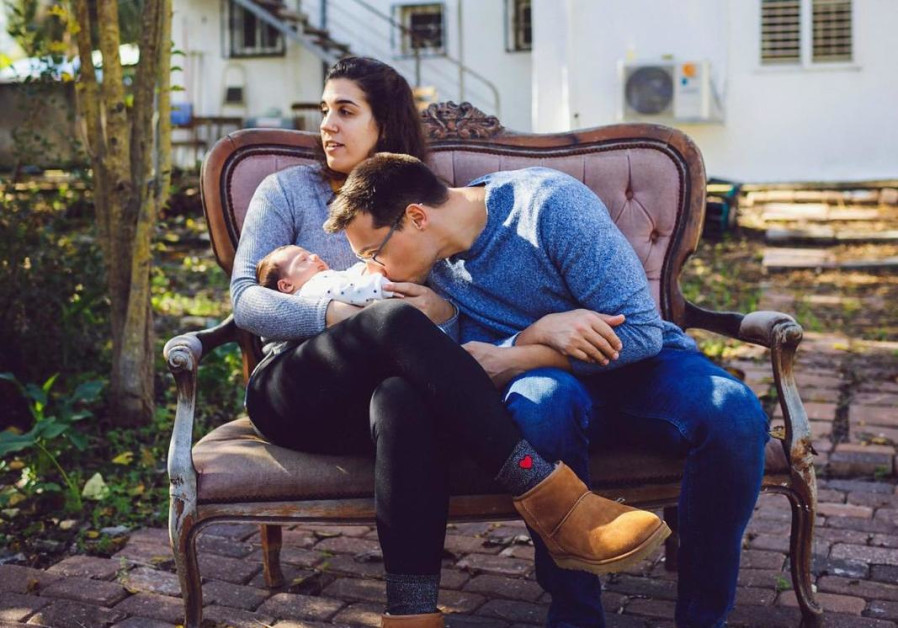
His three-week-old son is considered Jewish, because his wife, Anat, is Jewish. “My son is Jewish, even though the rabbinate doesn’t believe me to be Jewish. He is Jewish by technicality,” said Carmel, who named his son in memory of his mother.
Kariv will add a progressive voice during a time when other parties have introduced bills against the Reform movement in Israel, LGBT rights, affirmative action for women and the right to an abortion, said Rabbi Noa Sattath, director of the Israel Religious Action Center.
All three couples would have preferred to be married among family and friends in Israel. However, the Jewish state does not legally recognize marriages performed outside sanctioned religious authorities. Interfaith marriages also are illegal.
Jews must be married in an Orthodox ceremony by an Orthodox rabbi for their marriage to be recognized. However, Israeli citizens who go abroad to be married are recognized as married when they return to Israel.
During parts of the hour-long virtual discussion, the couples’ children were seen on screen. M. Bruce Lustig, Washington Hebrew Congregation’s senior rabbi, gazed at them with love before saying, “We are concerned what rights they will have as citizens of Israel.” After four elections, “The situation doesn’t seem so much that it is going to be pluralistic.”
Sattath agreed. “In Israel, like elsewhere in the world, there’s been a huge struggle for democracy.” Once again, she said, “We are in a stalemate. We may have a short-term government.”
Her organization is “already very focused on a fifth campaign. This is a struggle for our democracy.”
Americans on the call were challenged not to lose their love for Israel because of its anti-progressive ways.
David Astrove, a past president of Washington Hebrew Congregation who participated at the recent World Zionist Congress for the Reform movement, urged everyone not to let the rhetoric “draw a wedge between us and our sisters and brothers in Israel. We should try to do what we can to promote pluralism.”
Hoffman agreed, stating, “We are looking at an Israel, a Judaism, that is so off the rails. This causes some North American Jews to say, ‘You know, when they get back to their senses, then I’ll respect it.’” But Hoffman urged Americans to stay involved. “We are partners. I think you have a duty to join us.”
She added, “Israel is way too important to be left to the Israelis.”
The event was sponsored by the Elizabeth and Richard Dubin Family Heritage Fund.