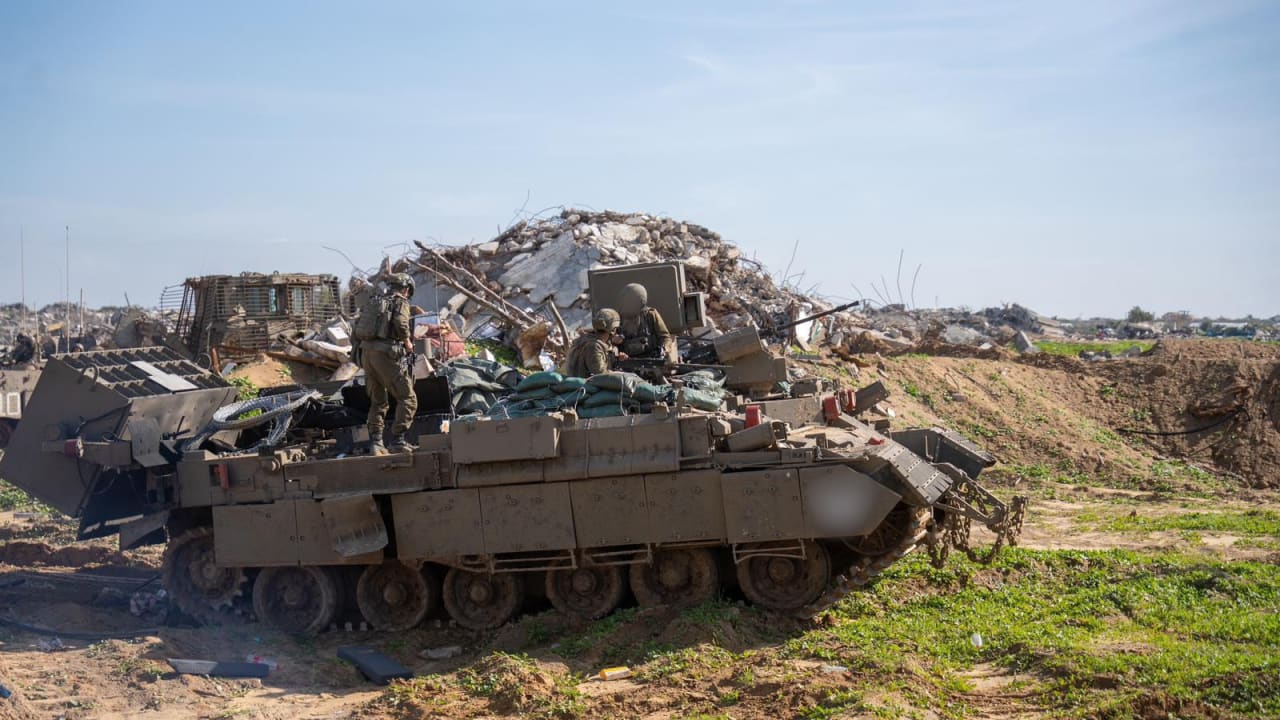
The IDF has expanded its operational control to approximately 70% of the Gaza Strip, and defense officials believe the area under Israeli control could grow further in the coming months.
"It is possible that the scope of operational control in Palestinian territory will increase in the coming months, while Hamas is allegedly dragging its feet, entrenching itself in the field, recruiting operatives, and preparing for war with Israel," a security source told Walla.
The assessment comes as Israeli defense officials express concern that Hamas is delaying implementation of the ceasefire agreement while rebuilding its capabilities and preparing for the possibility of renewed fighting.
Although Israel's security focus remains heavily directed toward Iran and Lebanon, Southern Command chief Maj.-Gen. Yaniv Asor is overseeing three parallel efforts in Gaza: addressing threats along the Yellow Line, expanding Israeli operational control and defensive infrastructure, and preparing for a possible future campaign against Hamas while shaping the Rafah area under a proposed US-backed "green city" initiative.
According to defense officials, the Southern Command conducts daily assessments along the Yellow Line and in other parts of Gaza. The effort combines intelligence from IDF Military Intelligence and the Shin Bet to identify emerging threats and coordinate operational responses.

Preparing for attacks and monitoring threats
Officials said the assessments are designed to detect preparations for attacks, monitor terrorist operatives and commanders, respond to immediate threats requiring ground or air strikes, and protect the boundary between Israeli-controlled areas and territory held by Hamas.
The military is also dealing with incidents in which Hamas allegedly sends civilians toward Israeli positions in an effort to provoke contact with troops.
According to a security official quoted by Walla, the IDF and Shin Bet maintain a list of targets who were directly or indirectly involved in the October 7 massacre, including individuals accused of participating in the holding of hostages.
At the same time, the military continues to strengthen defenses along the Yellow Line. Officials said Hamas has continued to challenge Israeli forces in the area and has not complied with demands to disarm.
The IDF is also expanding security zones near Israeli communities adjacent to Gaza amid concerns about the possibility of future attacks.
As part of that effort, forces are building new routes, paving roads, upgrading positions facing the Yellow Line, improving intelligence-gathering capabilities, and reinforcing the area with regular and reserve troops.
Military preparations are focused on two longer-term tracks
The first involves planning for a possible large-scale campaign against Hamas. Defense officials said that if Hamas refuses to disarm and demilitarize, the IDF could be required, subject to government approval, to launch a new offensive. Officials believe many Hamas operatives and commanders remain concentrated in Gaza City.
The second track centers on preparations for a proposed US-backed civilian zone in the Rafah area. The initiative, referred to as a "green city," is intended to create an area free of terrorist activity and could move forward even if Hamas does not disarm and even if a multinational force is not deployed.
According to Walla, the United States has already issued infrastructure and construction tenders connected to the project. In its initial phase, the plan would provide facilities for approximately 50,000 Palestinians who would undergo security screening before being allowed to reside in the zone.