
Prime Minister Benjamin Netanyahu’s coalition is still far from the numbers needed to form a government, but a lack of a true opposition leader and public sparring among party chiefs is fueling shifts within the anti-Netanyahu camp, according to a Maariv poll released on Friday.
Even as Israel remains uncertain regarding the Iranian front and following the public uproar in the wake of the attack on two female soldiers in Bnei Brak, the poll found that the balance between the blocs remained largely unchanged.
Former IDF chief of staff Gadi Eisenkot, however, continued a steady rise, reaching a new high of 13 seats for his “Yashar!” party.
Other opposition parties also saw movement this week, but without the same consistent trend. The Democrats gained two seats to 11, Naftali Bennett slipped by one to 20, and both Yesh Atid and Yisrael Beytenu fell by one seat each to eight.
In Netanyahu’s coalition, changes were limited. Likud rose by one seat to 26, while Otzma Yehudit dropped by one to nine. Religious Zionist Party, Blue and White, the Reservists, and Balad all failed to pass the electoral threshold, the poll found.
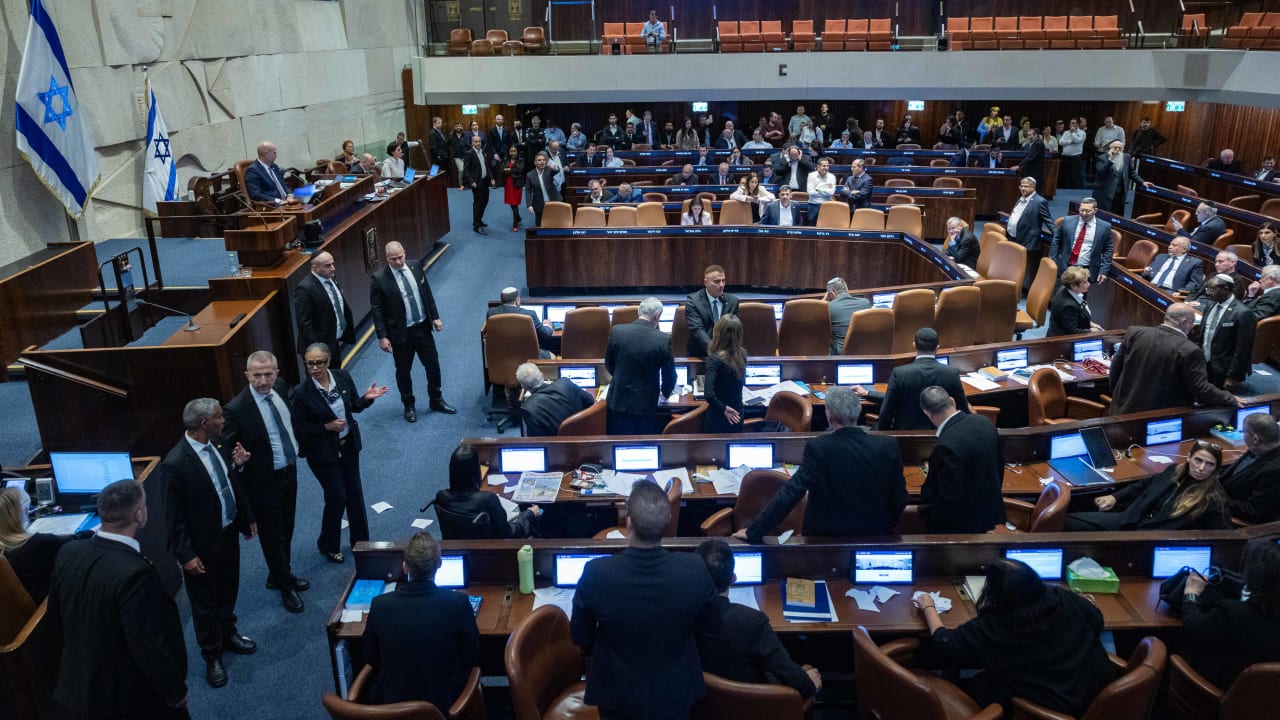
When asked which party they would vote for if the following lists ran in the next Knesset election, respondents gave the following results: Likud 26, up from 25; Bennett 20, down from 21; Yashar! 13, up from 12; The Democrats 11, up from nine; Otzma Yehudit nine, down from 10; Yisrael Beytenu and Yesh Atid at eight, both down from nine; Shas eight, unchanged; United Torah Judaism 7, unchanged; Hadash-Ta’al and Ra’am both unchanged at five.
Blue and White (2.9%), the Reservists (1.3%), Religious Zionism (2.6%), and Balad (1.8%) did not cross the threshold.
In bloc terms, Netanyahu’s coalition stood at 50 seats (unchanged from the previous poll), the opposition bloc at 60 (unchanged), and Hadash-Ta’al plus Ra’am at 10 (unchanged).
Rising crime in Israel’s Arab society
The survey also examined public perceptions around the high number of murders in Arab society.
A majority of Jewish respondents (56%) said the main reason was a “cultural problem” within the sector, while a similar majority of Arab respondents (57%) blamed police inaction.
Overall, about half of Israelis pointed to cultural factors as the primary cause, 31% cited police inaction, 12% blamed restrictions imposed by the judicial system on police and security agencies, and 8% said they did not know.
Regarding handling violent demonstrations, 69% of respondents, particularly opposition voters (78%), said authorities should use the maximum force legally possible.
Some 17% said the events should be contained as much as possible, and 14% said they did not know.
The poll was conducted by Lazar Research under Dr. Menachem Lazar in cooperation with Panel4All on February 18–19 among 501 respondents, a representative sample of Israel’s adult population aged 18 and over, Jewish and Arab. The maximum margin of sampling error was 4.4%.