
The government told the High Court of Justice ahead of Tuesday’s hearing on the haredi draft enforcement freeze that it had declined to hire a private attorney to defend the law because the outcome of the case was already “known in advance."
Rather than provide a legal response to the petitions, the government’s two-page position focused largely on accusing the court of violating the separation of powers and the Attorney-General’s Office of obstructing efforts to increase haredi enlistment.
“Israel needs haredi recruits, not haredi detainees,” the government said. The government also argued that arrests of yeshiva students could reverse a gradual increase in enlistment and, in its most severe formulation, risk “civil war in the midst of a multi-front war.”
The document was formally submitted by the State Attorney’s Office at the request of Cabinet Secretary Yossi Fuchs. The prosecutors attached an unusual disclaimer, which said that the act of filing did not indicate agreement with any of its factual or legal claims.
The government said the temporary law was intended to distinguish between full-time yeshiva students and people who claim to study but are not genuinely doing so. Although it acknowledged that neither group is legally exempt from military service, it argued that enforcement, including arrests, should be directed primarily at those who are not studying.
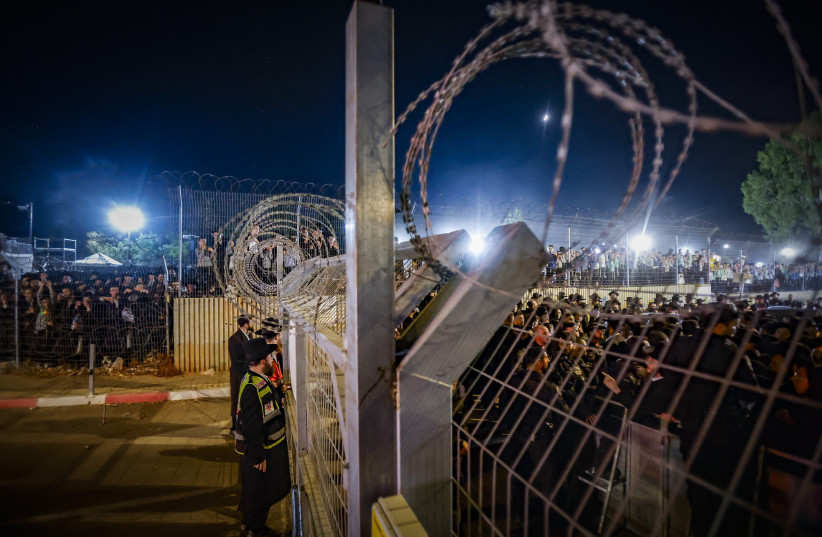
'Random arrests' driving potential recruits away, weakening legitimacy
According to the submission, organizations involved in recruiting soldiers to the IDF’s Hashmonaim Brigade and Netzah Yehuda Battalion, as well as heads of haredi hesder yeshivas, warned that “random arrests” were driving potential recruits away and weakening the legitimacy of uniformed haredim within their communities.
The government also claimed that President Isaac Herzog, Fuchs, and other officials had asked the Attorney-General’s Office to support a temporary suspension of arrests, but that those requests had gone unanswered. No supporting correspondence or data was attached to the filing.
It argued that the burden should instead be placed on the attorney-general to prove that arresting full-time yeshiva students ultimately causes them to enlist.
“If this were a genuine legal proceeding,” the government said, the court would ask the relevant authorities whether the arrests had led those students to join the IDF. “The answer is known.”
The submission does not directly answer the principal constitutional and legislative arguments raised against the law by Attorney-General Gali Baharav-Miara and the Knesset’s own legal advisers.
Baharav-Miara has asked the court to strike down the amendment, describing it as a discriminatory “group immunity mechanism” that leaves yeshiva students’ legal obligation to enlist intact while protecting those covered by the law from arrest, investigation, and prosecution.
Law suspends enforcement against yeshiva students
The Knesset’s legal advisers separately told the court that the measure was enacted through a fundamentally defective process. The final law, they argued, was wholly different from the comprehensive enlistment proposal approved in its first reading and therefore constituted a prohibited “new subject.”
The law passed on July 14 and was frozen the following day by Justice Ofer Grosskopf. It suspends enforcement against qualifying haredi yeshiva students until November 30, but does not grant them a lawful exemption or deferment from military service.
Five petitions against the law are scheduled to be heard on Tuesday by an expanded nine-justice panel.
The government criticized Grosskopf for freezing primary legislation before receiving the Knesset’s response, saying the decision had turned the judiciary into a “supreme authority, and in practice the sole authority.”
“Since the judgment in these petitions is known in advance,” it concluded, the government saw no reason to retain private counsel for proceedings “in which the final result has already been determined.”