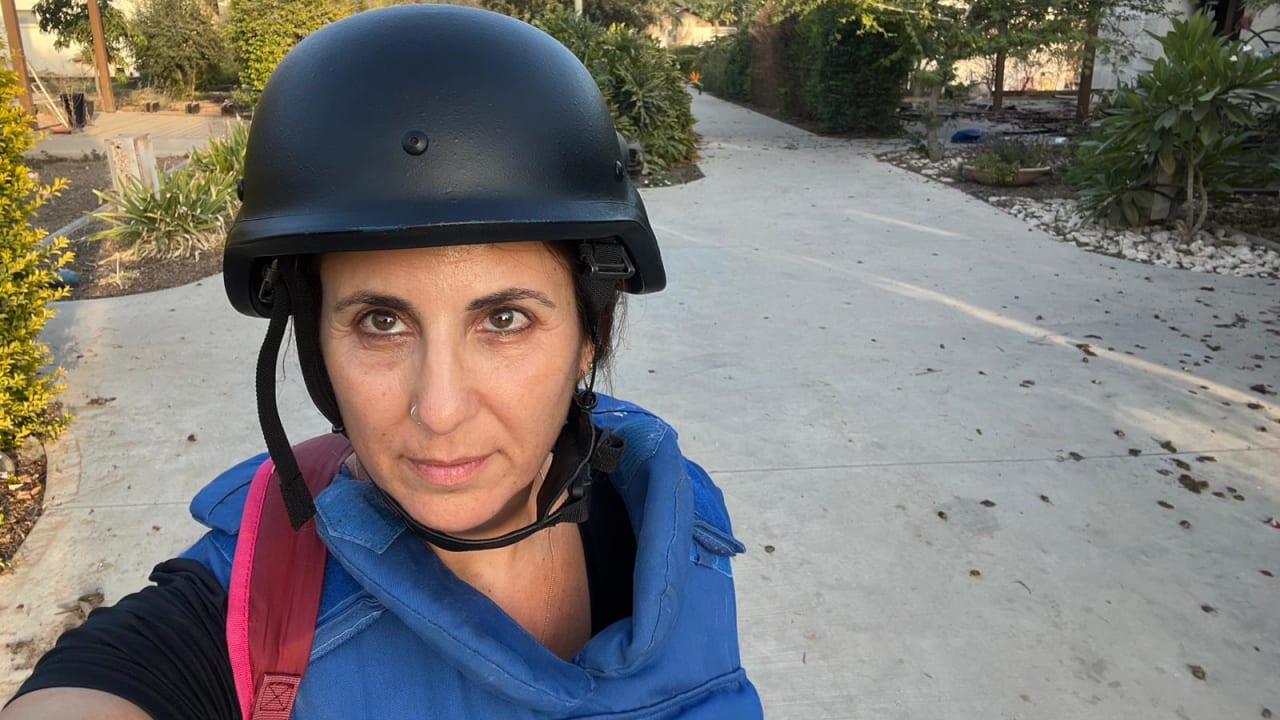
Ruth Marks Eglash has had an incredibly prolific journalistic career, with bylines gracing a vast number of major publications from The Washington Post to Fox and AFP.
She has been able to approach the news of Israel from a number of angles, getting multiple sides of the story, and exploring deep into just what makes current events tick.
And yet, calling Eglash merely a journalist does not do her justice. Eglash is not just a reporter – she is a storyteller, a vehicle by which to transmit news stories, analyses, and features to audiences.
That is, after all, the core of journalism – being a blank page to platform a story to the public. And she will go to great lengths to get those stories out there. Indeed, Eglash is not the type of journalist who is content to do all her work from an office. While her output has always been consistent and high-quality, she shines the most when in the field, conducting interviews, and putting together a coherent and in-depth article.
Eglash has recently taken the reins of The Jerusalem Report, and since assuming the post, every issue has been packed with thoughtful and detailed features and analyses, never once straying towards bias.

But her career goes beyond simple journalism. Covering the Israeli-Palestinian conflict for so many years has seen Eglash amass so much information that she couldn’t include all of it in her reports. So she instead poured it all into a novel, Parallel Lines, which portrays the complex reality of Jerusalem and the conflict with nuance and empathy.
Whether in journalism or fiction, Eglash is a storyteller without peer. And when factoring in her editorial skills, it’s clear there's really no stopping her.
In Jerusalem spoke with Eglash as she was on the road to pick her brain and learn about her approach to the craft of journalism.
1) What brought you to Israel?
I spent every summer here as a child. My father is Israeli, and I always kind of knew I would probably end up living in Israel one day. I guess I liked the weather, and I liked the way it was more laid back than England.
So after I finished university, I decided to give it a go and moved here. I don’t think I technically made aliyah since I always had Israeli citizenship, but I thought I’d try it. And it just started working out for me every step of the way. I met my husband, I got a good job, and I ended up staying here.
2) What got you into journalism?
I always knew I was going to be a writer. I always loved telling stories. When I was around six years old, I wrote a story that my teacher loved so much that he had my class make it into a play, and we went around the whole school telling the story to everyone else. I realized how much I loved writing and storytelling.
I became the editor of the magazine for my youth movement, and I studied journalism in university.
Originally, I thought I’d be a radio journalist, but I found a job as a writer at The Jerusalem Post.
3) What brought you to the Post and then the Report?
Working for the Post was one of my first jobs after moving to Israel. Initially, I started as a graphic designer and page layout designer. I loved the news and how it worked, so I always kept a close eye on that.
Because of this, I always loved working on the night desk. And during the day, I started volunteering to write stories for the paper.
I took a break from my time at the Post to move to the US for a bit. I got a job working for a Jewish newspaper in Milwaukee, Wisconsin, called the Wisconsin Jewish Chronicle. I became the deputy editor in my 20s before I moved back to Israel and went back to the Post.
I worked there for 13 years before I decided to leave and try other things. I started working for The Washington Post, where I was the correspondent here for eight years. During COVID, I got bored of staying at home because I loved going out and doing stories. Eventually, I got a job for Jewish Insider, where I worked for three years, and I also freelanced for Fox News Digital.
Then October 7 happened, I ended up writing for many media outlets in the immediate aftermath. I wrote for The Times in London, The Express, and more.
And then in the summer of 2024, I was hired by AFP news agency, which I was very excited for. The agency focuses on breaking news and following the news cycle, and I prefer more in-depth story writing, so I realized it wasn't for me and left mid-2025.
I ended up doing freelance a bit more until I was offered the job for the Report. This felt like a really good option for me. I love analyses and features that offer more in-depth views of what’s going on.
4) Tell me about some of your favorite anecdotes from your career
During my time at The Washington Post, one thing that I really enjoyed was being able to access both sides of the story here. I obviously speak Hebrew fluently and understand Israeli society after living here for so long. But because I was representing The Washington Post, I was also able to speak with Palestinians and hear their side of the story. I really loved being able to do that.
I saw my role as a blank page where people can write their stories and I would be able to tell them with the amazing platform that I had, and I still love doing that – I’ve done some really good stories for The Jerusalem Report and I hope to continue doing that.
5) What's something about the job that most people don't know?
It looks like it’s very hectic, and we do everything at the last minute as we follow the breaking news cycle. But being a reporter is about being very organized and structured, even down to writing a story. Whether it’s writing a news story, a feature piece, an analytical piece, it’s all about the structure. And once you understand the structure, it’s easier to write.
6) What advice can you give to any aspiring journalists?
Today, the media landscape has changed so much from when I first started. The best advice I can give is that even if you’re working for an outlet or trying to, you need to think of yourself as your own communicator. You can use your own platforms to broadcast, because not everything needs to be written into a news story. Sometimes you get extra information that doesn’t fit into the news story. But now you have personal platforms like Facebook and X/Twitter, and Instagram.
You always need to embrace new forms of storytelling. That’s all journalism is – it’s storytelling and how to get that information out there to the public in the most effective way possible.