
Everyone reads the Four Questions and sings “Dayenu.” But Passover Seders are the breeding ground for incorporating special family traditions and introducing new ways to embellish the standard story.
After participating in a particular Seder many years ago when our children were young, we began the evening with an introduction we had learned there that was fun and experiential for both the young and the young at heart.
Everyone went outside the apartment, and the hosts covered the floor of the entrance with two long swaths of blue crepe paper. All the participants had to “cross over” the threshold, symbolically through the parting Red Sea, and jump into the Seder.
Ever since, we have started every Seder we hosted that way, and it never failed to get everyone in the mood to retell the Exodus from Egypt as if we were there ourselves, as the sages urge.
To find out how other people make their Seders unique, I looked through my digital “Rolodex” and asked a number of public figures – in Israel and the Diaspora – to recount their own Seder traditions.

Isaac Herzog
We have a tradition of telling a special family story during the ceremony of opening the door to welcome Prophet Elijah. The story is of my grandmother Rabbanit Sara Herzog (z”l) who, as a child in Glasgow, Scotland, opened the door for Elijah and saw someone standing in the doorway in costume.
We continue to tell this story and honor the tremendous legacy of my grandmother, after whom the Herzog Medical Center in Jerusalem is named, as part of the ceremony to welcome Elijah every year – even though opening the door at the President’s Residence poses some challenges for our security team!
Isaac Herzog is the president of Israel.

Yair Lapid
The beauty of my family’s Passover Seder is that there is nothing unusual about it. It looks and sounds like the Seder of millions of other Jews, across generations and across places.
Tradition was not meant for innovations; it was meant to remind us where we came from and where we are going.
Yair Lapid is leader of the opposition and chairman of the Yesh Atid party.
Naftali Bennett
Since we were children, my father, Jim, of blessed memory, and my mother, Myrna, may she live a long life, introduced a special tradition into our Passover Seder.
When we reached the Ten Plagues, they didn’t just read them – they brought each plague to life in a physical, tangible way.
For example, during the plague of blood, they would pour water into a cup and – like magic – the water would turn into blood! (Actually raspberry syrup, since there was concentrate waiting at the bottom of the cup.)
During the plague of frogs, they would throw small rubber frogs at everyone.
For lice, we would stick little white stickers on ourselves and scratch.
And that way, no child ever forgot the experience!
To this day, we continue the tradition – with our grandchildren and even great-grandchildren – passing it on.
Naftali Bennett is a former prime minister of Israel.

Mayim Bialik
My mother‘s native tongue is Yiddish, and I was raised with Yiddish as well – it’s my mamaloshen. Both of my parents spoke what is now referred to as an “Ashkenazi dialect” for all Hebrew pronunciations and speech – it’s as if everything was Yiddish.
The Seder was no exception – b’mitzVOYsuv is how you pronounce b’mitzvoTAV and so on. Many people consider this somewhat anachronistic, since I was raised in the 1970s and 1980s in Southern California, pronouncing things like a 90-year-old from the shtetl.
Over the years, since my kids were born, I have painstakingly typed out a Haggadah that we use, complete with Ashkenazi transliteration – it’s the only Haggadah I can imagine using. My children also use an Ashkenazi accent, including when they became bar mitzvah, and I hope this Haggadah continues to be in their families for all of the generations to come, who will know what our old world sounded like.
Mayim Bialik is an American actress.

Nachman Shai
Our Seder is, above all, a family celebration. Not very original – but absolutely true. We are a loving, involved, typical family. My parents and my wife’s parents surely envisioned it this way for the generations to come – and it is wonderful to fulfill their wish, even though they are no longer with us.
At the beginning of the Seder, there is the “chairman’s speech,” delivered by the person seated at the head of the table. My grandfather and my father once sat there – and now it is my turn. This short speech has become something of a tradition.
We talk about what has happened to the family over the past year, what has happened in the country, and what has happened to the Jewish people, wherever they may be. There is a brief moment of quiet. By tradition, my wife, Rivka, urges me to keep it short – just as my mother used to do with my father – and then a great commotion follows, as happens in a family with many children.
Our hearts go out, like those of many families, to our branch of the family in the United States. Every year, we express the hope that we will celebrate the Seder together.
Nachman Shai is dean of the Hebrew Union College in Jerusalem, former minister for Diaspora affairs, and former IDF spokesperson.

David Broza
In the last few years, our family Seder has become a production of sorts. We gather family and friends around the beautiful table. We pour much wine, read through the Haggadah, eat endless dishes of tradition and innovation, resume reading and singing… afikoman, and the anticipated visit of Eliyahu the Prophet. (If he doesn’t show up, we drink his wine, too.)
But then, after all is done, we get to retell the story of the Exodus through the most original script by the great funny writer/actor/comedian Yoni Lotan – the son of my wife, Nili Lotan, my stepson.
He wrote an incredible Haggadah, which is read by all attending, and everyone has a role in the script. We read it out loud, raise more toasts, and end the great night of storytelling and traditional gathering in a triumphant finale. This entire ordeal goes on for at least four hours of a raucous and entertaining night.
David Broza is an Israeli singer-songwriter.
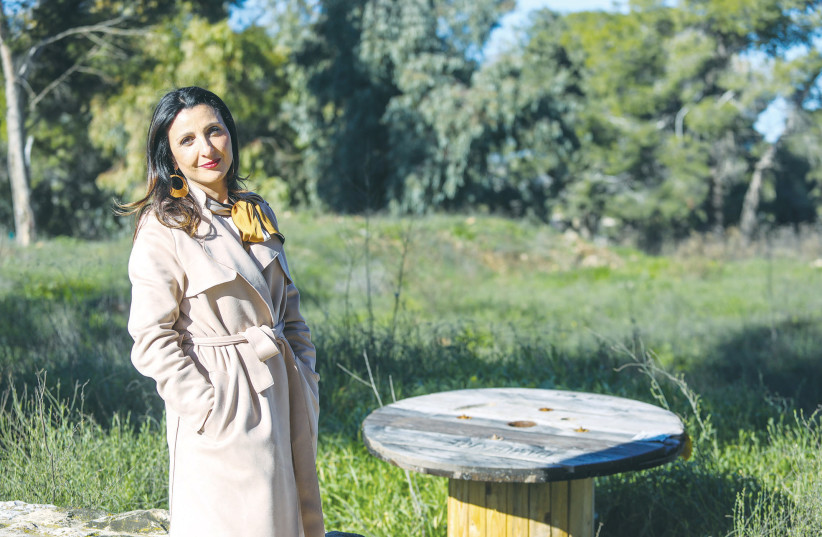
Fleur Hassah Nahoum
Before “Mah Nishtana?” [“The Four Questions”], we take the Seder plate, and we sing or chant “Bibhilu yatzanu mimitzrayim,” which means “in haste we left Egypt,” and the father takes the Seder plate and goes around the table circling it over everyone’s head, one by one, as we continue to chant “Bibhilu yatzanu mimitzrayim.”
It’s a Gibraltar minhag [custom], and it’s fun, as my father used to gently bump our heads with the Seder plate, and my husband does the same to the kids, who find it fun and funny.
Fleur Hassan Nahoum is special envoy for the Foreign Ministry.
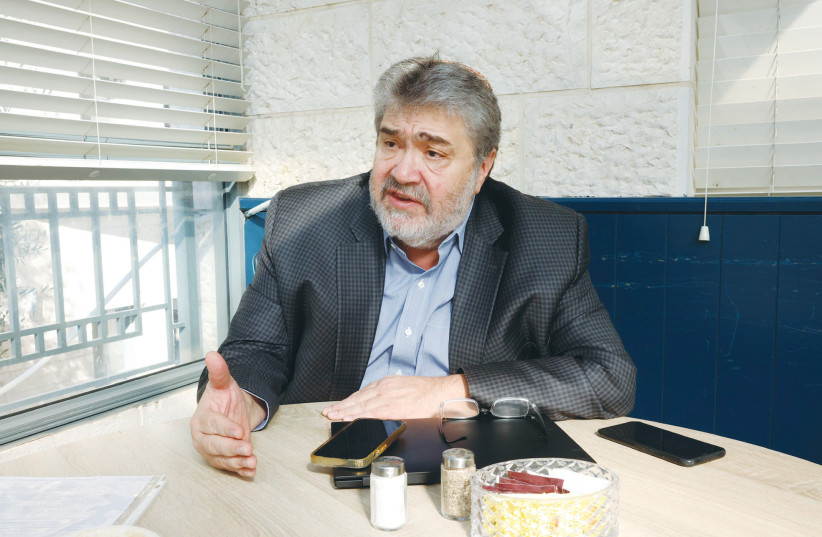
Jon Medved
Like many Jewish families, every year we use our treasured collection of the Maxwell House Haggadah, the iconic blue-and-white book which was distributed in the millions of copies as a brilliant marketing move by the coffee giant.
What makes our tradition unique, perhaps, is the final song after “Chad Gadya” that we have added to our family repertoire, where we, together, sing our own tune to the list of coffees presented at the back of the book: “The Original Passover Coffees for Your Enjoyment: Maxwell House, Maxwell House, Maxim, etc.”
This is accompanied by much joy, laughter, and vigorous clinking of cutlery on wine glasses and provides a welcome and appropriate “after Seder coda” to a marvelous night.
Jon Medved is a venture capitalist and founder of OurCrowd.

Avital Leibovich
Every year, my family gathers for the Passover Seder, a tradition that connects us across generations. As evening falls, our table is set with symbolic foods – matzah, maror, charoset, and the Seder plate – each reminding us of the journey from slavery to freedom. My father leads the Seder, guiding us through the Haggadah, while everyone reads parts aloud.
In the past decade, I have added a unique dimension by inviting senior diplomats from all continents and religions to join us. I hope this offers them a meaningful insight into Jewish culture. To make the experience inclusive, I organize the Haggadah in English so they can actively participate.
We sing familiar songs, often loudly and off-key, creating a warm atmosphere. One highlight is the search for the afikoman, always led by the youngest child – no matter their age. In our case, it is my 20-year-old daughter.
My favorite part of the meal is eating spicy hazeret with matzah, a simple but powerful reminder of the bitterness and resilience in our story. The evening is filled with reflection, conversation, and togetherness. It is a moment where tradition meets the present, and where guests leave not only informed but also emotionally connected to our shared human story.
Lt. Col. (res.) Avital Leibovich is director of AJC (American Jewish Committee) Jerusalem.

Michael Rapaport
My best Passover memories are from my Grandma Evelyn’s home. Her house was in Lawrence, Long Island – the Five Towns – and from the second you walked in, you knew it wasn’t a regular night.
The smells, the noise, the table that felt like it stretched for miles, the kind of food that only lives in your memory once it’s gone. It was family, it was chaos, it was tradition – and it was always special for reasons you don’t even understand until you’re older.
My brother and I grew up in Manhattan, so just being in a house felt like we were on vacation. Not a mansion, not some palace – just a regular house, but to us it was a whole world. We’d wander from room to room like explorers, checking out the basement, opening doors, just soaking in the space of it all. Meanwhile, upstairs, the Seder was doing its thing – the prayers, the stories, the laughs, the same voices every year getting older without you realizing it.
And that’s the thing about those nights – at the time, it just felt like food and family and running around. But looking back, it was something bigger. It was connection, it was identity, it was being part of something that started long before us and keeps going after us. Grandma Evelyn’s house wasn’t just where we had Passover – it was where it felt like Passover.
Michael Rapaport is an American actor and comedian.
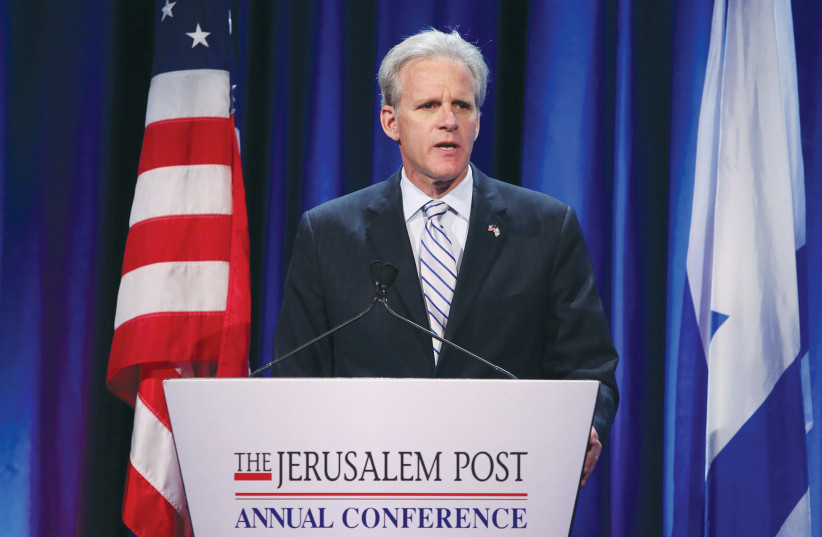
Michael Oren
The high point of our Seder is not reading from the Haggadah, singing “Chad Gadya,” or finding the afikoman, but rather our discussion about the meaning of freedom. Often, I’ll recall a secret Seder I attended 45 years ago in the Soviet Union, together with brave members of the Zionist underground. Facing prison in the gulag merely for wanting to make aliyah, they risked their freedom to celebrate ours – from slavery in Egypt. Around our Seder table in Jaffa – even during wartime – my family talks about the inestimable blessing of being a free people in our own land. Dayenu.
Michael Oren is a former Israeli ambassador to the United States, former MK, and founder of the Israel Advocacy Group.
Hannah Brown contributed to this article.