
In this week’s parasha, Moses delivers a moving and historical monologue recounting the journey of the Jewish people during their 40 years of wandering in the vast desert. This parasha is rich with ethical guidance and critique, offering life lessons, encouragement, and inspiration. Every verse in this portion – and those that follow – contains an eternal, relevant message for the moment and for generations to come.
In one of the opening verses of Devarim, Moses tells of the time he established a system for teaching Torah, law, and judgment to the people of Israel. Following the advice of his father-in-law, Jethro, he appointed leaders over thousands, hundreds, fifties, and tens – creating small study and teaching groups that made learning more efficient and effective. Every 10 people had a teacher, with additional leaders over each 50, 100, and 1,000. At the top of this pyramid stood Moses himself, to whom people would turn only for the most difficult questions.
Moses expresses this system in the words:
“The matter that is too difficult for you, bring it to me and I will hear it” (Deuteronomy 1:17).
This statement carries an important message. When a student asks a question, they are not only developing critical and independent thinking – processing material, analyzing it, identifying weaknesses or misunderstandings, and not taking things for granted – but they also sharpen the intellect of the teacher. The question stimulates deeper thinking and brings about clarity that the teacher may not have otherwise reached.
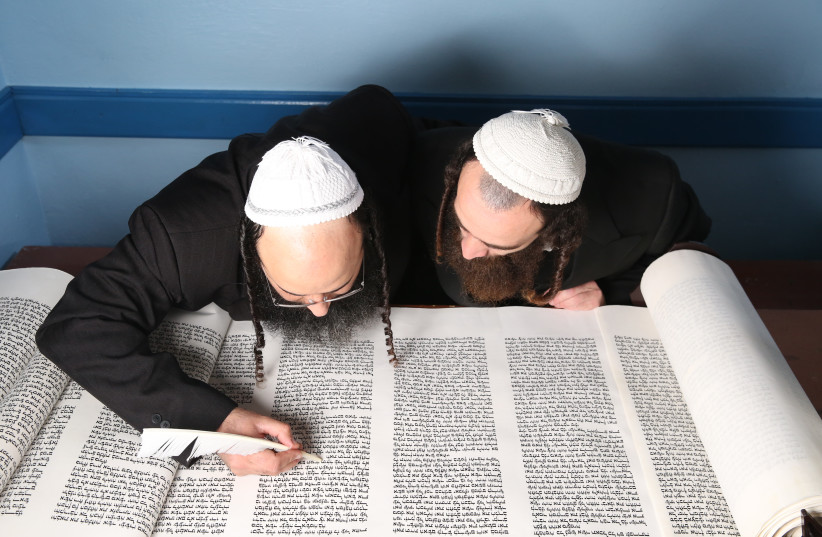
The student-teacher dynamic
This dynamic of student inquiry and the teacher’s patient, honest response is essential for effective and meaningful learning – for both the teacher and the student.
Rabbi Moshe Sofer of Pressburg (known as the Chatam Sofer, after his works) explains this verse beautifully:
“The matter that is too difficult for you” – referring to the questions that arise during your learning together, “bring it to me” – your insightful questions will bring the issue closer to my understanding. When I consider the topic in light of your questions, “I will hear it” – and “hearing,” in the language of our sages, means understanding.
Moses, the great teacher of Israel, tells the people: Don’t be ashamed to ask what you don’t understand. It’s not a sign of weakness. On the contrary, not only will this help you as a student – it will help me understand the subject more deeply and fully.
Sometimes, a teacher may study a topic without fully grasping it – and may not even realize that they don’t fully understand. But when a student asks a question and the teacher is compelled to respond, it brings about true clarity – for the teacher as well.
The sages of the Talmud used a beautiful metaphor: When a certain rabbi gave a brilliant answer to a friend’s question, the friend said:
“If you hadn’t lifted the shard, would you have found the precious stone beneath it?” (Bava Metzia 17a, Yevamot 92b, Makkot 21a). In other words: Yes, your answer is brilliant and you revealed a precious insight – but you wouldn’t have reached it without my question, which sharpened your mind!
How wonderful are the words of Rabbi Chanina in the Babylonian Talmud:
“I have learned much from my teachers, more from my colleagues, and from my students – more than all” (Ta’anit 7a).
From our parasha, we learn to open our ears to the questions of our children and students, to listen to them, to answer with patience, and to treat them with respect.
It is not only for their benefit – it is for ours as well. For we, the “teachers,” the “adults,” have much to gain, too.■
The writer is rabbi of the Western Wall and Holy Sites.