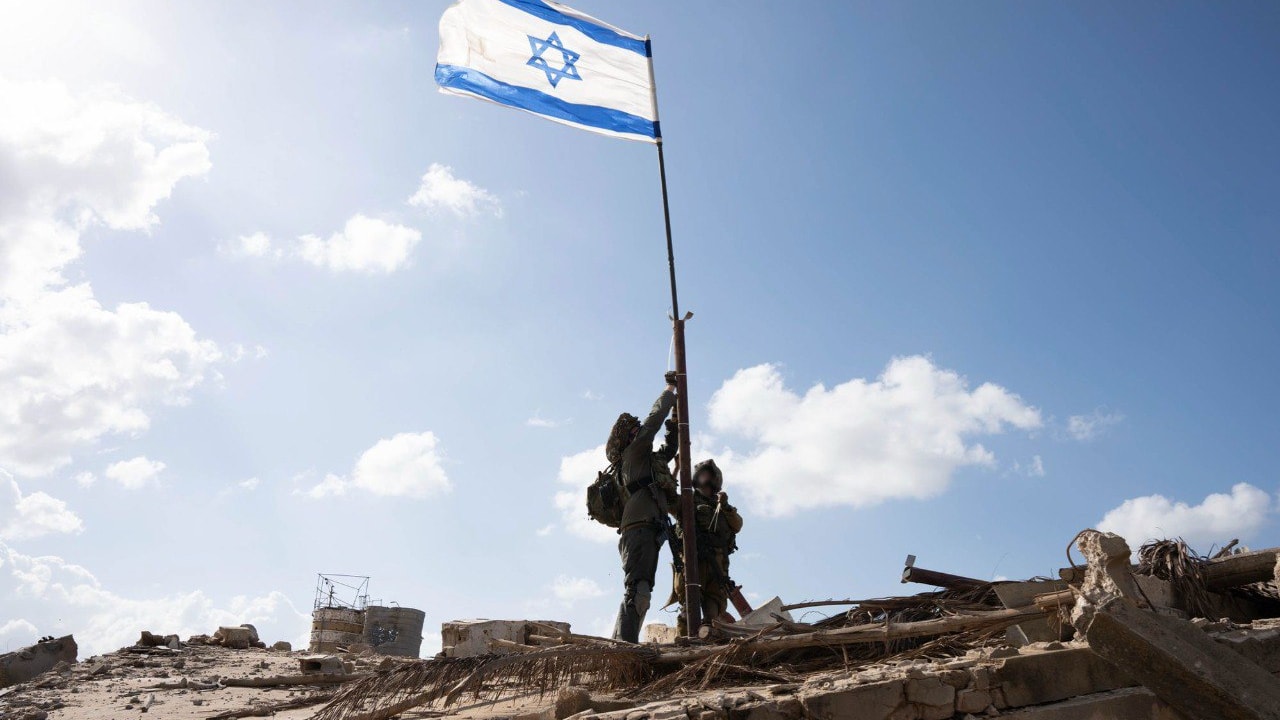
The haftarah for parashat “Noah,” taken from Isaiah 54, opens with a call that reverberates across generations.
“Enlarge the place of your tent,” declares the prophet, “and let them stretch forth the curtains of your dwellings; do not hold back; lengthen your cords and strengthen your stakes” (Isaiah 54:2). In just a few verses, Isaiah captures the very essence of Jewish destiny: a nation that will grow outward and upward, stretching its borders to make room for the unfolding promise of redemption.
The imagery is striking. After the flood in Noah’s time, humanity began again. After the destruction of Jerusalem, Israel too would begin again. And in that rebirth, Isaiah insists, there can be no shrinking back. God calls upon them to expand – to build, to plant, to spread their tent far and wide.
In the plain sense, the verse refers to the return from exile: The Jewish people, long confined and humiliated, will once again flourish in its own land. But on a deeper level, it is a summons to audacity, to enlarge our national “tent” by reclaiming our ancestral homeland.
The nation of Israel, reborn after millennia of dispersion, stands today as a living fulfillment of Isaiah’s vision. Every new community established, every barren hill made to bloom, every aliyah flight that touches down at Ben-Gurion Airport is another act of expanding the tent – a modern echo of the prophet’s ancient call.

The haftarah continues: “For you shall spread out to the right and to the left; your offspring shall possess nations and will resettle desolate cities” (Isaiah 54:3). Here the prophet makes clear that the Jewish people, so often diminished numerically throughout history, is fated to grow beyond its confines. Desolate areas, be they in Judea, Samaria, Gaza, the Negev, or the Galilee, will be rebuilt. Places once emptied of Jewish life will pulse again with Torah, innovation, and purpose.
But this is not only about geography. It is about mission.
“Fear not, for you shall not be ashamed,” Isaiah adds (Isaiah 54:4). The shame of exile will fade, and the widowhood of dispersion will be forgotten. This is the vision that drives the Zionist enterprise at its deepest level – that the Jewish nation, once rejected and scattered, now stands upright, sovereign, and unashamed in the land promised to our forefathers.
However, Isaiah does not ignore the pain he foresaw that would precede our national renewal. “‘For a brief moment have I forsaken you, but with great mercies will I gather you in,’ says the Lord” (Isaiah 54:7). These words pierce through the centuries, encapsulating the entire arc of Jewish history – exile and return, distance and closeness, despair and hope. But note that God’s abandonment is measured in time, which is finite and passing. His mercy, by contrast, is unbounded, eternal, and infinite.
But Isaiah’s metaphor of the tent also carries with it an implicit warning. The cords must be lengthened, yes – but the stakes, too, must be strengthened. Expansion without stability can collapse upon itself. Israel’s task, therefore, is not only to widen its reach but to deepen its Jewish roots. We must secure our moral foundations, reinforce our unity, and fortify the spiritual underpinnings of our national life. A tent can hold only if its stakes are firmly planted in the ground.
In our era, as Israel faces threats from without and doubts from within, Isaiah’s message resounds with even greater urgency: Do not retreat. Do not cower. Enlarge the tent. Make room for more life, more faith, more light. The temporary hiding of God’s face was but a fleeting moment. The gathering of His people – in mercy, in strength, in destiny – is forever.
And perhaps that is the key message of parashat “Noah” and its haftarah. Ultimately, every flood is followed by a covenant, and every exile by return. The Jewish story is not one of mere survival – it is one of ascent. Just as Noah emerged from the ark to rebuild civilization, Israel emerges from centuries of dispersion to rebuild its land and infuse it with holiness.
They are the very contours of redemption itself.