A year ago, Syria was at the center of the tensions between Israel and Iran. The Islamic Republic used Syria to transfer weapons to Hezbollah in Lebanon.
In addition, Iran's Islamic Revolutionary Guard Corps had bases in Syria and hundreds or even thousands of personnel there. Israel had tried to prevent Iranian entrenchment in Syria via what was called the Campaign Between the Wars.
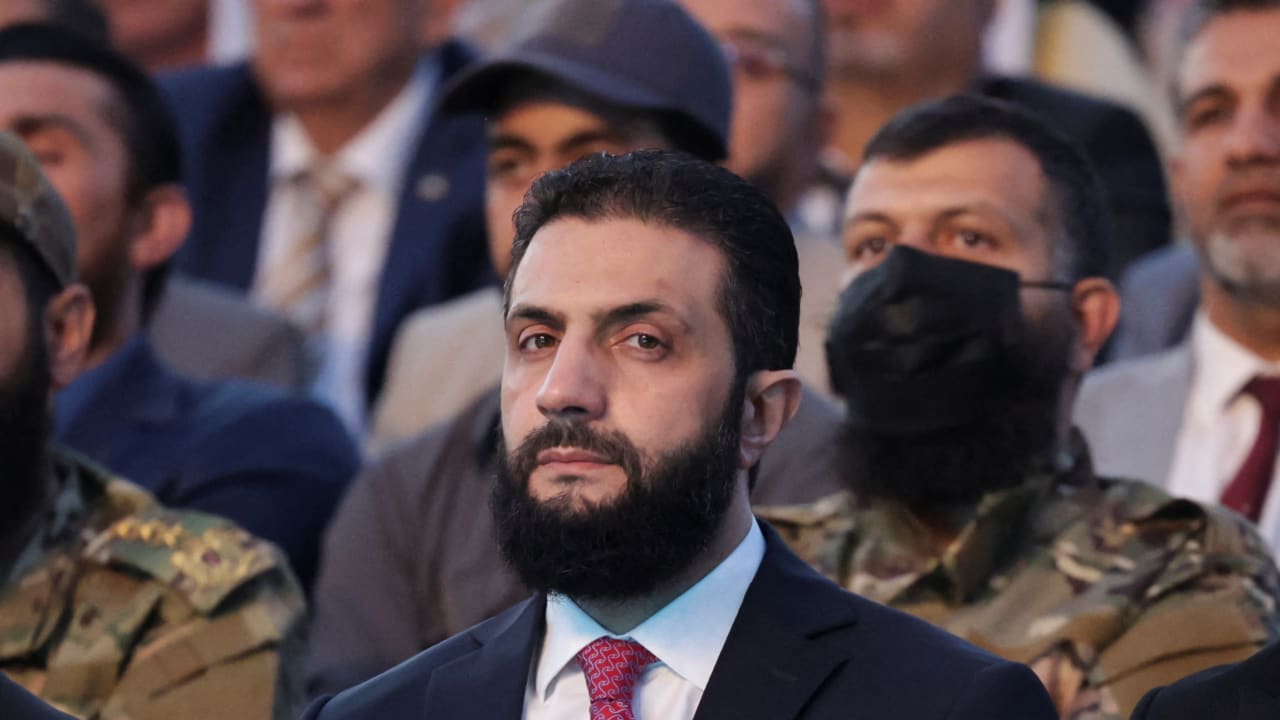
Today, all that is over. Syria’s Bashar al-Assad regime fell on December 8, 2024. A new government has come to power. Ahmed al-Sharaa’s government in Syria is opposed to Iran and sympathetic to countries that are against Tehran. Still, amid the Israel-Iran war, the Syrian government wants to keep the peace.
It is interested in focusing on investments and reconstruction. The Syrian government has been holding meetings and working with foreign counterparts to this end.
For instance, the Syrian Foreign Minister, Asaad Hassan al-Shaibani, met with Germany and also spoke with his Italian counterpart regarding bilateral issues and other matters.

Separately, Syria is focused on the upcoming academic year. Stefan Schneck, Germany’s special envoy to Syria, spoke with Shaibani.
They “agreed to establish a German-Syrian economic cooperation council to support Syria’s reconstruction and an inclusive political process.
Berlin is helping Syria move beyond the past and work toward its future “as a prosperous, free, and diverse country,” the Syrian media outlet Levant24 said.
This does not mean that Syria is completely aloof from the conflict. Missiles and drones from Iran have been flying over Syria on the way to Israel. Also, Damascus has accused Israel of bulldozing several structures near the border, saying Israel carried out a recent raid near Beit Jinn in Syria.
Syria's main concern is security threats
The Damascus International Airport is also open, but many flights have been curtailed due to the hostilities in the region. Meanwhile, the Syrian Baniyas Port has received its first Turkish vessel, according to Levant24.
Syria’s primary concerns now also relate to security threats. There are pro-Assad loyalists as well as possible Iranian agents in Syria.
In addition, US forces in eastern Syria continue to consolidate their bases. They are reportedly moving or redeploying forces to one base in eastern Syria from a half-dozen they previously used.
The US backs the Syrian Democratic Forces in their fight against ISIS. However, they are redeploying as Syria’s new government takes shape.
America also has forces in Tanf, a garrison in southern Syria. It is possible that Iran could target US forces in Syria amid tensions between Tehran and Israel and potential US intervention against Iran. All of this is a concern for US personnel in Syria and also in Iraq.
Another development is that the Syrian-Iraqi border has reopened. Both Syria and Iraq are concerned about ISIS threats. All of these issues will remain priorities, even as the world shifts its focus to Iran.