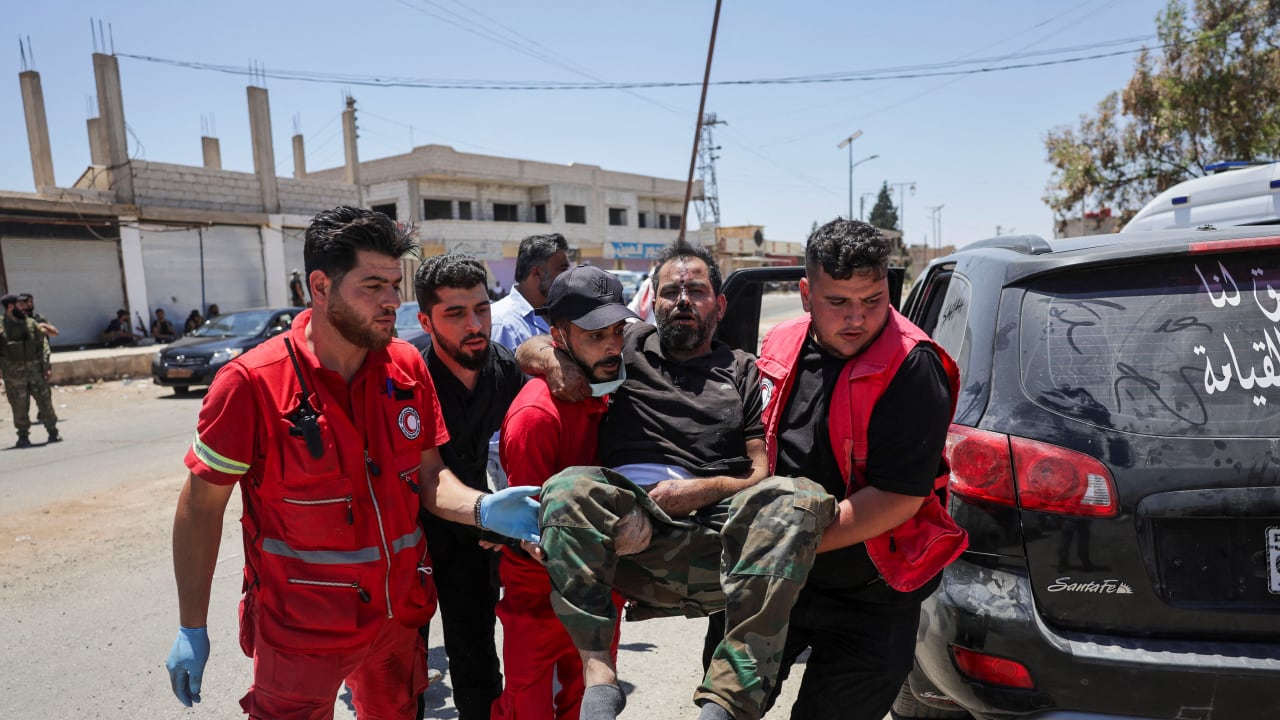
The Office for the Coordination of Humanitarian Affairs (OCHA) confirmed on Thursday that UN agencies assisted the Syrian Arab Red Crescent (SARC) on Wednesday in delivering aid to the Druze-majority city of Sweida, where the community has been under attack by state forces and Bedouin militias.
The Wednesday aid delivery included wheat flour, fuel, medicines, and health supplies.
OCHA confirmed that support was given to more than 500 families displaced by the recent violence and that the UN organization has plans to expand aid to the conflict-struck region in coordination with regional partners.
The World Food Programme (WFP) also distributed food aid to displaced families on Thursday and supported Syrians returning home after the fall of the Assad regime.
The UN agencies also visited the Sayyeda Zeinab community and announced plans to visit the neighbouring Dar’a Governorate, where tens of thousands of displaced people are in need of humanitarian support.

Over 1,600 dignity kits, containing feminine hygiene products, were also delivered to women and girls across Sweida, Rural Damascus, and Dar’a governorates.
The OCHA statement added that despite efforts to support displaced people in southern Syria, security restraints prevented aid workers from accessing every area touched by the conflict.
Hospitals in Syria's Sweida struggling after sectarian clashes, WHO says
The main hospital in the southern Syrian city of Sweida is overwhelmed with trauma patients and working without adequate power or water after the local Druze minority clashed almost two weeks ago with Bedouin and government forces.
"Inside of Sweida, it's a grim picture, with the health facilities under immense strain," the World Health Organization's Christina Bethke told reporters in Geneva via video link from Damascus.
"Electricity and water are cut off, and essential medicine supplies are running out."
Many medical staff cannot reach their workplace safely, and the main hospital's morgue was full at one point this week as it dealt with a surge of trauma cases.
At least 903 people were killed in the sectarian bloodshed, according to the Syrian Network for Human Rights, after clashes between Druze militias and Bedouin tribes spilled into ferocious fighting between the Druze and government forces sent to quell the unrest.
The Network's head, Fadel Abdulghany, has said the toll is not final, and that his group documented field executions by Syrian troops, Bedouin tribal fighters, and Druze factions.
Though the WHO has managed to deliver two convoys of aid in the last week, access remains difficult because tensions remain between the groups controlling various parts of Sweida governorate, it said.
More than 145,000 people have been displaced by the recent fighting, the WHO said, with many sheltering in makeshift reception centers in Daraa and Damascus.