Israeli officials estimated on Thursday that it is unlikely that Iran and the US will reach an agreement during the slated talks between senior officials in Oman on Friday.
Iranian Foreign Minister Abbas Araghchi is set to meet with US President Donald Trump’s envoys Steve Witkoff and Jared Kushner in Muscat.
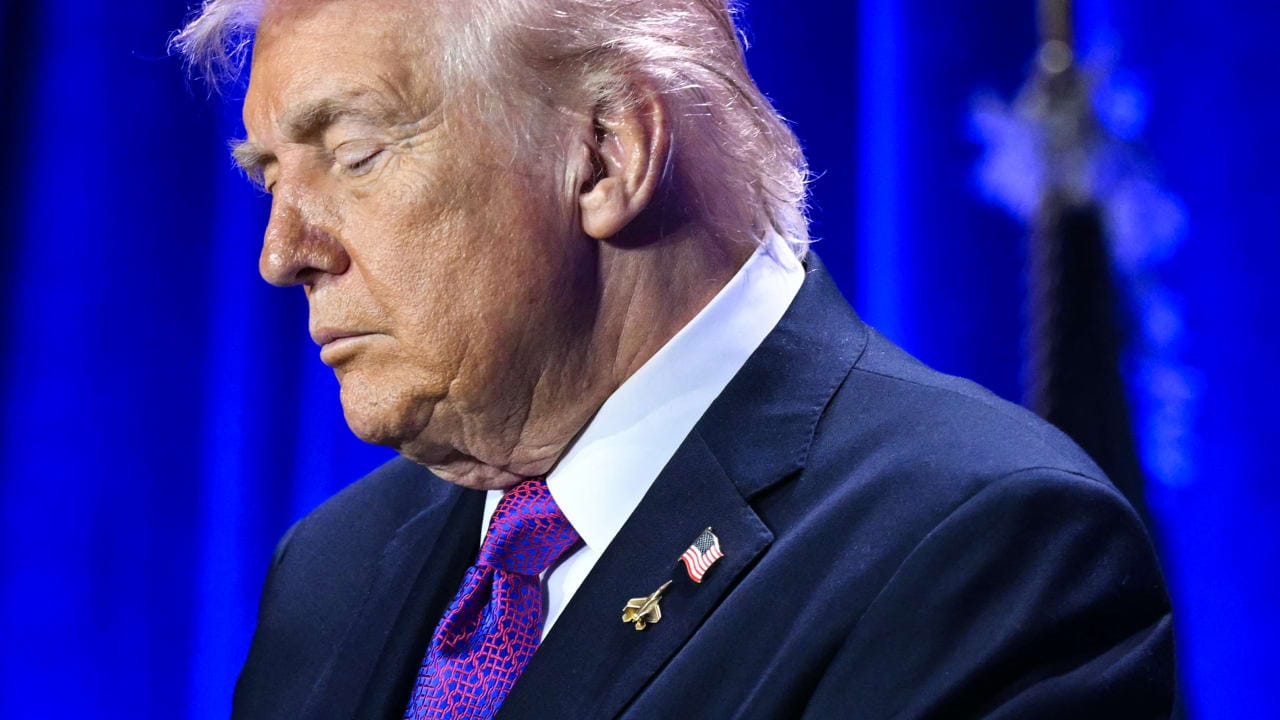
“Iran is talking to us because it doesn’t want us to attack them,” Trump said on Thursday.
According to Al Jazeera, the US is demanding that Iran dismantle its nuclear program, reduce the range of its ballistic missiles so they cannot reach Israel, and grant “a kind of amnesty” to those arrested during the 12-day war and the recent protests.
It added that America was also requesting that the Islamic Republic reduce oil exports to China and strike an agreement that will end the current hostility between Iran and America.
Further, the report claimed, Qatar, Turkey, and Egypt proposed a framework agreement under which Iran would leave uranium enrichment at a 3% level and later be allowed to enrich it to a 1.5% level overall. As for the 400 kg. of uranium enriched to 60%, this stockpile would be transferred to a third country. In addition, Iran will need to agree not to export weapons and technology to proxy groups and commit to refraining from using its ballistic missiles.
US Vice President JD Vance said in an interview that “Trump will try to achieve whatever he can through non-military means. But, if he feels that the military option is the only one left, he will choose that.”

Conflict over topics to be discussed
One of the main issues where gaps remain between the US and Iran is what the talks will actually cover.
The Iranians insist, at least publicly, on discussing only the nuclear issue, while the US administration is determined to negotiate on other matters as well.
“I think the room for flexibility exists only on the nuclear issue,” said Dr. Raz Zimmt, the director of the Iran and the Shi’ite axis research program at the Institute for National Security Studies (INSS).
“I see no room for flexibility on the proxy issue or on ballistic missiles. At most, the Iranians might say: ‘Let’s reach an agreement on the nuclear issue, and if that succeeds, then we can talk about other issues in the next stage.’”
The doctor went on to say that he would be amazed if Iran agreed to any concessions on missiles, since they are currently the only tool that provides Tehran with a certain level of deterrence – even against Israel.
“Giving up the nuclear issue isn’t really a concession, because they don’t truly have a nuclear program,” Zimmt said. “They have an air force that cannot take off – so how would they create deterrence?”
According to him, the central question is what Iran would demand in return for any concessions. “Is Trump willing to release billions of dollars to them? I hope not. Will the snapback sanctions be lifted? This is where many problems are expected.”
Meanwhile, Prime Minister Benjamin Netanyahu told members of the Knesset’s Foreign Affairs and Defense Committee on Thursday that he did not know what Trump would ultimately decide, but that he and the US president were in close contact.
Regarding the possibility that the regime in Tehran might decide to attack Israel, Netanyahu said, “If the Iranians attack us, we will respond with a force the likes of which has never been seen.”
During a meeting convened this week by Netanyahu with Witkoff, IDF Chief of Staff Lt.-Gen. Eyal Zamir said that “if Israel is attacked, we will strike surprising and unexpected targets.”