
Media coverage and demonstrations related to the IDF’s entry into Rafah received approximately 100 times more attention than those addressing the Iranian protests, a Jewish People Policy Institute (JPPI) study released Thursday revealed.
The study examined the disparity between the global response to the scale of violence during the protests in Iran and the response to the Israel-Hamas war, particularly the IDF’s entry into Rafah, and was conducted by the Glazer Information Center at JPPI, with Shlomi Berznick, Eli Kanai, and Yaakov Katz serving as the responsible researchers.
JPPI President Prof. Yedidia Stern said the research aimed primarily to demonstrate that when Israel conducts a “defensive war against armed terrorist organizations that attacked it, it is judged harshly.”
By contrast, Stern noted that when the Islamic regime “massacred its own citizens, who are defenseless,” the response from the international community was relatively modest.
Among its findings, the JPPI study highlighted significant gaps in both the volume of international media coverage and the number of protests held in the United States surrounding each issue.
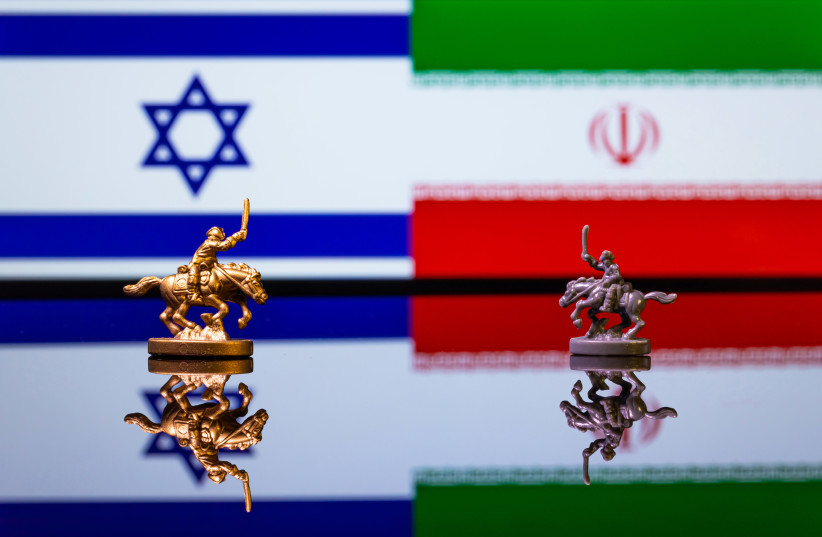
As part of the analysis, the number of protests in the United States related to Israel’s entry into Rafah was compared with protests addressing the suppression of demonstrations in Tehran. These figures were then cross-referenced with the volume of international media coverage in leading outlets focused on both events.
To ensure comparability, the researchers used two identical 22-day time windows. The analysis revealed substantially greater traction surrounding the Rafah case, a trend linked in part to the social media campaign “All Eyes on Rafah.” This period also coincided with a wave of protests on US college campuses.
To analyze protest activity, the study relied on the Crowd Counting Consortium, the largest database documenting protests in the United States, including their locations, organizers, and central messages.
Only 25 protests held in US over Iran crackdown
The findings showed that only 25 protests were held in the United States during the period of the Iranian protest crackdown. In addition, not all of these demonstrations expressed solidarity with the Iranian protesters, with some instead calling for avoiding American involvement in the unfolding violence.
In contrast, during the Israel-Hamas war, 476 protests against Israel were held, along with 2,120 protests in the United States during the 22-day period examined around the IDF’s entry into Rafah.
The JPPI study also examined the involvement of human rights organizations and women’s groups in both contexts. The data showed that during the Iranian demonstrations, organizations that led protests against Israel were absent from expressions of solidarity with the Iranian protesters.
Among the organizations examined were Codepink, Kalamazoo Nonviolent Opponents of War, and Geneva Women’s Assembly.
To assess media coverage, JPPI used the Lexis-Nexis database to review reporting in major international outlets, including Al Jazeera (English), CNN, CBC, NPR, Sky News, the Los Angeles Times, the Washington Post, the Chicago Tribune, Axios, Politico, the Times of India, the Irish Times, Time, and the Daily Telegraph.
The resulting data showed that, during the period of the IDF’s entry into Rafah, the coverage of the Palestinian issue was nearly twice as extensive as coverage of the Iranian protests during their violent suppression.
According to the authors of the JPPI study, conflicts involving Israel receive a particularly high level of attention, which may at times be disproportionate when compared with more severe events elsewhere. The researchers concluded that these findings point to a clear bias in the international discourse surrounding Israel.