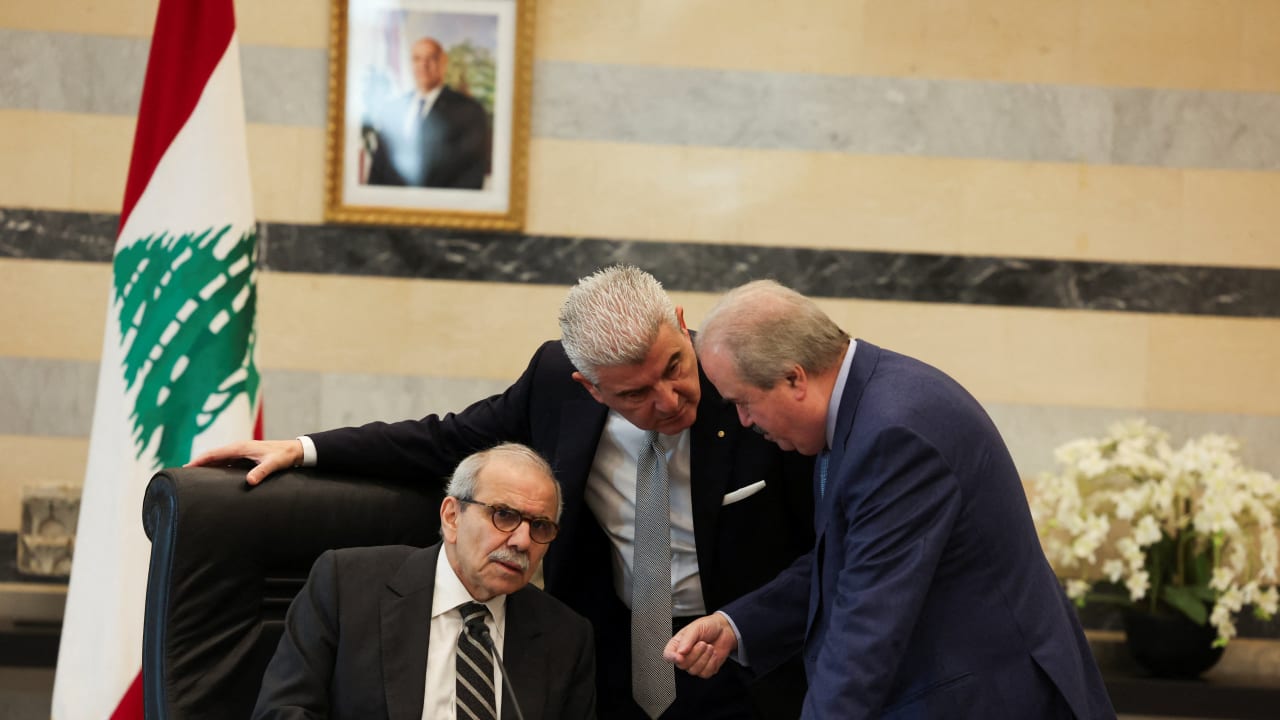
The Lebanese government is angry that Hezbollah is dragging Lebanon into the war with Iran. Israel had warned the terror organization not to get involved. However, rockets were fired at Israel overnight between March 1 and 2.
Israel launched retaliatory strikes and warned of a widening war that would include Lebanon. Israeli officials have warned Lebanon in the past to keep Hezbollah out of the war.
Now, Arabic media reports have claimed that Lebanon’s Prime Minister Nawaf Salam is seeking to ban Hezbollah’s “military activities.” This would appear to be purposely worded to avoid banning the “political” part of Hezbollah, which is in Lebanon’s parliament.
This is one of those features of the region where Iranian-backed groups have an “armed wing” and a “political wing.”
This is how Iran controls countries in the region. It arms proxies and then also demands that they be allowed to run for office. This essentially makes it hard to get rid of Iranian-backed political groups because they are so well armed that it’s hard to ban them.

Lebanese PM, president seek to disarm Hezbollah
Al-Ain media in the UAE reported on March 2 that “Lebanon announces a ban on Hezbollah’s military activities.” The report said, “In a historic development, the Lebanese government announced on Monday a ban on Hezbollah’s military activities and restricted its work to the political arena… The Lebanese government also tasked the army with decisively implementing the decision to restrict weapons to the state, in a session that lasted four hours.”
Salam and Lebanese President Joseph Aoun have been seeking to disarm Hezbollah for a year. They were supposed to do so after the November ceasefire between Israel and Lebanon. However, they have so far been unsuccessful in disarming the group, though they claimed to have made progress south of the Litani River. However, it is unclear whether their claims can be verified.
How many weapons has Beirut actually collected from Hezbollah? Al-Ain noted that Salam said that “the authorities would impose a ban on Hezbollah’s military activities and restrict its activity to the political sphere only,” at a press conference following a cabinet meeting on Monday.
The media report noted that “the Lebanese government’s move came after the party launched a missile attack on Israel in response to the killing of Iranian Supreme Leader Ali Khamenei... Prime Minister Nawaf Salam said that the Cabinet condemned the firing of missiles from Lebanon, which constitutes a violation of the agreement and Cabinet decisions.”
Salam said that “the state has declared its absolute rejection of any military actions launched from its territory and affirms that the decision of war and peace is in its hands, which necessitates banning the party’s activities and obliging it to surrender its weapons and commit to political action.”
The Lebanese military is now supposed to swing into action. Lebanon’s military chief, Rudolph Haykal, visited the United States last month to meet with US Central Command and other US officials. He has been praised by CENTCOM in the past.
Lebanon is now claiming that it is increasing pressure on Hezbollah south of the Litani River and considering how to disarm it north of the river.
The pro-Iranian Al-Akhbar media in Lebanon also noted that “Prime Minister Nawaf Salam announced a ban on Hezbollah’s military and security activities, stressing that any military actions launched from Lebanese territory outside the framework of legitimate state institutions are completely unacceptable.”
It also reported that, after the cabinet meeting at Baabda Palace, Salam said that Hezbollah’s missile launch constituted “a violation of the cabinet’s decisions and a transgression of the will of the majority of Lebanese, and contradicts the principle that the decision of war and peace is the sole prerogative of the Lebanese state, and also contradicts the rejection of dragging Lebanon into the ongoing regional war.”
This report indicates that Beirut is indeed asking the military and security agencies in Lebanon “to take immediate measures to prevent any military operation or the launching of missiles or drones, and to arrest violators in accordance with the laws and regulations in force, stressing to the army leadership to immediately begin implementing the plan that was presented in the session of February 16 to confine weapons north of the Litani River, and to use all means to ensure its firm implementation.”
Lebanon will need to provide proof that it can actually disarm Hezbollah.
It is possible that Israel’s threats may finally get Beirut to actually do what it has promised to do. However, decades of misleading statements and broken promises from Beirut have suggested that it was afraid to confront Hezbollah.