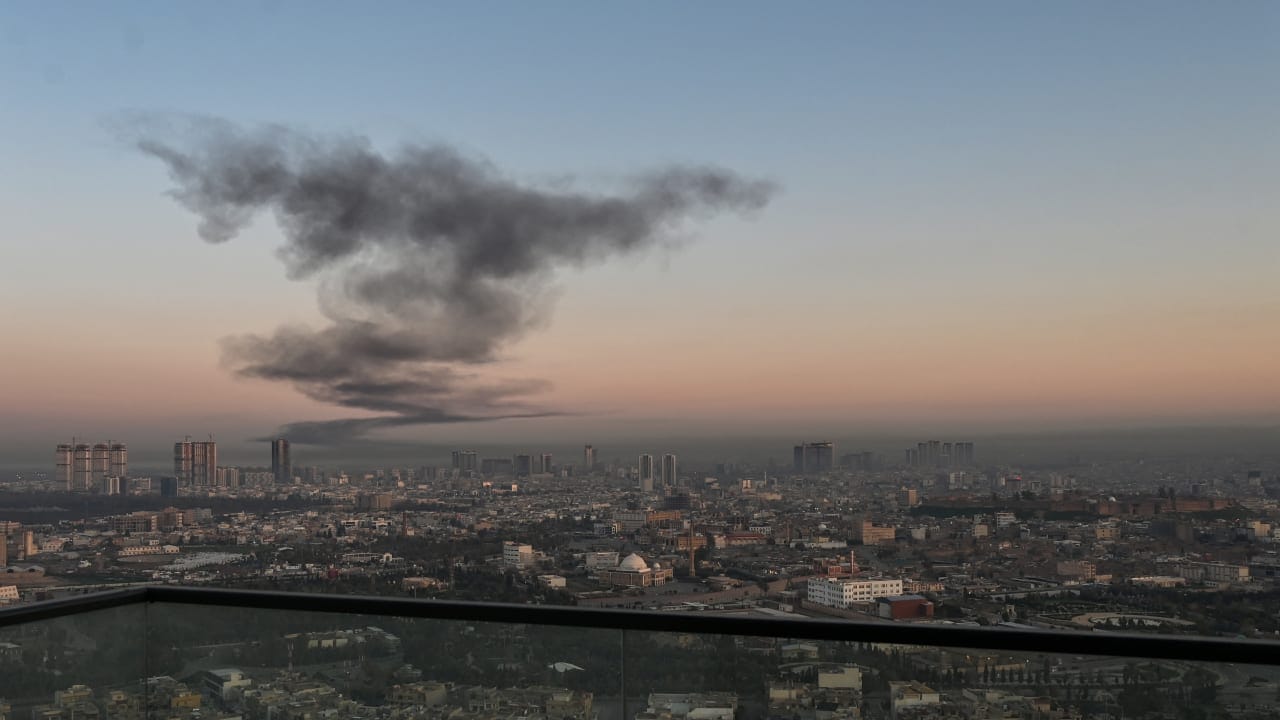
Iran is seeking to pre-empt any uprising by Kurdish opposition groups in Iran by striking at their bases in the Kurdistan Region of northern Iraq, while also using its Iranian-backed militias in Iraq to increase attacks on US forces in the Kurdistan region and to threaten Kuwait, Saudi Arabia, Jordan, and other countries.
This is part of Iran’s attempt to turn Iraq into a “Near Abroad,” essentially a buffer zone and a war zone.
The concept of a “New Abroad” was part of Russia’s foreign policy to create a large buffer between Russia and Europe, using Ukraine and parts of Poland for this purpose, and Iran now wants to do the same with Iraq.
After the fall of Saddam’s regime in 2003, Iran has slowly begun to take over Iraq. It had done this by making Iraq dependent on Iran’s economy and by arming militias in Iraq.
The Shi’ite militias play a dual role. They are part of the Hashd al-Shaabi or Popular Mobilization Forces, which has been an official paramilitary force since 2018. They also act independently and stockpile weapons and even run secret prisons.

Iran can activate the militias when it wants and has several powerful militias, such as Kataib Hezbollah.
These groups function like Hezbollah in Lebanon, and now Iran is using them to attack US forces in the Kurdistan Region. The US largely withdrew from the rest of Iraq in 2019.
Now, US forces are based in various areas of the autonomous Kurdistan Region of northern Iraq. This includes sites in Erbil near the Airport and a base called Harir, although it appears the US has likely moved forces from areas that might be threatened.
The militias are raining down kamikaze drones in various areas. One recent target is a hotel in Erbil. The militias apparently believe US personnel were at the hotel.
Iran targeting Erbil airport, Kurdish opposition groups
The major targets of the Iranian attacks are Erbil airport and also Kurdish opposition groups such as the Kurdistan Freedom Party or PAK and the Democratic Party of Iranian Kurdistan – PDKI. Both groups say they have been targeted.
According to Iraqi Foreign Minister Fuad Hussein, Erbil has been “targeted with more than 70 missiles and drones as regional tensions continue to spill over into Iraq,’ Rudaw media in Erbil said.
Iraq has “become a victim” of Iran’s war with the US and Israel, Iraq’s foreign minister apparently said this week. Rudaw notes that Iraq “is facing attacks from different parties involved in the conflict, further complicating the security situation.
The city of Erbil has been targeted with more than 70 missiles and drones, while other parties have struck locations in southern and western Iraq,” Hussein told the UAE’s Abdullah bin Zayed Al Nahyan, according to a statement from his office.
“The foreign minister reiterated Iraq’s firm position calling for a ceasefire and the containment of escalation in order to protect civilians and safeguard the security and stability of the region,” the Iraqi statement added.
Iran’s goal is to try to spread the war to Iraq.
If Iraq is a frontline, then Iran assumes that resources will be spent by the US and others in Iraq, rather than in Iran.
Iran likely reads the same news that others do and is aware that there is talk about Kurdish opposition groups being more active in Kurdish areas of Iran.
These areas are called Eastern Kurdistan or Rojhelat among Kurds. Five Kurdish opposition groups united in a coalition on February 22 to oppose the regime. They set aside ideological differences for the greater battle. The groups include the PAK, PDKI, as well as PJAK, Komala, and Khabat. Iran hopes to keep the war in the Kurdistan Region of Iraq and thus pre-empt a battle in Rojhalat.