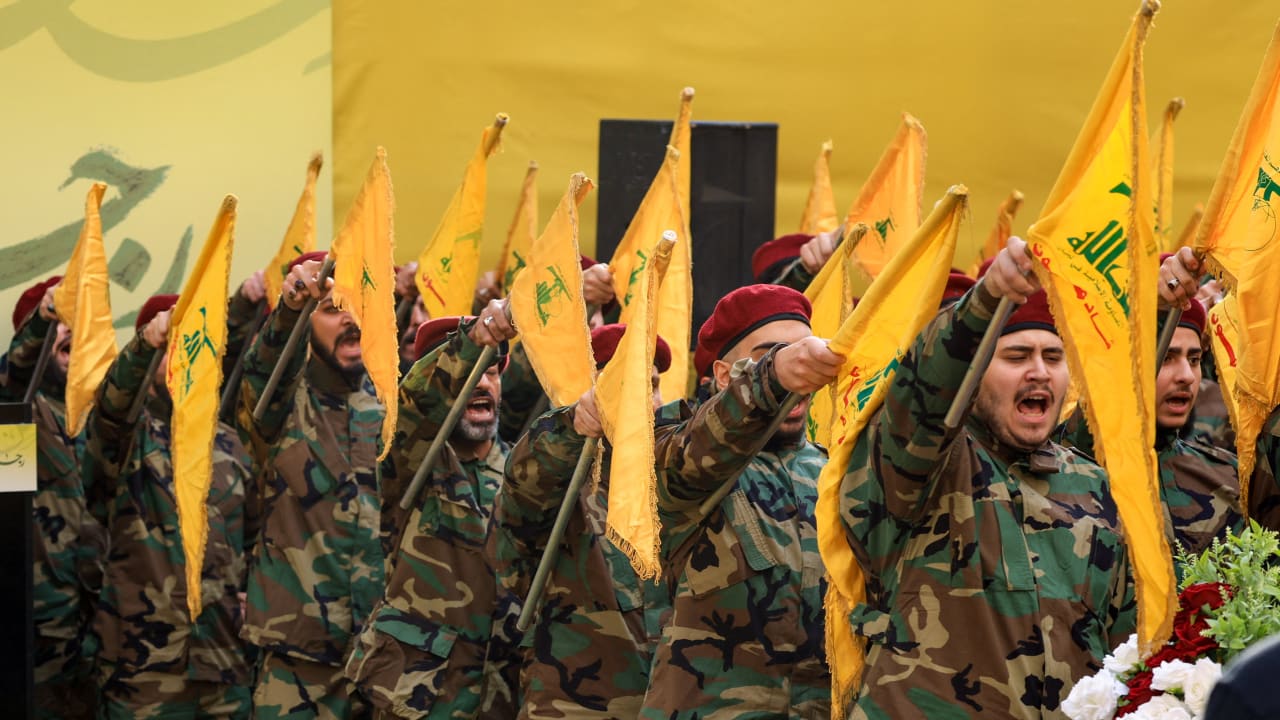
A Hezbollah terrorist fired an anti-tank missile at IDF troops in southern Lebanon on Tuesday. No damage was caused, and no injuries were reported. The IAF eliminated the terrorist, along with additional terrorists, shortly afterward.
When Hezbollah opened fire on October 8, 2023, a day after Hamas’s massacre, Israel’s instinct was to pull its people back.
Entire communities along the northern border were emptied amid fear that Hezbollah might try to penetrate the North as Hamas did in the South. Ultimately, between 60,000 and 80,000 people from the Galilee were evacuated, part of a nationwide evacuation effort that affected more than 200,000 Israelis.
The logic then was straightforward: Reduce civilian exposure, prevent casualties from anti-tank missiles and cross-border raids, and give the IDF operational freedom along the frontier.
Today, as war with Iran intensifies and Hezbollah has – as it did on October 8 – formally joined the fray, Israel is doing the opposite.
This time, senior officials are saying explicitly: No evacuation.

Finance Minister Bezalel Smotrich said, “This time we are not evacuating anyone.” IDF Northern Command chief Maj.-Gen. Rafi Milo has stated the IDF is prepared “in defense and offense,” and that strikes in Beirut and southern Lebanon will intensify.
New doctrine: Israel defends north without evacuations
The message is clear: Civilians will remain in place while the military takes the fight deep into Lebanese territory.
This is not just a change in tactics; it is a doctrinal reversal.
The contrast is stark. Last time Hezbollah attacked, Israel sought to protect its citizens by moving civilians away from enemy fire. This time, it aims to move enemy fire away from civilians.
Defense Minister Israel Katz said on Tuesday that to prevent the possibility of direct fire at Israeli communities from Lebanon, the IDF is authorized to “advance and hold additional dominant terrain in Lebanon and defend the border communities from there.”
And this is not just rhetoric.
The IDF increased its ground presence in southern Lebanon, moving beyond the five forward positions it previously maintained and controlling strategic terrain overlooking the border.
Rather than creating a buffer zone inside Israel by emptying Israeli towns, the army is attempting to establish depth on the Lebanese side by physically holding key terrain.
This new policy also reflects hard lessons learned after October 7.
Last month, the State Comptroller’s Office issued a highly critical report describing the evacuation and absorption process that followed the massacre as “complete disorder.”
As of October 7, Israel had no approved national operational evacuation plan. When the war broke out, municipalities improvised. In the South, some communities evacuated themselves under fire.
In the North, Kiryat Shmona was not even formally included in the framework; around 10,000 residents left before any official decision was made.
Evacuees were sent to hundreds of hotels across the country, and the state ultimately spent billions on housing displaced residents. Education systems were disrupted, businesses collapsed, agriculture stalled, and social cohesion frayed. Many northern communities have still not fully recovered.
Evacuation saved lives, but it also exacted a heavy price – economic, social, psychological, and strategic.
Strategically, critics argued that large-scale evacuation created a de facto security zone inside Israel. Hezbollah did not have to conquer territory; it merely had to make it uninhabitable through sustained fire.
Further, the images of empty towns signaled vulnerability and weakness, suggesting that the state could not protect communities along its borders. The perception took hold that Hezbollah did not need to invade; it only needed to fire.
That experience now looms over every discussion about whether to evacuate again.
In 2023, Israel feared a coordinated, surprise ground invasion from both Gaza and Lebanon. Evacuating a strip of up to five kilometers from the border reduced vulnerability to anti-tank missiles and possible cross-border raids. It bought time.
In 2026, the context is different. Israel is at war with Iran, and Hezbollah’s capabilities are not what they once were.
Israel killed much of the terrorist organization’s senior leadership in 2024 and significantly degraded its rocket and missile capabilities. Israeli intelligence and air power are operating aggressively inside Lebanon.
IDF forces along the northern border have been reinforced.
In short, the strategic balance has shifted.
The doctrine now is forward defense.
Instead of emptying towns to create military maneuver space, the IDF is expanding maneuver space by pushing operations north of the border. Instead of moving Israelis away from the frontier, it is attempting to push the effective line of threat farther away from Israeli homes.
This approach has its advantages.
Keeping communities in place helps their economy and social cohesion. It denies Hezbollah the psychological victory of empty Israeli towns. It signals confidence and resilience, and enhances deterrence.
But there are risks as well.
Evacuation reduces exposure to danger. Staying put does not.
Rockets, drones, and anti-tank missiles pose real and immediate threats. Shelters and active defense reduce risk, but they do not eliminate it. Moreover, there are significant gaps between what communities in the North need in terms of shelters and in-home safe rooms and what they actually have.
In the months from October 7 to March 2026, Israel’s policy on this matter has swung from one pole to the other.
In the immediate aftermath of October 7, evacuation was seen as necessary but chaotic.
Today, non-evacuation is framed as resilience and deterrence. In 2023, Israel protected its citizens by removing them from danger. In 2026, it seeks to protect them by pushing the danger away.
That difference is significant.