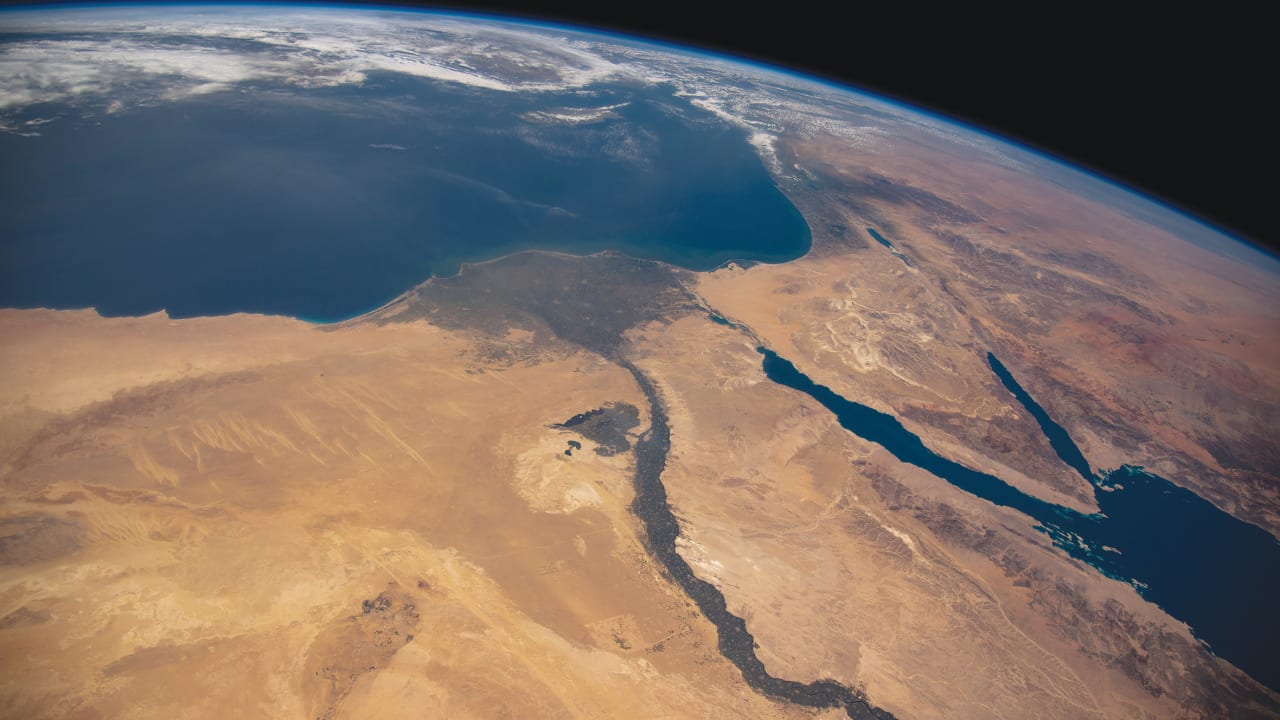
The Middle East in 30 years
Asharq Al-Awsat, London, February 27
For more stories from The Media Line go to themedialine.org
The region stands today on the brink of a new phase, as established and effective powers work to consolidate their positions, rising powers test their capacity to ascend, and others indulge the illusion that a fleeting moment of advantage has cleared the path for lasting hegemony. The central question, then, is this: What will the Middle East look like 30 years from now?
At its core, this is not a question about who commands the loudest rhetoric, nor about who wagers on external actors to engineer change on their behalf. It is a question about who possesses a viable, sustainable project for the future. Years ago, Saudi Crown Prince Mohammed bin Salman suggested that the Middle East could become the “new Europe.” His remark was less a geographical or civilizational comparison than a reference to a political trajectory – a shift from the logic of perpetual conflict to the logic of economic integration.
Europe offers a living example: after decades of devastating wars that exhausted its nations, it concluded that there was no alternative but development. And development could only be secured through effective partnership grounded in stability. European countries, therefore, chose to build a common market and establish a long-term peace anchored in shared interests rather than fragile balances of deterrence.
Despite the clarity and depth of the European model – a model that could well shape our own region three decades from now – some states interpret the current moment differently. They see in ongoing global transformations and in the preoccupation of major powers with other pressing international crises, a historic opportunity to leap into a leadership role. Yet regional leadership is not a vacuum to be filled with slogans; it is a responsibility constructed on firm foundations, foremost among them a productive economy, stable institutions, internal legitimacy, and both regional and international acceptance.
Absent these pillars, ambition becomes a liability, and the pursuit of dominance begins to resemble a costly gamble.
Most troubling of all is the reality that some ambitions extend no further than serving as an “agent” of a larger regional or global power, relying on its political or military umbrella to bolster their standing. Such a rise is inherently fragile, tethered to external will. It advances when that patron advances and recedes when strategic calculations shift.

Thirty years from now, only those states that have built independent decision-making capacity will endure as consequential actors; those content to function as intermediaries or instruments in others’ conflicts will not.
Consider Israel today. It is undeniably a formidable military and technological power, with global influence in innovation, yet it confronts a profound question about the nature of its political project. When Thomas Friedman criticized the policies of Benjamin Netanyahu’s government in The New York Times, he was issuing a warning: the relentless pursuit of permanent facts on the ground without a credible political horizon risks transforming military superiority into a strategic burden. Hard power can deter adversaries, but it cannot secure regional acceptance or resolve the deeper struggle for legitimacy.
The same principle applies to regional states that depend on armed proxies or extend their influence across multiple arenas through the backing of militias. Influence that is not rooted in cohesive internal development and a resilient economy inevitably becomes a drain. Nations are not judged by the number of active fronts they sustain, but by employment opportunities, the quality of education, the standard of public services, and the sense of security they provide their citizens.
Three decades from now, the Middle East will either emerge as a zone of cross-border economic integration or remain a permanent chessboard for proxy wars. In the first scenario, entrenched conflicts – foremost among them the Palestinian question – will be addressed through courageous compromises, and a regional order will take shape around shared interests in energy, technology, and supply chains.
In the second, the cycle will persist: crises will repeat themselves, alliances will shift, and historic opportunities will slip away. In the end, the future shows little mercy toward illusions. Nations that craft cohesive national projects, strike a careful balance between security and development, and recognize that regional legitimacy must be earned rather than imposed will claim a seat at the table of decision-making 30 years from now.
Those who imagine that wealth alone, or a transient period of instability exploited through interference in other states’ affairs and the sponsorship of militias, is sufficient to impose illegitimate dominance will find that history does not assign leading roles to the unprepared. The region is being reshaped in real time, and the decisive question is not who dreams of leadership, but who has earned it – and who can sustain it.
– Zaed Bin Kami

On the brink of war: Lebanon between vision and slogans
Nida Al Watan, Lebanon, February 27
Lebanon stands today on the precipice of an exceedingly dangerous phase, amid intensifying speculation about a possible US strike against Iran and the likelihood that its repercussions would extend well beyond Iranian territory to encompass Tehran’s spheres of influence across the region.
Lebanon, in particular, remains vulnerable to a range of scenarios because of Hezbollah’s organic connection to the Iranian project and its continued maintenance of weapons, as well as a military and security apparatus operating outside the framework of the state. Statements issued by Hezbollah’s leadership – especially those delivered by Sheikh Naim Qassem regarding the party’s readiness to open a Lebanese front in support of Iran in the event of confrontation – effectively place the country at the center of a perilous regional equation.
The gravest danger lies not merely in the prospect of being dragged into yet another devastating war, but in the state’s passivity as the country is pulled toward that abyss. Most striking in this unfolding scenario is the absence of Lebanese authorities willing to shoulder their responsibilities. There are no clear political initiatives, no concrete measures to reassert state sovereignty, and no meaningful effort to restore the confidence of Arab and international partners. Silence – or reliance on vague platitudes and recycled slogans – has come to define the official posture at this critical hour.
Lebanon cannot afford either delay or reckless calculation. What is urgently required are clear, decisive steps from those in power that place the national interest above all else and reaffirm a fundamental principle: the security and stability of the Lebanese people are not bargaining chips to be traded on Iran’s behalf, but an absolute priority that must not be compromised under any circumstances.

It is therefore fitting, on the 21st anniversary of his assassination, to invoke the memory of the martyred prime minister Rafic Hariri and measure the vast distance between an era when a leader advanced a coherent national project and actively engaged the world to safeguard the country, and the present moment, in which officials appear mired in ambiguity, evasion, and empty rhetoric.
Hariri may well have been the only leader of his generation to articulate a clear vision and actionable plan for Lebanon’s future and to begin implementing it. At the heart of that vision was reconstruction as the essential pillar for emerging from civil war, dismantling the psychological and physical barriers among the Lebanese people, and restoring the state’s authority while building political, economic, and social resilience. That resilience, in turn, was intended to enable Lebanon, at the appropriate moment, to loosen the grip of Syrian tutelage and position itself to engage constructively with the regional peace process then taking shape.
His project can be distilled into a simple yet ambitious objective: to move Lebanon from the logic of war to the horizon of peace and toward the normalization of a state engaged in positive, interest-based relations founded on mutual respect and trust with both the Arab and international communities. In stark contrast, today’s leadership offers no responsible road map to confront mounting risks, no strategic vision, and no credible plan for the future.
Instead, citizens are presented with hollow assurances and vague promises unaccompanied by timelines or mechanisms for implementation. Governance has devolved into the management of perpetual crisis and the distribution of spoils, rather than the construction of a sustainable future. Restoring Lebanon to its rightful place requires a series of well-known and unequivocal steps: bringing all weapons under the exclusive authority of the state, undertaking genuine structural reforms and a serious campaign against corruption, rebuilding what has been destroyed on the basis of transparency and accountability, and repositioning Lebanon within the regional order – including confronting, with clarity and resolve, the question of peace with Israel.
It must be stated plainly that pledging reconstruction without pursuing the major political settlements necessary to secure lasting stability and eliminate existential risks – foremost among them a durable peace – amounts to little more than selling illusions to the people of southern Lebanon. Oscillating between grandiose slogans and paralyzing inaction risks placing the country once again at the center of a gathering storm. Lebanon does not need further drift or theatrical declarations; it needs a coherent national project, a forward-looking vision, and the political courage to carry it through – a project capable of redefining Lebanon’s role and restoring confidence at home and abroad alike. – Marwan El Amine
The Horn of Africa and the struggle to redraw maps of power and influence
Al-Masry Al-Youm, Egypt, February 27
The Horn of Africa is experiencing a pivotal moment of transformation that is reshaping its strategic balance. Internal conflicts are increasingly intertwined with intensifying regional and international rivalries, pushing the region toward escalation that could spill beyond its geographic confines.
Rising tensions between Ethiopia and Eritrea, renewed clashes in Tigray, Israel’s recognition of Somaliland, and the memorandum of understanding signed in January 2024 between Ethiopia and Somaliland are not isolated developments. Rather, they signal an accelerating trajectory aimed at redrawing the map of power along the African shore of the Red Sea, one of the world’s most critical geopolitical hubs for global trade and maritime security. The surge in diplomatic activity – including Turkish President Recep Tayyip Erdogan’s visit to Addis Ababa and the visit of President Isaac Herzog to Ethiopia – highlights mounting international focus on the Horn as a geopolitical axis shaping the balance of power in the Red Sea, energy security, and global commerce.
These shifts are inseparable from the Horn’s exceptional geography. Overlooking the Bab el-Mandeb Strait – the chokepoint linking the Indian Ocean to the Red Sea and the Suez Canal – the region occupies a position of immense strategic consequence. The uninterrupted flow of navigation through these waters is fundamental to energy security and global supply chains, explaining the expanding international presence and competition to secure influence and protect strategic interests.
Within this framework, Ethiopia’s ambition to secure access to the Red Sea assumes an urgent security dimension.
As a landlocked state, Ethiopia regards maritime access as a strategic necessity to guarantee commercial autonomy and enhance geopolitical maneuverability. Yet this pursuit is fraught with political and security complexities, particularly given Eritrea’s insistence on sovereignty over its ports and rejection of any arrangement that could affect borders.
Ethiopia’s January 2024 memorandum with Somaliland granting access to the Port of Berbera has sharply heightened tensions with Somalia’s Federal Government and stirred broader regional anxiety, as ports and maritime gateways increasingly function as instruments of strategic leverage. This unfolds against Ethiopia’s fragile internal landscape, marked by renewed tensions in the Tigray region that expose the limitations of the settlement that ended the war and highlight the persistent risk of renewed conflictTigray’s proximity to Eritrea and the Red Sea renders its stability critical to safeguarding maritime corridors and maintaining regional security dynamics stretching from the Red Sea to the Gulf of Aden. Addis Ababa’s reported engagement with Sudan’s Rapid Support Forces (RSF) further complicates the picture. Efforts to cultivate new spheres of influence – including training facilities for RSF elements near the Sudanese border – intersect with historically fraught relations with Eritrea, increasing the danger of cascading regional confrontations.
This raises the prospect of overlapping theaters of conflict between the Horn and eastern Sudan, potentially jeopardizing land and sea routes essential to trade and energy flows and prompting regional and global actors to expand military and naval deployments along one of the world’s most sensitive waterways.
Israel’s recognition of the self-declared Republic of Somaliland adds another layer of complexity, with implications for the redistribution of influence over ports and maritime routes in the Red Sea and the Gulf of Aden. The move reflects an effort to consolidate its presence within a shifting regional landscape and secure vital waterways, informed by historical precedents such as the closure of the Bab el-Mandeb Strait during the October 1973 war and ongoing security challenges in the Red Sea arena.
At the same time, this recognition risks emboldening separatist movements, exacerbating fragmentation, heightening vulnerabilities around critical ports and sea lanes, and transforming a localized political question into a focal point of regional and international competition tied to energy security and global trade. These dynamics coincide with intensifying global competition over the Red Sea.
The US seeks to safeguard trade routes and counter Chinese influence; China aims to secure its Belt and Road Initiative; Russia pursues a maritime foothold; and Turkey strengthens its presence through the TURKSOM base in Mogadishu, its largest overseas military installation. This web of intersecting ambitions is transforming the Horn into an open arena of strategic rivalry. Against this backdrop, the Horn stands at a crossroads where regional ambitions intersect with major power calculations, and sovereignty collides with the imperatives of global maritime security.
While full-scale war may remain unlikely, unresolved tensions risk entrenching a prolonged cold conflict capable of redrawing alliances and influence. The stability of the Horn of Africa will depend on whether regional and international actors can convert competition into a sustainable balance of power and channel confrontation into cooperation before dispersed flashpoints coalesce into a broader strategic crisis.
– Amr Helmy
A Profound Disconnect From the Iraqi Public
Al Mada, Iraq, February 27
Months ago, the State of Law Coalition declared that the activities of the American Embassy in Iraq violated established diplomatic norms. Even earlier, Mr. Nouri al-Maliki, head of the State of Law Coalition, stated in a televised interview that “the engagement of all ambassadors around the world is conducted through the mediation of the host country and cannot bypass it to build direct social relations with tribes, women, civil society organizations, or political forces.”
He added that the “American ambassador, through her activities, breached these diplomatic norms and began forming social ties and holding meetings outside the proper framework.” Some will ask: What is new here? Maliki, they argue, is merely defending the sovereignty of his country, which the former ambassador was allegedly attempting to undermine. Subsequently, a leader within the State of Law Coalition at the time, Mohammed al-Sayhoud, called on the government to take a clear position on these actions, which “constitute blatant interference in Iraq’s internal affairs.” He was backed by his colleague Muhammad Al-Shammari, who accused the American Embassy of behaving as though diplomatic conventions did not exist.
He then directed a rhetorical question to us – the citizens who have no influence over an ambassador’s conduct – asking: “Can the Iraqi ambassador in Washington act in such a manner?” The answer, of course, is no. But has our saga with the embassy come to an end? Certainly not; there is always another chapter. Just yesterday, Mr. Abbas al-Bayati, one of the hardliners of the State of Law Coalition, appeared on television and again brought this issue up. Bayati went on to outline the advantages of contracts with American companies and even emphasized that US policy is shaped by oil companies – a reality, he suggested, from which Iraq should seek to benefit.
But I urge you not to get excited. Iraqi democracy, as practiced, ensures that the citizen remains a spectator while politicians operate as partners in a shared enterprise, each safeguarding the interests of the other, protecting each other, and extending courtesy to the colleague with whom he divides the Iraqi pie in prosperity and in crisis alike. That is why it was deemed necessary for Maliki to publicly criticize the ambassador, only to return later to advocate cooperation with her. Maliki, head of the State of Law Coalition, devotes his valuable time these days to drafting statements and speeches – one day vowing to thwart an American conspiracy, the next urging the swift implementation of agreements with Uncle Sam.
Unfortunately, many of our politicians suffer from a profound disconnect with the Iraqi citizen who, despite his good faith and his eagerness to understand politics, finds himself unable to reconcile what is proclaimed in public with what is arranged behind closed doors. Today, when some are persuaded that America will alter its rhetoric simply because Bayati has praised it, or because Maliki declared in his latest interview that “the relationship with America is essential for Iraq’s progress,” such thinking amounts to little more than a defense of immature political projects.
– Ali Hussein
Translated by Asaf Zilberfarb. All assertions, opinions, facts, and information presented in these articles are the sole responsibility of their respective authors and are not necessarily those of The Media Line, which assumes no responsibility for their content.