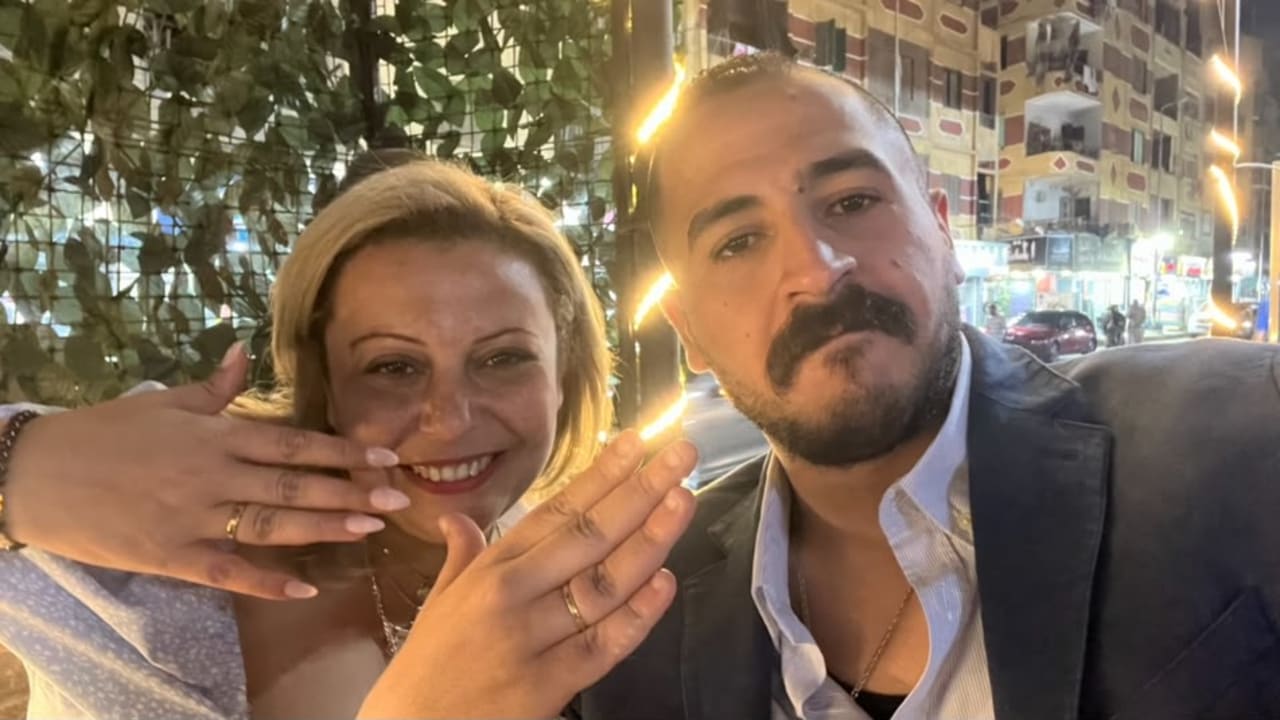
“They tried to remove his cross tattoo. They tortured him. They had him crucified the whole time that he was there,” the fiancée of Said Mansour Rezk Abdelrazek, an Egyptian convert to Christianity who faces the possibility of execution, told The Jerusalem Post, describing the abuse he has endured after being charged as punishment for leaving Islam.
Abdelrazek was arrested in July 2025 and has been detained by Egyptian authorities since then. His lawyer, Said Fayez, confirmed on Tuesday that Egyptian prosecutors are pursuing the “maximum penalty,” either execution or 25 years in prison. According to the NGO Coptic Solidarity, Abdelrazek faces charges of contempt for Islam, inciting public disorder, disseminating false information, and joining a banned terrorist organization that allegedly does not exist.
Fayez’s office has asserted that the terrorist organization authorities have accused him of belonging to is entirely fictitious and that the charges actually stem from his refusal to “renounce Jesus.” Sophia has also confirmed that Egyptian authorities have yet to identify the alleged terrorist organization and further alleged that at least 180 other Christians are being held by the authorities on similarly dubious charges.
Australian-Egyptian citizen Sophia met Abdelrazek on social media, where they both regularly posted about Christianity and amassed sizable followings. The two quickly fell in love, meeting in person for the first time in 2021.
Born into a Muslim family, Abdelrazek first encountered Christianity after noticing an open Bible at a neighbor’s shop. The passage he came across was the Sermon on the Mount in the Gospel of Matthew. He initially reacted angrily to what he read, but continued thinking about the passage and returned to the shop a few days later to speak with a part-time reverend.
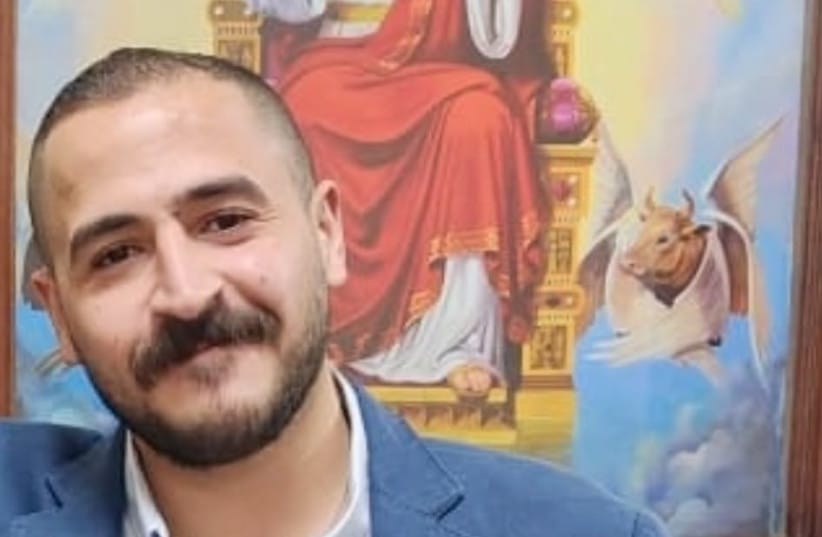
Baptized after studying Bible with Protestant church
He subsequently began studying the Bible with a Protestant Baptist church and, over time, became convinced of the faith and requested baptism, Sophia explained. Although his initial request was denied, he was eventually baptized around 2017.
Sophia said that, having grown up in a religiously observant Muslim family, Abdelrazek had never previously felt safe asking questions about his faith. Christianity offered him the freedom to question, explore, and seek answers in a way he had not experienced before.
Life became difficult when his journey of faith became public. Sophia explained that it was Abdelrazek’s own mother who initially reported him to the security services after he announced his conversion to Christianity. She said authorities spent hours attempting to pressure him into returning to his parents’ faith. His mother also took away his then-wife and son, fearing that he would lead them toward Christianity.
He was first arrested in 2023 for allegedly posting videos depicting the desecration of the Quran, for which he served a year-long prison sentence. Following his release, he fled to Russia but was deported despite the Russian High Court having ruled that he could remain in the country and the UNHCR having recognized his asylum case.
Asked why he chose Russia, given that it is not known for respecting international law, Sophia explained that he was unable to reach Australia with his weak passport. His options were therefore Turkey or Russia, and he did not want to live in another Muslim country after everything he had experienced.
After being returned to Egypt in 2024, he was briefly detained by authorities.
“He was tortured. They attempted to remove his cross tattoo and brought him Islamic religious figures. They had him crucified the whole time he was there, not with nails, but by attaching him to a wall. They also played good cop, bad cop with him,” Sophia said.
“They have this really strange idea that there are big organizations out there trying to baptize all the Muslims in Egypt, that there is big money involved, and that he knows all these people. They wanted him to become an informant on other priests and converts. He was also pressured to return to Islam and use his social media accounts to criticize Christianity.”
Authorities released him into the custody of his family on the condition that he return to Islam. When he refused, they instead required him to attend classes on Islam.
While living at his family home, Abdelrazek was subjected to escalating levels of emotional and religious abuse, Sophia said. He was repeatedly pressured to perform Islamic prayers five times a day and was eventually “pushed over the edge” when his brother-in-law began dumping pots of water over his face to wake him for early morning prayers at around 5 a.m.
“That was it for him,” she said, recounting how he began borrowing money from friends to rent his own apartment.
Sophia had been scheduled to travel to Egypt in early April 2025, where the couple planned to marry at the Australian Embassy. However, she fell ill, and the trip was postponed. Egyptian authorities subsequently rearrested Abdelrazek after he posted on social media that he intended to try to have his legal religious status changed, preventing the two from finalizing their marriage.
Fiancée launches relentless campaign to secure release
Since his arrest, Sophia has campaigned relentlessly to secure his release, fearing that he could receive the death penalty or spend the rest of his life in 10th of Ramadan Prison. She has faced frequent online abuse and death threats from Egyptian Islamists targeting her. Meanwhile, she pays around 11,000 Egyptian pounds a month to have food and clothing smuggled into the prison so that her fiancé does not go without basic necessities.
“Our lawyer has been able to visit him only once, in January, and we are banned from visiting him ourselves. We are also prohibited from sending him food, clothing, or other basic necessities,” Sophia said.
“I have to go through so many people to get him anything. I rely on other prisoners and their families, and we have to pay exorbitant amounts. It is not cheap. The items have to be smuggled into the prison and kept by other prisoners for a while so that nobody knows they are intended for him before they are eventually handed over.
“The prison where he is being held does not even allow prisoners to socialize with one another. It is not officially a maximum-security prison. The authorities refer to it as a rehabilitation facility, but it is one of the worst in the world.”
Now, Sophia told The Post that she has been forced to pin her hopes on the international community, particularly the US and the Netherlands.
The United States provides Egypt with approximately $1.5 billion in total foreign aid each year, and Sophia hopes that Washington would be willing to condition that aid on Abdelrazek’s release and improvements in the treatment of religious minorities, despite neither she nor her fiancé being American.
She also noted that Egypt has been desperately trying to secure the release of Ahmed Nasser, who was arrested by the Netherlands for having allegedly participated in campaigns of intimidation and threats at various meetings and demonstrations in 2025 and 2026, acting on behalf of a foreign power. She hopes the Netherlands would consider a prisoner exchange, particularly as she and her soon-to-be husband have no intention of residing in the Netherlands or taking resources from the state.
She described such a deal as a “humanitarian favor.”
In the meantime, Sophia and Abdelrazek are waiting for their lawyers to present their defense on December 8, 2026.
Underscoring the importance of the case, Coptic Solidarity said in a statement to The Post that the trial would be a “defining test for the future of religious freedom in Egypt.”
“His case is not isolated. Other Coptic prisoners of conscience, including Christian scholar Dr. Augustinos Samaan, Romany Gharib Adly Azer, Sherif Wagih Fahmi, and six young Christians detained over a comedy video, face imprisonment or prosecution under blasphemy and national-security provisions. Together, these cases reveal an alarming trajectory in which Egypt increasingly weaponizes its legal system to punish religious conversion, peaceful expression, and criticism of Islam,” CS continued.
“This escalating crackdown stands in stark contrast to the Egyptian government’s extensive lobbying and religious influence campaigns in Washington, which promote a carefully cultivated image of religious tolerance while obscuring the realities faced by Christians.
“The outcome of Said’s trial will have consequences far beyond one individual. A severe sentence could establish a dangerous precedent for the prosecution of religious converts and embolden authorities to pursue similarly harsh penalties against other Coptic prisoners of conscience. It will also signal whether Egyptians have any meaningful right to leave Islam and practice another religion without risking imprisonment under terrorism laws.”