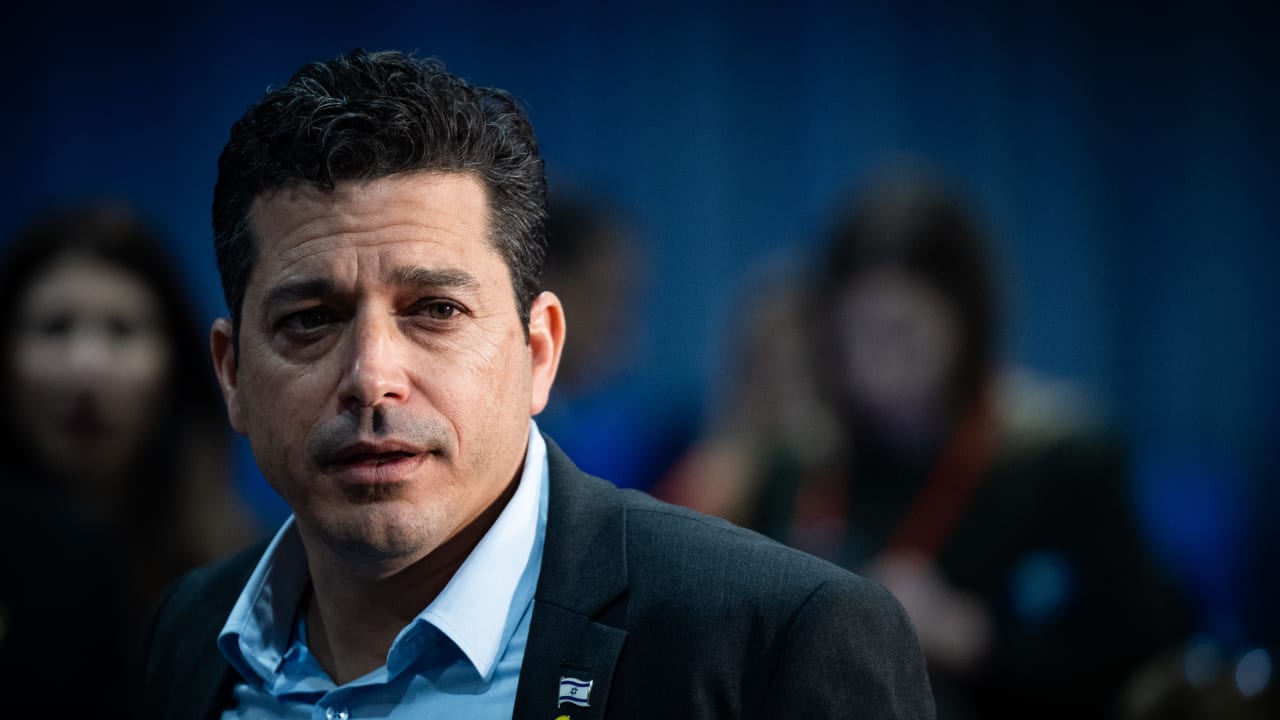
Iran launched its war against the State of Israel on October 7, 2023, Diaspora Affairs and Combating Antisemitism Minister Amichai Chikli said during an online briefing titled “Roaring Lion Unfiltered.”
Chikli stressed that the current conflict should be viewed as part of a longer confrontation with Iran.
He explained that the conflict intensified following the October 7 attacks carried out by Hamas. The reason Israel is currently striking Iran is that it came into possession of intelligence that the Islamic Republic is trying to take “what is left of its nuclear capabilities deep underground.”
Aside from strategic gains, Chikli said on Sunday that he hoped to see the Abraham Accords expand. “We hope to see Kuwait join. We hope to see Saudi Arabia join,” he said.
Shifting regional dynamics may encourage new partnerships between Israel and moderate Arab states that share concerns about Iran’s influence, he noted.

While Chikli said that crucial assistance for the Iranian people was important, he stressed that “regime change can only happen by the Iranian people themselves.”
Middle East expert Dina Lisnyansky provided historical and geopolitical context for the conflict, tracing the roots of the Iranian regime’s regional strategy to the 1979 Islamic Revolution that established the Islamic Republic.
Historical tensions shape the region
She explained that tensions between Iran and several Sunni Arab states have historically shaped regional alliances, but that many Gulf countries have endeavored to maintain stability through diplomatic engagement with Tehran.
Lisnyansky said the outcome of the current conflict could have long-term implications for Iran’s nuclear ambitions, though she cautioned that dismantling the country’s nuclear program or achieving political change inside Iran would likely require sustained international pressure over time.
She also addressed the threat to Jewish communities abroad: “Representatives of Jewish communities all over the world should know that the Iranian regime is actually targeting Jewish communities and institutions. Their goal is to harm as much as they can.”
She referred to the issue as a “sort of a paradox.”
“The less they can do to Israel, the more they will try to do to the Jewish communities all over the world,” she explained, adding: “And we are not speaking only about Jews here; we are speaking about a real threat to all of Western civilization.”
The briefing concluded with operational remarks from IDF spokesperson and messaging expert Kelly Odes, who outlined the operational stages.
She described the first phase of Operation Roaring Lion, aka Epic Fury, as focusing on critical “enablers,” including strikes targeting Iranian air defense systems, military leadership, and other strategic assets in the conflict's initial hours.
Odes said the campaign has since shifted to a second phase, aimed at dismantling Iran’s broader military infrastructure, including missile production facilities and research and development capabilities:
“The goal is not only to remove immediate threats, but to reduce Iran’s ability to produce and deploy ballistic missiles in the future.”
Odes also emphasized the close coordination between Israel and the United States during the operation, describing the cooperation as unprecedented in scope.
The briefing also took place with other experts in French, Spanish, and Russian messaging.