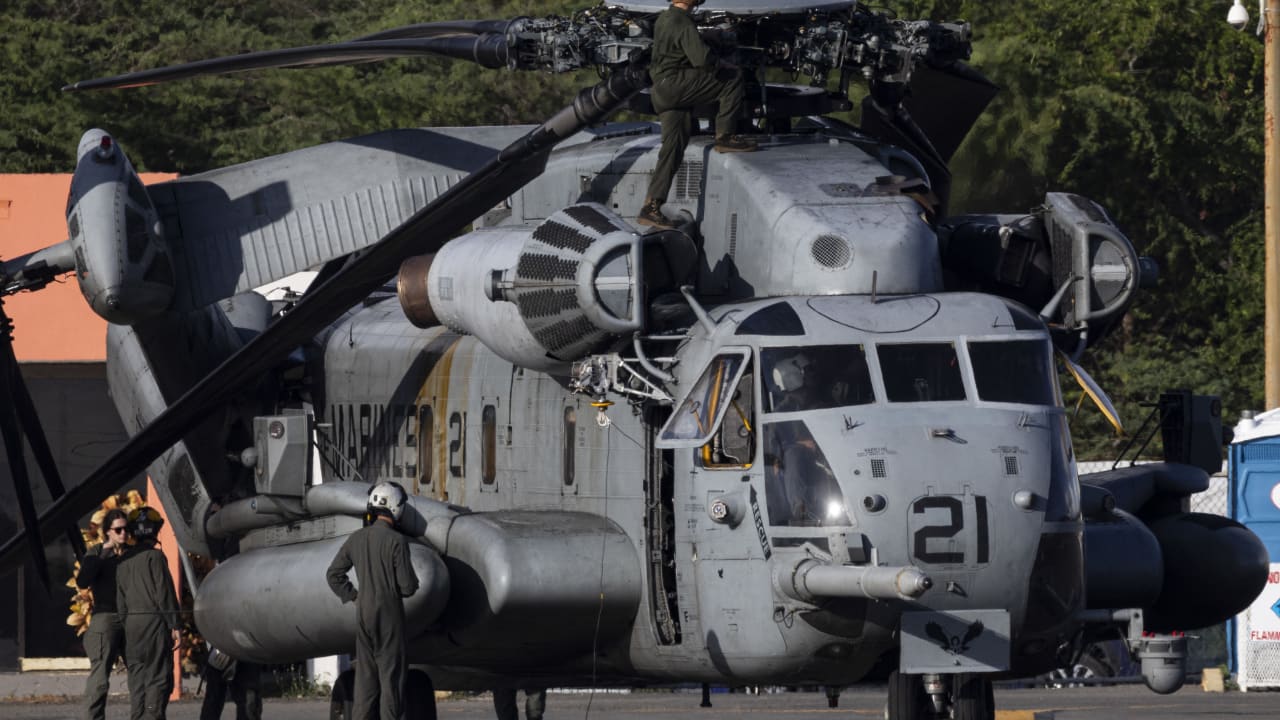
Despite numerous reports in recent days about a potential imminent and multi-sided US invasion of parts of Iran, including plans to retrieve 60% enriched uranium, The Jerusalem Post understands that these reports are exaggerated.
It is still possible that the US could use ground forces in some fashion. But the images of a large-scale invasion and specifically the idea of an extended mission in Isfahan to retrieve the 60% enriched uranium, which is part of Iran’s nuclear program, do not appear to be in the cards, the Post has learned.
Rather, the US’s military objectives have been consistently summarized as focused on eliminating ballistic missiles, drones, and naval threats – not the enriched uranium per se.
With a staggering 7,000 attacks since February 28, the US has also assisted with some strikes on Islamic Revolutionary Guard Corps positions, but has left much of that targeting to Israel.
What could be problematic is that more than two weeks into the war, neither Israel nor the US has announced any successful operations or attacks to neutralize the two largest remaining nuclear threats from Iran.

After the June 2025 war, the two main nuclear threats that remained were the over 400 kg of 60%-level enriched nuclear uranium covered in rubble from IDF attacks on nuclear sites and the Pickaxe Mountain nuclear facility.
Further, the IDF has declined to provide confidence that these two threats will be dealt with before the end of the war.
Some Israelis had hoped, based on reports of an American intervention, that at least the 60% enriched uranium would be seized or diluted.
However, as the issue has been more thoroughly analyzed, concerns have been raised that digging through the rubble to reach the uranium could take days or longer.
Unlike the US special forces intervention in Venezuela in January, which only took a few hours, such an extended intervention would put American ground forces at an unprecedented level of risk, even with what Israel and the US have termed “air supremacy.”
US and Israel avoiding the issue
There are still loose ends in this saga. Neither the US nor Israel has announced any operations to seize the uranium, but they have also pointedly avoided making statements that would indicate clearly that the issue is off the table.
The amphibious assault ship, USS Tripoli – believed to be carrying thousands of marines to the Middle East – is nearing the Malacca Strait off Singapore on its way to the region, maritime tracking data showed on Tuesday, according to CNN. CNN reported that the Tripoli is believed to be carrying troops from the Okinawa-based 31st Marine Expeditionary Unit (MEU), a rapid-response force of 2,200 personnel.
MEUs can be used for ship-to-shore movements, including raids and assaults, and some of their units are trained for special operations.
Why else would the US be moving such a force to the region if it was not planning an invasion?
Yet there are many ways these forces could be used, and they could also be part of a contingency plan that might never be executed.
In that sense, the thrust of what the Post has learned is that there is no obvious or imminent US plan to invade the Isfahan area in the next few days or weeks in order to seize the 60% enriched uranium.
How the forces on their way to the region may be used and how the US and Israel will deal with the threat from the enriched uranium in the future is less clear, possibly because Washington and Jerusalem may only decide as they see how the broader situation in Iran develops.
One potential comforting factor for Israel and the US is that for eight months, the Iranians themselves have failed to access the uranium, and all signs to date indicate that all or nearly all of their once 20,000-strong fleet of centrifuges were destroyed in June 2025.
Without Iran having access to the uranium, centrifuges to enrich the nuclear material, or weapons laboratories – which Israel also destroyed in June 2025 – it could take two years before the uranium could present a threat.
In that sense, the biggest nuclear threat would come if Iran were able to move the enriched uranium to the Pickaxe Mountain nuclear facility and then, over the next two years, succeed in rebuilding all of the destroyed parts of its nuclear program there – at a site so deep underground that it may be beyond even the US’s bunker busters’ capabilities to destroy.
Beyond the nuclear issue, the US has mostly attacked Iran’s regime in the south, while Israel has focused on targeting the West and the Tehran region. There have been fewer attacks in the East.
The US has specialized in destroying Iran’s naval capabilities, something that was never presented as a major priority by Israel.
However, as the war has homed in on Iran’s attempt to block the Strait of Hormuz, the US attacks on over 100 Iranian naval vessels, including an Iranian drone carrier ship, four Soleimani-class ships, and 30-plus minelayers, could prove valuable.
Iran’s naval infrastructure and vessels continue to be struck by US forces at ports, including Chabahar Port.
United States Central Command has also said it is working hard with Israel to take apart the Iranian defense industry and supply chains so that it will take the regime much longer to rebuild its ballistic missile apparatus and other military threats than in the past.
In contrast, CENTCOM has not made a direct mention of toppling the regime or the timing of such a goal.