
As images of our starving hostages in Hamas’s tunnels shock the world, the instinct to reach for our most powerful historical analogy – the Holocaust – feels overwhelming. Yet, even in this moment of unbearable pain and shock, we must exercise restraint.
Comparing October 7 to the Holocaust has damaged the memory of all victims while undermining Israel’s right to determine its independent policy and act to bring our hostages home.
In the immediate aftermath of the massacre, Israeli officials, media, and international outlets reflexively reached for the Holocaust analogy. Headlines proclaimed it “Israel’s 9/11” or “Israel’s Holocaust moment,” while politicians and commentators drew parallels to Nazi atrocities.
While these comparisons emerged from genuine shock and trauma, they created a dangerous precedent. If Israelis can compare October 7 to the Holocaust, it allows critics to compare Israeli military actions in Gaza to Nazi behavior. This rhetorical boomerang now undermines Israel’s international standing and legitimacy.
Today, as images of hungry children from Gaza circulate globally, critics increasingly turn Israel’s own Holocaust rhetoric against it. When these images dominate global media, they play directly into the hands of critics who compare Israel’s actions to the starvation of Jewish prisoners in concentration camps.
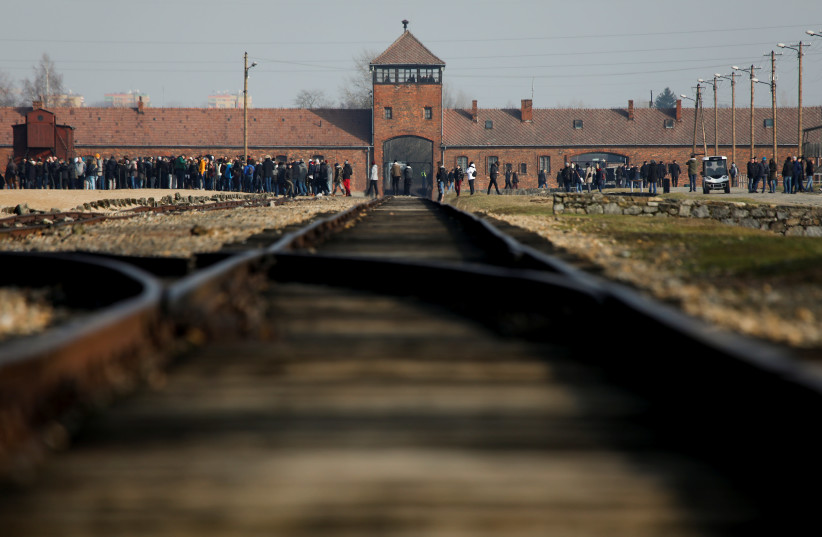
International voices now draw parallels between Israeli military actions and Nazi behavior – a devastating blow to Israel’s legitimacy stemming directly from our own misuse of Holocaust comparisons.
Holocaust survivors’ testimonies, which I recently reviewed, consistently emphasize the Shoah’s uniqueness – an unprecedented state-sponsored, legally protected industrial enterprise to exterminate European Jewry entirely.
In conversations I’ve had with second-generation survivors, I’ve encountered their careful deliberation when connecting October 7’s tragedy to the Holocaust.
Comparing the Holocaust and October 7 eliminates the uniqueness of each
If they exercise caution in choosing their words, shouldn’t we follow? We should also remember that back then we had no state or army to protect us. While these entities failed to identify the threat on October 7, the IDF rapidly regrouped and carried out strategic operations that strengthened Israel’s regional deterrence.
October 7, a horrific and traumatic day, represents a fundamentally different category of violence: a terrorist attack, a massacre, and a pogrom – but not a Holocaust. The differences matter not to minimize the suffering but to preserve historical accuracy and moral clarity, without diminishing the terrible failure for which the Israeli government and the IDF are responsible.
Historical research demonstrates that Israel has wrestled for decades with the politicization of Holocaust memory. The misuse of Holocaust terminology dilutes its historical significance and transforms it from a sacred memory into a political weapon. This isn’t merely an academic concern; it’s a practical strategy.
October 7 deserves its own historical category. It was the largest massacre of Jews since the Holocaust – a fact that carries enormous weight without requiring Holocaust comparisons. We must honor the victims, acknowledge the trauma, do all we can to bring our hostages home, and demand justice – without diminishing the unique horror of the Shoah.
Words matter. The Holocaust comparison we make today becomes the weapon used against us tomorrow.
The writer is deputy dean of students at Reichman University and a PhD research student at the University of Haifa, focusing on Holocaust memory.