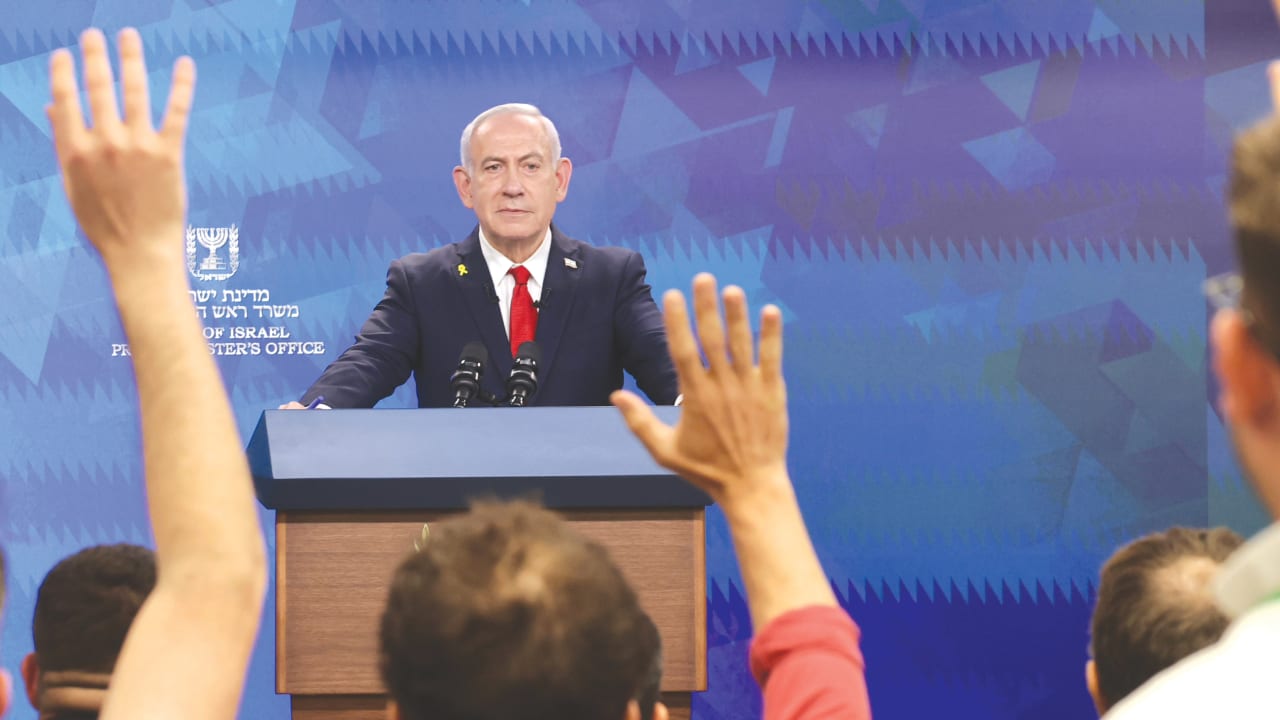
When Prime Minister Benjamin Netanyahu said on Monday that Israel may soon be forced to become a globally isolated “super-Sparta” with “autarkic features” – meaning little or no engagement with international trade – the first reaction was panic over what this would mean for the economy. Commentators warned of grounded planes, investors pulling out, and an army cut off from the spare parts and technologies it needs to win on the battlefield.
Yet the real shock was not economic. What unsettled Israelis most, I believe, was the stark message hidden in his words: this war is not ending anytime soon. Netanyahu’s path, as he spelled it out in that speech, is one of continued conflict and of Israel being forced to wield the sword indefinitely.
But for a nation still reeling from the trauma of October 7, the prospect of endless war is difficult to accept. Yes, Israelis want tourists and investors, but what they crave above all is something simpler and more profound– the ability, and even more so, the opportunity – to heal.
That is why the prime minister’s declaration was received so harshly. It told Israelis that the respite they yearn for is not coming anytime soon and that the nightmare that began with the failures of October 7 is not yet over. No wonder Netanyahu rushed to convene another press conference the next day and even gave a rare interview to an Israeli news station that is not Channel 14. He sensed the fury boiling beneath the surface.
What he seems to have miscalculated is the exasperation that has seeped into every corner of this country. While soldiers still report to duty, and reservists continue to volunteer and sacrifice their jobs and businesses, beneath the bravery lies a nation frayed and worn down.

Israel against the world
Every Israeli family has a name to mourn, a hostage to pray for, and a relative or friend’s child lost too soon. I think of my own children and the number of people they know who have been killed in this war – friends from youth groups, neighbors whose sons were killed, teachers whose husbands fell in battle. And this is just my family. This is Israel in 2025: a people deep in grief, yearning for the chance to breathe again.
Netanyahu's of “super-Sparta” offers none of that. What he depicted is a future in which Israel is locked in a hunkered-down status against the world. And while this is a natural posture after the disaster of October 7, it is not the future that Israelis desire.
The truth is that Israelis understand they will not be able to simply go back to the way things were before October 7, when the IDF watched as Hamas and Hezbollah amassed arms but refused to act, instead sanctifying the policy of containment and the so-called conceptzia that allowed for the Hamas attack to happen.
They understand that one of the primary lessons of these last two years is that to prevent this from happening, Israel will need to maintain a level of vigilance never known before in this country’s history. It will need to constantly fight on multiple fronts.
While they know that, what is just as disturbing is the way some of the government ministers talk about the war and, more specifically, how they view “the day after” in Gaza.
Finance Minister Bezalel Smotrich described a “real estate bonanza” awaiting in Gaza. He spoke of dividing percentages with the Americans, of moving from demolition to construction, as if the Strip were a development project waiting to be monetized. Twenty years after Israel dismantled Gush Katif, Smotrich now dreams aloud of its resurrection.
Words like “bonanza” from Smotrich or “receivership,” and “investible,” which I heard recently from a US official, may sound technical or optimistic. However, their meaning is that even when this war is declared over – hopefully with the hostages returned – for some people the real work will only begin.
Here lies the terrible gap between the people and their leaders. Israelis yearn for healing and a return to stability, while their leaders speak instead of isolation, annexation, and perpetual struggle. A super-Sparta from Netanyahu. A real estate “bonanza” from Smotrich. A future not of reconciliation but of continued conflict.
October 7 taught Israelis a cruel truth: the fight is not over and will not be for years to come. That is tragic and inescapable. But tragedy does not absolve leaders of their duty to speak responsibly and with compassion while outlining a vision that gives hope.
The people do not need ancient Sparta or property schemes in Gaza. They need leaders who will acknowledge their pain, be honest with them about the cost, and show a path not only to survival but also to healing.
The writer is a co-founder of the MEAD policy forum and a former editor-in-chief of The Jerusalem Post. His newest book, While Israel Slept, about the October 7 attack, is a national bestseller in the United States.