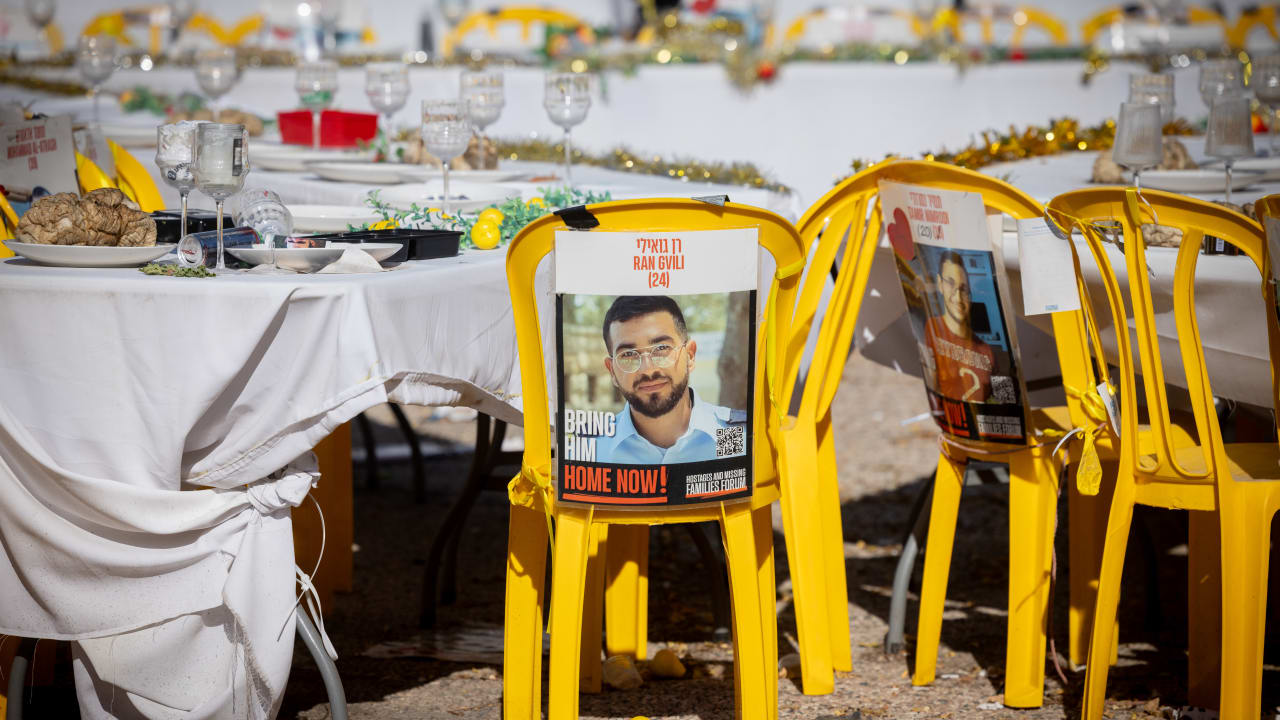
The news cycle has accelerated again. With attention rapidly shifting to the anticipated second phase of the ceasefire framework between Israel and Hamas, the escalating tensions in the North, political maneuvering in Jerusalem, and elections looming overhead, Israel’s collective focus is being pulled in multiple directions at once.
During these moments, when the nation’s focus shifts, it is crucial to remember that phase one of the hostage deal remains unresolved.
The remains of St. Sgt.-Maj. Ran Gvili, the last of the October 7 victims still held by Hamas in Gaza, has not yet been returned.
His family has not received the closure that every decent society owes its fallen. And despite these glaring, unresolved obligations, the public conversation has already begun to move on.
Gvili’s family implored the government to prioritize the return of his body, urging decision-makers not to let their son become a footnote to a horror that still defines the nation’s wounds.

Bringing Ran Home is a moral obligation
Since October 7, 2023, now more than 700 days ago, they have lived in suspended agony, trapped between certainty and absence. No family should endure this; no soldier’s sacrifice should be left hanging in diplomatic limbo.
Prime Minister Benjamin Netanyahu said this week that Israel is “determined to bring back [his] body,” part of the commitment embedded in the initial deal mediated with Hamas. Defense officials have reiterated similar sentiments.
Yet the family’s appeals tell a more profound truth: words have not yet yielded results. And when the country shifts its focus elsewhere, the pressure on decision-makers weakens. That is when promises risk turning into platitudes.
We cannot allow that to happen. Not now. Not ever.
Bringing Ran Gvili home is not a political demand. It is not a negotiation tool. It is not merely one line item in a multi-stage negotiation.
It is a moral obligation, one that Israel has upheld doggedly for decades, in far more complicated circumstances, often at high cost. The IDF ethos that no soldier is left behind is not a slogan for ceremonies; it is a commitment that defines us.
For the Gvili family, the issue is not merely a theoretical diplomatic matter; it is a daily challenge. “This issue never leaves us for a moment,” his brother Omri has said. “We live with it every day, every hour, every minute.”
His mother, Talik, has described the wait for news as “insane torment,” a pain that cannot be put into words. His father, Itzik, recalled that Ran insisted on returning to the battlefield, telling his commanders he would not let his friends fight alone and that, even with his injuries, he could still hold a pistol.
These are not the words of a family looking for headlines. They are the voice of a family that did everything this country asked of it and now asks for one thing in return: that Israel honor its promise to bring their son home for burial.
“I do not want them to build a building in Gaza on my son’s body,” his mother pleaded recently.
Gvili was killed on October 7 defending Kibbutz Nahal Oz, fighting to protect civilians as Hamas terrorists stormed through Israel’s south. Hamas abducted his body along with the bodies of other slain soldiers.
Most have since been returned, and Gvili is the last remaining deceased hostage.
His parents, siblings, and fiancée have not received the dignity of a burial, the ability to sit with their grief, or the closure that allows life to move forward.
As the government enters new phases of negotiations and the public conversation swells with political noise, we must resist the urge to look away from the unfinished business of the first phase.
Before we turn the page to what comes next, it must close the chapter still open on its desk. This obligation is not only a debt to one fallen soldier; it is a statement about who we are.
Israel cannot claim moral clarity in the face of its enemies if it forgets its own.
Leaders cannot demand national resilience while asking one family to endure the intolerable quietly. And a society that prides itself on solidarity cannot allow the last hostage to remain alone.
Ran Gvili must come home, not eventually, not after the election dust settles, and not once other priorities are addressed. Now.
Before we rush headlong into diplomatic plans, northern fronts, political campaigns, or strategies for the next stage of the conflict, this obligation must be fulfilled. It is the most basic promise Israel owes to its defenders and to itself.