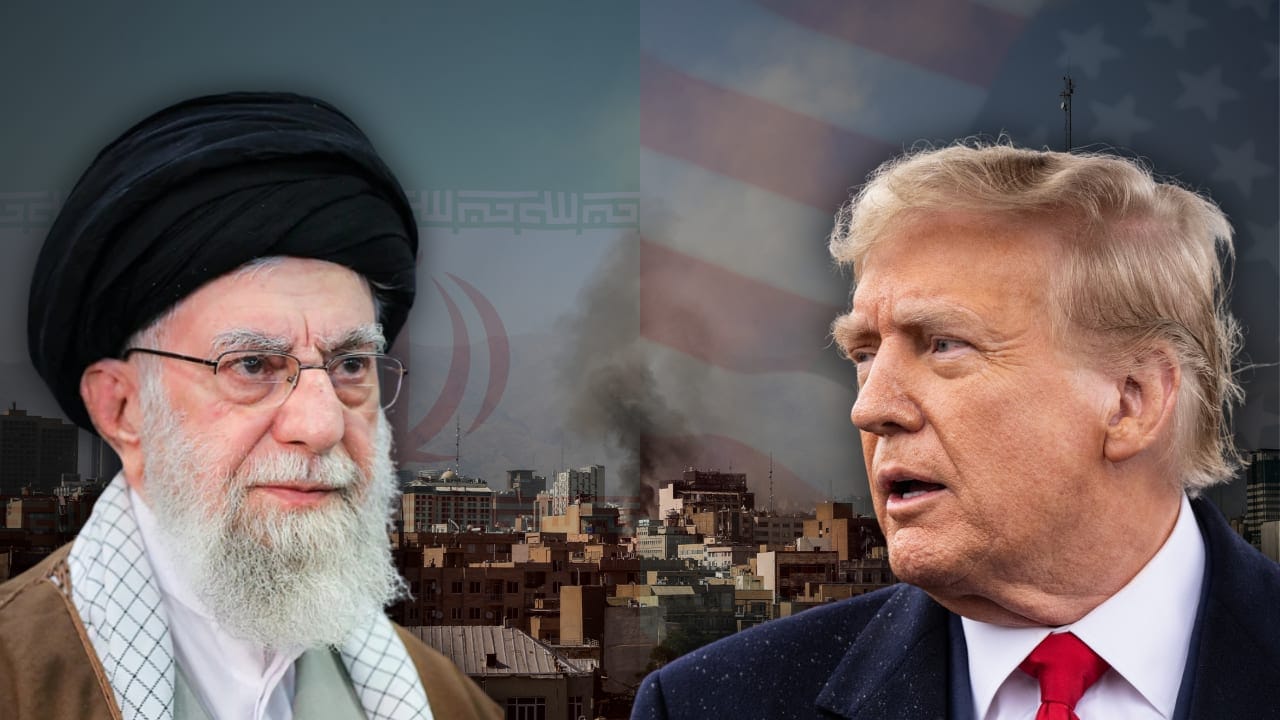
“And then there’s ISIS. I have a simple message for them. Their days are numbered. I won’t tell them where, and I won’t tell them how. We must, as a nation, be more unpredictable. We are totally predictable. We tell everything.
“We’re sending troops, we tell them. We’re sending something else; we have a news conference. We have to be unpredictable. And we have to be unpredictable starting now.”
President Donald Trump spoke these words a decade ago on April 27, 2016, during his first presidential campaign.
Yet they remain the key to understanding his entire approach to foreign policy. As tensions with Iran escalate and analysts scramble to predict American actions, this quote should explain everything.
We tend to interpret Trump’s mixed messages as evidence of erratic leadership, indecision, or lack of focus. But this clip reveals the opposite: the confusion is by design. If we’re confused by contradictory signals from Washington, understand that this is precisely how Trump intends it to be. Strategic unpredictability isn’t a bug in his foreign policy; it’s the core feature. We’re supposed to be confused, so that America’s enemies remain confused as well.

Hezbollah says it won't stand by if Iran is attacked
Against this backdrop, Iran’s proxies and allies have been issuing their own warnings. Naim Qassem, Hezbollah’s leader, declared last week that his organization will not stand idly by in the face of an attack against Iran. Similarly, Iraqi Kataib Hezbollah threatened “the Zionists” that “the war on the Islamic Republic will leave nothing of you in our region.” The Houthis in Yemen promised to resume attacks on global shipping in the Red Sea should the US strike Iran.
But should we take these threats seriously? While caution is always a wise policy, history suggests that the threats may be empty."
During last June’s twelve-day war between Israel and Iran, Hezbollah remained inactive. This was striking, given that the group that operates as Iran’s proxy in Lebanon is a northern front against Israel in precisely such a scenario. Its decision to sit out the conflict speaks volumes about both its current capabilities and its willingness to engage.
Since June, Israel has continued to enforce the ceasefire with near-daily airstrikes, systematically degrading Hezbollah’s infrastructure and eliminating personnel. The organization is hardly in a position to launch a major offensive. Moreover, if Hezbollah were to attack Israel in response to a US strike on Iran, it would give Israel full justification to complete what it has so far restrained itself from; devastating Hezbollah’s remaining capabilities entirely.
The Iraqi militias present a similar picture. During the twelve-day war, Israeli fighter jets flew through Iraqi airspace day and night en route to Iran. Kataib Hezbollah did nothing to hinder Israel. If they couldn’t or wouldn’t act then, why should we expect different now? It is worth noting that this is the same organization directly responsible for a drone strike that killed three American servicemen in Jordan last year.
As for the Houthis, while they may indeed attempt to disrupt Red Sea shipping again, their impact during the June conflict was minimal. Interestingly, the recent docking of the USS Delbert Black, a guided missile destroyer, at Israel’s port of Eilat suggests the US is preparing for precisely this contingency. The destroyer’s anti-ballistic missile defense capabilities position it perfectly to intercept Houthi missiles fired at Israel from Yemen.
What about Iran’s major allies? China signed a twenty-five-year comprehensive strategic partnership with Iran in March 2021. Russia signed a similar strategic alliance in January 2025, explicitly covering defense and military cooperation. Yet during the June war, neither lifted a finger to help Tehran. In fact, when Iran tried to close the Strait of Hormuz to block global shipping, China forced them to reopen it, not just abandoning their supposed ally, but actively undermining them.
Now, as the Iranian regime faces internal protests and potential collapse, with American military assets massing nearby, Tehran announces joint naval drills with China and Russia scheduled for mid-February.
The announcement came via Andalou, the state-run media of Erdogan’s Turkey. This is classic posturing, a way to signal continued partnerships in an attempt to deter the Americans from attacking Tehran for fear of wider escalation, without either Beijing or Moscow actually committing to military intervention.
Turkey’s state-run news agency dutifully reports it, and the message goes out: Iran still has powerful friends. But it’s a paper tiger, as recent history demonstrates.
None of this guarantees that nothing will happen. Desperate regimes can act unpredictably, and Iran’s proxies may yet surprise us. From a preparedness perspective, of course, caution is the best course. But if we use history as our guide, the saber-rattling from Tehran and its allies should be taken with considerable skepticism. Their track record during the last direct confrontation suggests far more bark than bite.
Meanwhile, as we try to parse President Trump’s intentions regarding Iran, we should remember that April 2016 speech. The mixed messages, the contradictory signals, the strategic ambiguity, it’s all deliberate. Trump believes in keeping adversaries off-balance, in maintaining what military strategists call “escalation dominance” through calculated unpredictability.
Whether this approach will successfully deter Iranian aggression, force meaningful negotiations, or lead to military action remains to be seen. But one thing is certain: we shouldn’t mistake strategic ambiguity for confusion. In Trump’s worldview, if we’re confused about what comes next, then Iran is too, and that’s exactly the point.
The writer is the executive director of Israel365 Action and co-host of the Shoulder to Shoulder podcast.