
Since the collapse of Rojava, which resulted in the loss of sovereignty over all its territories in the Eastern Euphrates – areas that the self-administration had controlled for nearly 14 years – debates among the Kurds about the region’s future have intensified.
There is growing concern that the Kurdish community may face a fate similar to that of their counterparts in Afrin, including ethnic cleansing, torture, kidnapping, killing, and daily humiliation at the hands of hostile Arab tribes and jihadists.
While Rojava’s future remains uncertain, various factions associated with the Kurdish-led autonomous region in northeastern Syria have promoted a familiar narrative, claiming that its collapse was the result of a secret international conspiracy.
Although this narrative may provide emotional comfort, it obscures a more uncomfortable reality and highlights a significant miscalculation. Rojava did not fall due to a covert agreement among global powers, as claimed. Instead, its collapse was largely self-inflicted, exacerbated by the shifting geopolitical interests of the American administration and Rojava’s failure to foresee the consequences of their cooperation with unreliable and constantly shifting Arab tribes, based on utopian ideals of “Brotherhood of Peoples” in a highly militarized and hostile Syria.
The truth behind the fall of Rojava
This situation was further aggravated by the “Turkey Terror-Free Process” initiated by the Turkish regime. Initiated by the Turkish state with the imprisonment of the Kurdistan Workers’ Party (PKK) leader since October 2024, it has led to significant disarmament and dissolution of the PKK, causing the Kurds in Rojava to mistakenly believe that peace in Turkey would eliminate Turkish hostility toward their territories.
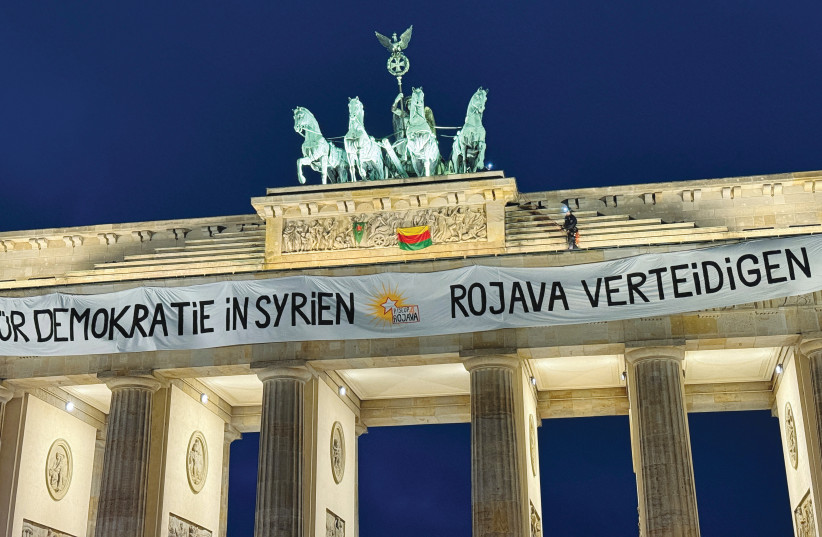
Yet, they miscalculated, believing that it was the Turkish regime conducting anti-Rojava diplomacy with the United States, European nations, and Arab states. Turkey trained and advised various Turkish-led Arab and Turkmen jihadists to prepare for attacks against the Kurdish-led Rojava. Additionally, it pressured Arab tribes – who had previously partnered with the Kurds – to change their allegiance and switch sides.
THE ROJAVA administration made an ideological choice, rather than a tactical one, to heavily rely on Arab tribal alliances for stabilizing territory and expanding governance. This decision was largely inspired by a sense of brotherhood aimed at creating sustainable democratic environments based on the self-governance of local communities in Syria, a region that has been heavily influenced by hostile, conservative, patriarchal, traditional, and tribal structures.
However, they failed to account for the region’s demographic complexity, leading to ideologically driven decisions that came at a significant cost. Instead of diversifying alliances beyond Syria and forging durable, interest-based partnerships, the leadership made little effort to develop alternative arrangements for fear of alienating tribal actors.
When these tribes withdrew their support, the consequences were immediate and devastating. Jihadist groups advanced rapidly toward the borders of Hasakah, Kobanê, and various Kurdish towns and villages. In Afrin and Manbij, Arab tribes similarly abandoned Kurdish forces, leaving them isolated and vulnerable.
These developments were foreseeable, yet little was done to mitigate the risk. More concerning was the failure to learn from these setbacks. Rather than reassessing their strategy, Rojava’s leadership doubled down on the belief that local alliances would remain intact and that international protection would be implicitly guaranteed. This misreading of power dynamics ultimately proved fatal.
THE ROLE of the United States is often mischaracterized in this context. Washington did not form an alliance against the Kurds but chose disengagement once its geopolitical priorities had shifted. Certainly, US Special Envoy for Syria Tom Barrack played a highly detrimental role in aligning American geopolitical interests with those of Turkey. He openly displayed a lack of sympathy for Kurdish demands, reaffirming this stance on several occasions.
Additionally, other American officials candidly acknowledged the limitations of their commitment to the Kurds. They stated repeatedly that relations with Kurdish forces were tactical, transitional, and temporary; that the Kurds were viewed primarily as an effective militia against ISIS; and that the US would not confront Turkey on their behalf. They made these statements publicly, not through hidden diplomatic backchannels.
The Rojava leadership failed to prepare for this scenario and did not translate battlefield cooperation into binding political and diplomatic guarantees. Opportunities existed to seek formal assurances, potentially even elevating the issue to the level of the US Congress.
The region’s administration chose to emphasize decentralization and insisted on presenting itself solely as a Syrian entity. This approach led to the avoidance of challenging negotiations concerning Kurdish status and protections. Ideological consistency came at the expense of political security.
ISRAEL’S POSITION has also been misunderstood. The absence of Israeli military support for Rojava was not a sign of hostility or indifference but rather a result of strategic calculation. Jerusalem had no formal agreement with Kurdish actors in Syria, and direct intervention risked complicating already volatile dossiers regarding Iran and Gaza, as well as straining relations with Washington.
That said, Israel did not remain idle. Diplomatic efforts were undertaken in Washington to prevent mass atrocities, as reflected in the foreign minister’s statement on X that Israel is silent but not inactive. For the Jewish state, the priority was damage control, not military entanglement.
Turkey implemented a multidimensional and highly coordinated strategy, including supporting jihadist proxies, mobilizing tribal networks to undermine Kurdish authority from within, conducting sustained diplomatic campaigns to secure legitimacy, and advancing a deceptive peace process that lulled Kurdish actors into complacency.
The Rojava administration failed to respond adequately to any of these challenges. This failure was not just about alliance-building but represented a fundamental failure of statecraft. The most tragic example occurred early in the crisis when children in Kobanê died from exposure within days, highlighting the lack of contingency planning after years of de facto autonomy. A project that aimed for radical democracy and self-governance proved incapable of addressing basic humanitarian needs.
Nevertheless, none of these events diminishes the symbolic and political importance of Rojava for Kurds throughout the region. For many, it remains a rare experiment in self-rule, gender equality, and grassroots governance under extremely challenging conditions.
To conclude, what transpired in northeastern Syria was not the result of an international conspiracy but rather the outcome of internal fragility and external realignment. Rojava had options, but it failed to take adequate precautions at crucial moments, making accountability inevitable.
The author is a research fellow in the Department of International Relations at the Hebrew University of Jerusalem. X: @dagweysi