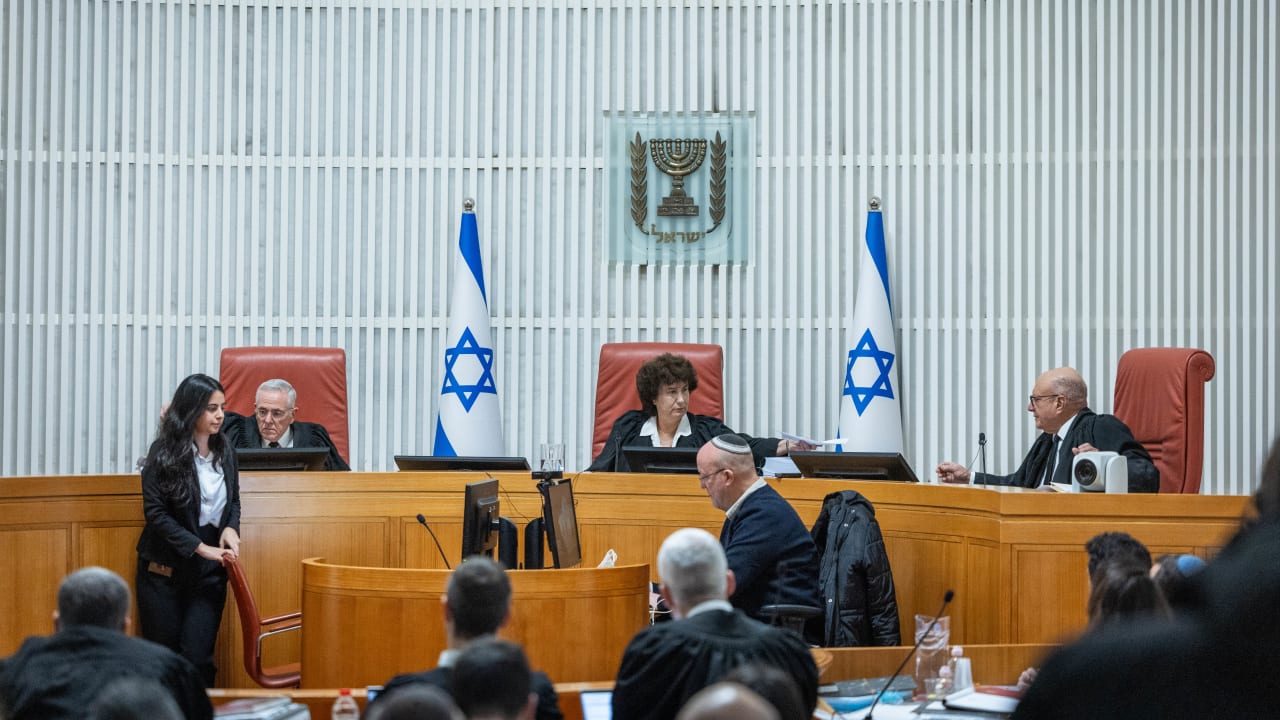
The recent High Court ruling on the appointment of the Civil Service Commissioner holds up an unflattering mirror to Israel’s attorney-general and the government’s legal advisory system as a whole.
At a time when the government has declared war on the legal establishment and the rule of law, this system must indeed act with resolve – but also with judgment and restraint.
The majority opinion in this ruling, as in several recent decisions, suggests that the attorney-general herself would do well to engage in some serious self-reflection. At its core, this was a dispute over the limits of power.
The minority justices urged intervention based on a broader sense of danger: fears of executive abuse and democratic backsliding.
But the majority refused to play along. Courts, they insisted, are not there to enforce what feels right, but what the law actually says – strict adherence to the text of the law, legal precedent, and the bare facts.

Chief Justice Isaac Amit, writing for the minority, warned that the ship of state might “sink” if the appointment moved forward.
But the majority shrugged off the metaphor.
A blunt rejoinder followed: courts do not intervene because a policy seems unwise or troubling – only when it is unlawful. That line should resonate well beyond Israel. When legal opinion quietly replaces law itself, democracy begins to rot from the inside.
The sharpest criticism – and the one that should echo through the halls of the Justice Ministry – came from Justice David Mintz and Deputy Chief Justice Noam Solberg.
When legal gatekeeping meets political reality
Mintz wrote that “these matters cast a heavy shadow over the position taken by the legal advisers.”
Solberg was even more direct, pointing to a professional failure on the part of the Attorney General’s office.
In striking language, he concluded: “The boundaries of the law are considerably broader than those presented to the government by the attorney-general.”
He added a terse reminder, quoting former chief justice Dorit Beinisch, that “prosecutors are not policymakers.”
Attorney-General Baharav-Miara had insisted that appointing the commissioner without a search committee would be illegal. The court disagreed. The law allows it. This was not a one-off.
In recent months, the court has repeatedly sided with the government over the attorney-general on questions of legal authority.
Given the government’s ongoing push for “judicial reform” and the flood of decisions and legislation aimed at undermining the foundations of Israeli democracy, the role of the legal advisory system is more vital than ever.
Precisely for that reason, it must act responsibly and with restraint. A healthy justice system depends on public trust. When the attorney-general is perceived as acting in open rebellion to the government, the damage reaches beyond the government to the rule of law itself.
Gatekeepers matter. But gatekeeping is not governing.
Justice Solberg summed it up with a call to action: “Lessons must be learned.” Indeed, the legal advisory system must continue to draw clear legal red lines where necessary – but not invent them where the law and precedent are clear.
The majority opinion reminds us that there are judges in Jerusalem. There is also an elected government. And there is the law.
The role of the legal advisory system is to respect all three and to act as a true gatekeeper only when the legal threshold has clearly been crossed.
The writer is director-general of JPPI – the Jewish People Policy Institute – and a senior lecturer in law at the Peres Academic Center.