The basic guideline of journalism is often summed up as “The 5 Ws”: Who, What, When, Where, and Why.” This provides a good starting point for any investigating committee, too, which is why I am running into difficulties writing this piece and why the country does not yet have an official, accepted commission of inquiry into the events surrounding October 7, 2023.
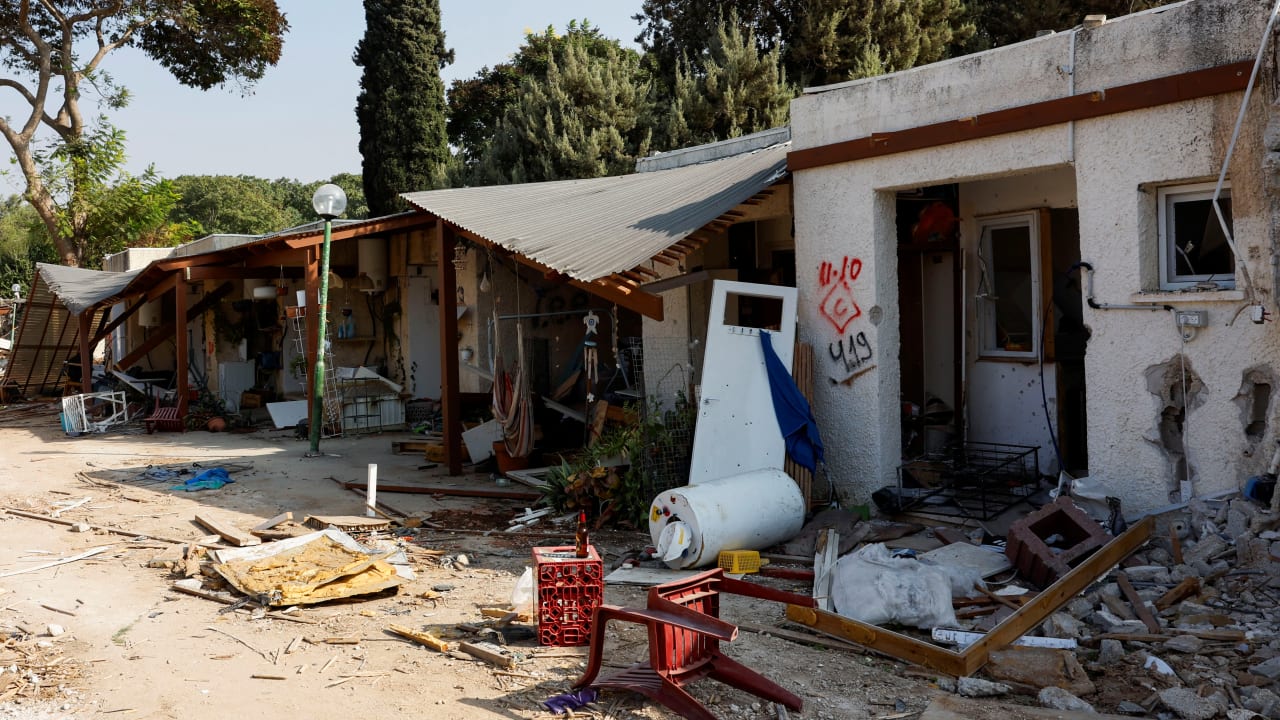
There is no doubt about the seriousness of what happened that dreadful day. Hamas led an invasion from Gaza into southern Israel and perpetrated a mega-atrocity that resulted in the slaughter of 1,200 people, the abduction of 251, the wounding of thousands, and the displacement of tens of thousands. In the North, thousands more became refugees as Hezbollah also launched rockets and seemed poised to join in with a similar attack.
The resulting war, known variously as the “October 7 War,” “Swords of Iron,” and “Tkuma” (revival) was conducted on seven fronts, including missile barrages from Iran and its proxies, as well as intensive fighting in Gaza and Lebanon that cost the lives of more than 1,000 soldiers. The nation was scarred and traumatized even after the existential threat had been successfully repelled – and in some operations, spectacularly so.
When the body of Ran Gvili, the last of the hostages, was returned from Gaza last month, the country moved into a new phase. Demands for a commission of inquiry naturally increased. Just what type of probe it should be, however, is far from being a consensus issue. The basic lack of trust between the judiciary, the government, and the general public has exacerbated the problem. Any commission of inquiry runs the risk of increasing polarization.
The question of “Who” covers both who will be investigated – political, military, and civilian figures – as well as who will carry out the investigation: a state committee of inquiry (headed by a judge and appointed by the president of the Supreme Court); a governmental review commission (appointed by a minister or the government); or a parliamentary commission of inquiry (established by the Knesset). So far, calls by the government for the opposition to join a commission with equal numbers of members on the panel have been rejected.

As former Likud MK Michael Kleiner noted recently in Maariv: “The important question at hand is not whether the committee is state, governmental, or parliamentary – but whether it is a professional committee, built on the foundations of knowledge, restraint, and good judgment.”
Multiple inquiries into the October 7 massacre
State Comptroller Matanyahu Englman began his own inquiry, although it was opposed by Attorney-General Gali Baharav-Miara and frozen by the High Court in December. The IDF and Shin Bet (Israel Security Agency) have also carried out internal investigations, although just how thoroughly an organization probes its own failings is a mute question.
The months preceding October 2023 were marked by the upheaval surrounding the government’s proposed judicial reform and the response, which included paralyzing strikes and demonstrations as well as calls for a refusal to serve, particularly among pilots and elite units. These are among the factors that must be investigated. Israel’s enemies did not disguise their glee as the protests weakened the country.
In addition, the justice establishment will need to answer questions regarding its open-fire regulations, which limited the response before the war, along with rulings regarding the scope and type of “humanitarian” aid to Gaza.
It is tempting to demand that personal blame be assigned and that heads roll, metaphorically and politically. This, however, is not necessarily effective: It tends to draw out the investigatory process and might consciously or subconsciously affect the nature of the testimonies submitted.
The IDF chief of staff, head of Military Intelligence, and other senior military officials from October 7 are no longer serving. Ditto the head of the Shin Bet. The fate of political figures can be determined in elections.
The recommendations of investigating committees can be circumvented. For example, the Kahan Commission investigated the Sabra and Shatila massacre of Palestinians by Christian Phalangists in an area under Israeli control in 1982 during the First Lebanon War. It ruled that Ariel Sharon could not serve as defense minister; that did not prevent him from later becoming prime minister.
There might even be some kind of perverse pendulum effect. The Agranat State Commission of Inquiry examined the massive failings of the 1973 Yom Kippur War and their primary conclusion was that military leaders were reluctant to take the threats seriously; the Winograd Commission that examined the 2006 Second Lebanon War determined that, under prime minister Ehud Olmert, the country had leaped to war while unprepared. In both cases, it was public pressure, rather than the commissions, that ultimately forced prime ministers Golda Meir and Olmert to resign.
For too many years, Israel stuck to what was known as Haconceptzia – The Concept – a narrow security rationale holding that Israel’s enemies lacked the capacity or the desire to wage war. This same misconception somehow survived the Yom Kippur War and can be seen pre-October 7, exactly 50 years later. The leadership was both unprepared and reluctant to take action, despite the obvious signs of mounting threats seen in Hamas maneuvers, violent rallies on the Gaza border, rocket attacks, and eco-terrorism.
Deterrence was the buzzword of the top military and political echelons. Prime Minister Benjamin Netanyahu and former (briefly) prime ministers Naftali Bennett and Yair Lapid all fell into the same trap. Netanyahu let large amounts of Qatari money into Gaza in the hope of maintaining quiet if not peace; Lapid, in October 2022, during his last days in office, pushed through a deal with Lebanon, effectively handing over part of Israel’s waters and potential maritime gas field in the vain attempt to stave of Hezbollah’s hostilities.
Last week, Netanyahu reportedly presented the Knesset Foreign Affairs and Defense Committee with a long list of documents he had supplied the state comptroller, supporting his claims that he had not been provided with the necessary intel. The opposition, including Lapid, immediately accused the prime minister of “cherry picking” selected statements.
This all brought to mind the quote attributed to Israel’s first prime minister, David Ben-Gurion: “Anyone who believes you can’t change history has never tried to write his memoirs.”
The Questions of “when” and “what” are no less important than the “who.” The Agranat Commission investigating the Yom Kippur War limited its scope to the few days before it broke out and the first days of the fighting. The causes of the “October 7 War” will have to go back further than that: How far depends on whom you ask.
Many believe the roots of the war lie in the 2005 “Disengagement” from Gaza, removing all Israeli presence from the Strip – and no less significantly, losing invaluable human intelligence sources (HUMINT) which the Shin Bet apparently did not replace. Some people will go back further still, blaming the Oslo Accords in the 1990s, which also resulted in the loss of such intel while leading the terrorist organizations to believe that escalating violence could drive the Jews away.
Certainly, the existence of terror tunnels – particularly seen in the 2005 murder of two soldiers and the abduction of Gilad Schalit to Gaza – needs to be investigated in this context. Tunnels are still being discovered. The extent of these tunnels – dug under civilian homes, hospitals, schools, and mosques – shows them to be a strategic threat that was created while Israel placed its head in the sand to try to drown out the sound of the drilling.
The massive release of more than 1,000 terrorists in exchange for Schalit in 2011 also cannot be ignored. It’s not by chance that the October 7 invaders abducted more than 250 hostages to use as bargaining chips.
Why Israel was lulled into complacency; why was strategic intelligence ignored; at what point did the IDF and Shin Bet realize the extent of the threat and when did they warn the prime minister; why it took so long for forces, particularly the Air Force, to respond – all these are haunting questions that need investigation. The public needs answers and closure – and the ability to try to believe that this will not happen again.
Inquiring minds can ask questions and demand answers, but an investigatory committee is only as good as the implementation of its recommendations. We can’t change what happened, but we can still try to prevent history from repeating itself.