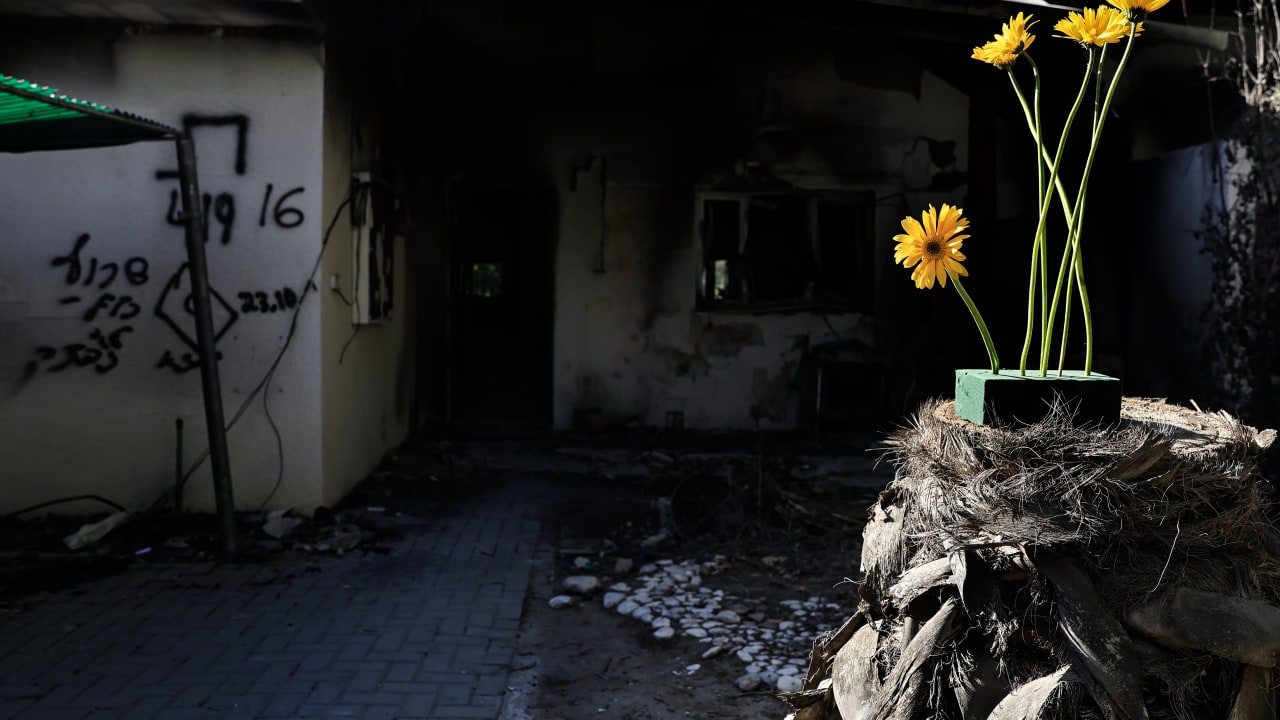
State Comptroller Matanyahu Englman criticized the government’s handling of the rehabilitation and development of the Gaza border communities attacked on October 7, warning that key recovery plans were only partially implemented and that major gaps remain for residents who are still unable to return home.
“Failures must be fixed so those who experienced the October 7 massacre can be rehabilitated as soon as possible,” Englman said in the report published on Tuesday, adding that it is unacceptable that an orderly alternative government solution has still not been formulated for residents who are unable to return to their homes.
The audit reviewed government and local authority actions over an extended period following the October 7 attack and focuses on failures in civilian recovery.
Englman called on the Prime Minister’s Office, the minister in the Finance Ministry responsible for the Tekuma Administration – the government body set up to coordinate the rehabilitation of the Gaza-border communities – and the Tekuma Administration itself to act without delay to correct the deficiencies identified in the report and to remove obstacles preventing the rehabilitation of the region, its residents, and its communities.
Following a series of government decisions recognizing the severe damage suffered by the communities, the government established the Tekuma Administration to lead the national effort to rehabilitate and develop the region and restore normal life.

The area was later designated a national priority zone under legislation aimed at accelerating recovery across all areas of life, including infrastructure, education, welfare, and economic development. Most residents have since returned to their homes, following the completion of essential repairs.
State Comptroller urges fixes for Gaza border recovery failures
Despite the scale of the budgets approved for the region, the comptroller’s report found that implementation on the ground lagged behind planning. According to the audit, gaps in coordination, unclear priorities, and weaknesses in oversight slowed recovery efforts and currently risk undermining public trust in the rehabilitation process.
The report notes that after legislative changes and budget cuts, Tekuma was required to update its multi-year rehabilitation plan but only published the revised plan months later than scheduled. The delay, the comptroller found, harmed rehabilitation activity and slowed regional development efforts.
The updated plan also failed to clearly explain which programs were reduced or changed following the budget cuts, making it difficult to understand how priorities were reshaped.
Education emerged as one of the central areas of concern. Englman said the Education Ministry’s budget for students in the region created distortions and was not distributed equally, and that funds intended to incentivize teaching staff were implemented only minimally.
The audit found specifically that the education plan was prepared without sufficient dialogue with key local authorities, particularly those most severely affected, and that funding mechanisms did not ensure fair distribution of resources meant to support students academically, emotionally, and socially.
The report also criticizes the handling of incentives for teaching staff, finding that decisions were made without proper involvement of the relevant professional bodies and without sufficient analysis of whether the incentives would address actual needs on the ground. In practice, only a small portion of the approved funds was used, raising doubts about the effectiveness of the program.
Local government capacity-building was another area where the audit found significant failures. Although funds were allocated to strengthen local authorities through staffing, service procurement, and administrative support, the Interior Ministry did not implement the program it drafted.
Responsibility had later been shifted, but the audit found that funds intended to strengthen local authorities remained unused for an extended period, further delaying recovery at the municipal level.
Environmental rehabilitation was also found lacking. The audit states that damaged open areas in the region have not been addressed through a comprehensive framework and that the Environmental Protection Ministry failed to establish a clear mechanism to ensure full rehabilitation. The absence of a coordinating body, the report warned, could make it difficult for local authorities to identify priorities and carry out restoration work effectively.
Englman emphasized that the government has yet to provide a comprehensive solution for residents who cannot return to their homes, despite public announcements encouraging return. The report describes this gap as particularly serious and urges immediate action to address the needs of these residents in a coordinated and orderly manner.
The audit also highlights shortcomings in transparency and budget oversight. It finds that Tekuma’s reporting did not clearly show how much money was actually transferred to implementing bodies and that updated plans lacked detailed financial breakdowns. In addition, Tekuma was found to lack a structured budget-monitoring system that would allow for effective tracking of implementation and identification of delays.
The report includes a broad set of recommendations aimed at addressing these issues. Among them are calls for clearer publication of budget priorities, renewed dialogue with local authorities and communities, reassessment of education funding mechanisms, closer evaluation of teacher incentive programs, stronger action to support local governments, improved coordination in environmental rehabilitation, and the creation of a structured system to monitor budgets and implementation.
The report also urges closer coordination between rehabilitation plans for the Tekuma region, neighboring communities, and the broader Beersheba metropolitan area in order to reduce duplication and promote shared regional development.
Englman concluded by calling on the PMO, the Finance Ministry, and the Tekuma Administration to act without delay to correct the failures identified in the report and to remove barriers preventing the rehabilitation of the region, its residents, and its communities.