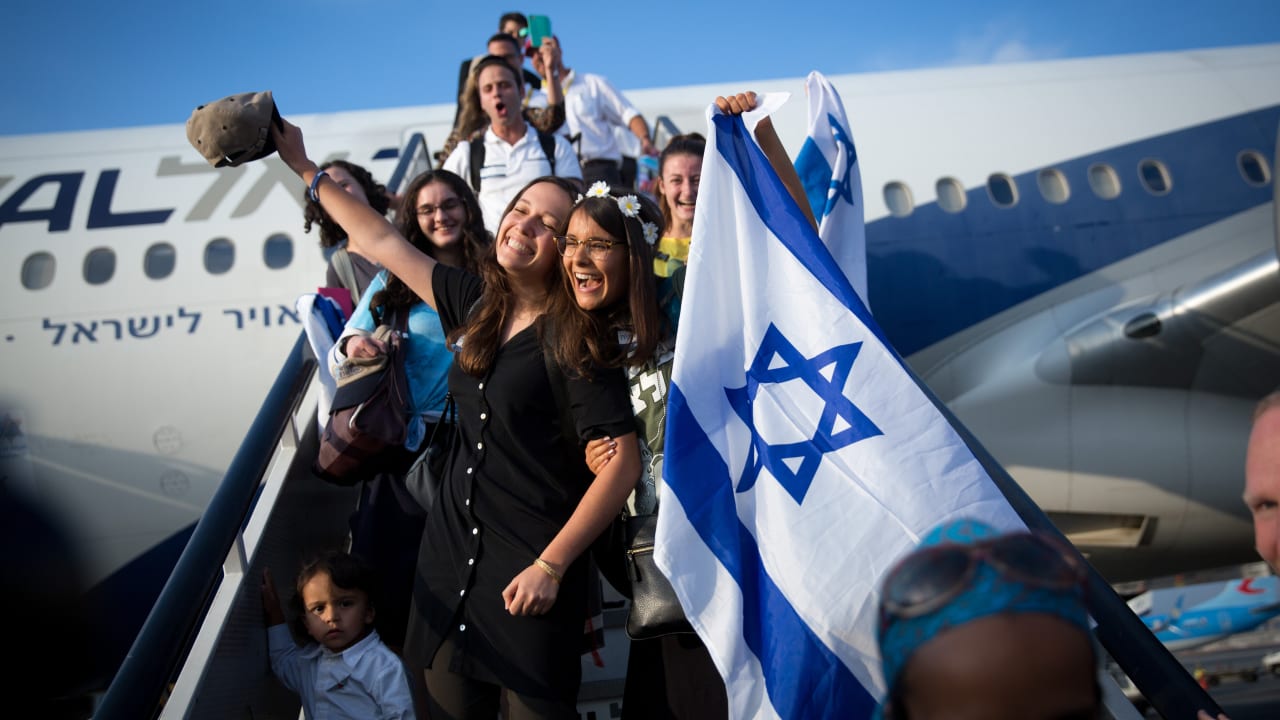
This week, the Knesset’s Committee on Immigration, Absorption and Diaspora Affairs reported that the number of immigrants from the former Soviet Union in 2025 is the lowest since 2020. MK Ze’ev Elkin warned of an additional projected 50% drop in aliyah from those countries. These are not just statistics. They are warning signs.
Israel was founded on aliyah. The Zionist dream was not merely about sovereignty but about ingathering – creating a home for every Jew and every person tied to the Jewish people who seeks to build their future here. When aliyah declines so sharply, especially from regions that have historically sustained Israel demographically, economically, and culturally, we must ask why.
Geopolitics and war play a role. So do economic conditions. But there is a deeper and more uncomfortable truth: Hundreds of thousands of aliyah-eligible individuals from the former Soviet Union know that if they come to Israel, their Jewish status will be questioned, their ability to marry will be constrained, and their children’s identity may be cast into doubt.
More than 580,000 Israeli citizens today are not recognized as Jewish according to Halacha by the Chief Rabbinate, despite being part of Israeli society – serving in the army, speaking Hebrew, paying taxes, and tying their destiny to the Jewish state. For them, and for their relatives abroad, Israel offers citizenship but not full belonging. This is not merely a bureaucratic challenge. It is a crisis of identity.
Conversion and aliyah as political weapons
Instead of addressing this challenge with courage, radicals on both the Right and the Left have turned conversion and aliyah into political weapons.
On the Right, resistance to meaningful conversion reform has effectively closed the gates before those who seek to join the Jewish people in good faith. Conversion is treated as a threat rather than as a historic opportunity. The result is paralysis and alienation.
On parts of the Left, recent public discourse has suggested that aliyah itself can be engineered for demographic or political ends. Such rhetoric, including troubling remarks attributed to former prime minister Ehud Barak about shaping aliyah to rebalance Israeli society, reduces the sacred enterprise of ingathering to social manipulation.

Both approaches betray Zionism.
Foundational pillars of Judaism and Zionism
Aliyah and conversion are not tools for electoral strategy. They are foundational pillars of Jewish continuity and Israeli sovereignty.
Israel must recommit to being a home for all those eligible under the Law of Return. At the same time, we must open wide the doors of conversion – particularly for those already living among us – with seriousness, compassion, and halachic integrity.
Jewish law has always contained the mechanisms to welcome sincere converts. What is lacking is not tradition but political will. That is what I am trying to do in the ITIM – Giyur K’Halacha initiative that has already converted thousands of Israeli citizens.
Return, renewal, and responsiblity
If we fail, the consequences will not only be fewer immigrants. We will see the growing rift within Israeli society itself fester.
The Zionist dream was never about exclusion. It was about return, renewal, and responsibility for one another.
The gates of aliyah and the gates of conversion were meant to stand side by side. It is time to open them both.
The writer is the founder and director of ITIM.