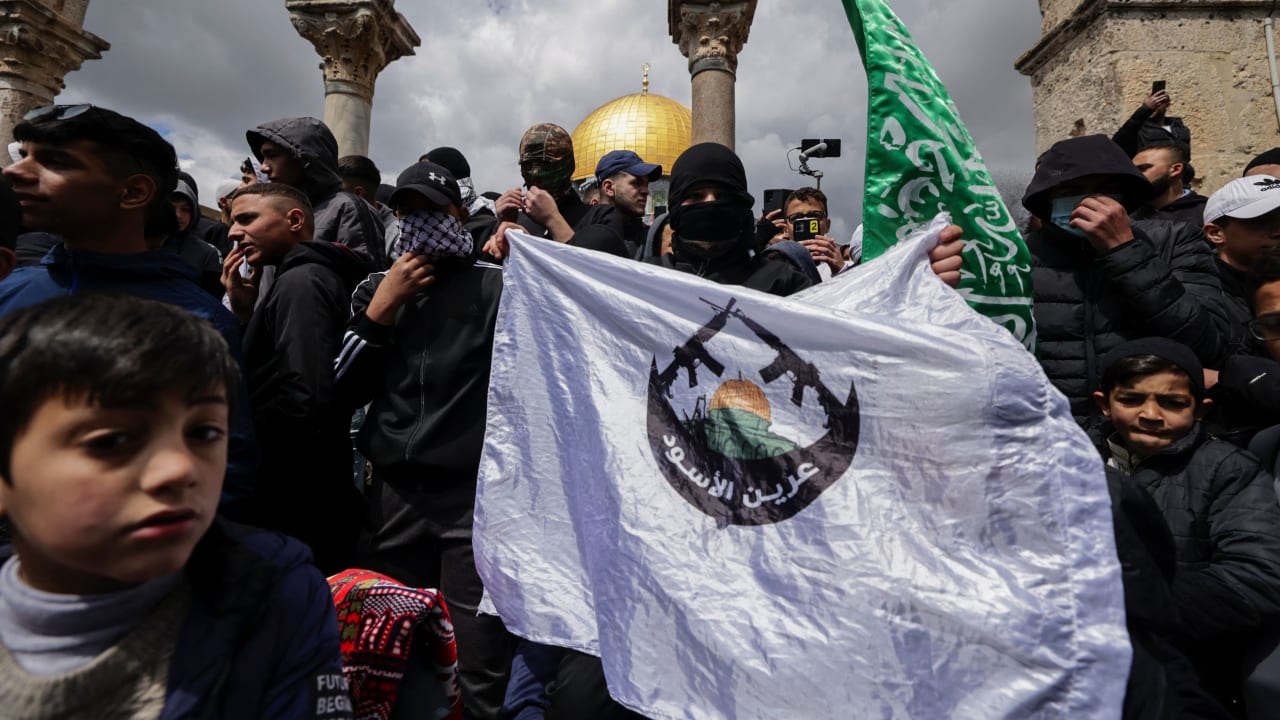
Ahead of the month of Ramadan, three new mosques were inaugurated in northern Gaza, funded by a Turkish religious foundation, with Turkish flags flying prominently on their façades. One of the mosques is named after Abdullah Azzam, one of the spiritual fathers of al-Qaeda. This is not merely an innocent reconstruction project: it is an ideological declaration of intent.
For years, Israel has opposed any Qatari or Turkish military presence in the Gaza Strip. Yet even without tanks and soldiers, Doha and Ankara operate in Gaza with significant influence, providing food, shelter, infrastructure, and mosques. States that openly support Hamas and host its senior leaders understand well that real influence does not begin on the battlefield, but in consciousness.
And consciousness is shaped in mosques and schools.
The greatest mistake of the international community in recent decades has been its exclusive focus on the security or economic dimension: another round, another arrangement, another flow of funds. But without deep de-radicalization – a fundamental transformation of values and messages – nothing will truly change.

Terrorists as heroes
One cannot build a stable reality when a child in Gaza learns to admire terrorists as “heroes,” consumes content that glorifies shahids, and listens to sermons preaching war against infidels. This is a systematic incitement industry that produces generation after generation of terrorists.
Therefore, the “day after” in Gaza cannot be limited to “reconstruction” – it must come together with de-radicalization and a transformation of consciousness.
The next generation in Gaza must grow up differently, and that begins with education. A serious international plan for the future of the region must include close supervision of educational content and mosque sermons, the appointment of moderate imams, and clear enforcement against incitement. Such oversight exists in dozens of Arab states, out of an understanding by their governments of the weight sermons carry for their stability.
The most prominent regional example is the United Arab Emirates (UAE). At the Abrahamic Family House campus in Abu Dhabi a mosque, a church, and a synagogue stand side by side among the most magnificent in the Mediterranean sphere – a symbol of a deliberate policy of religious tolerance and coexistence.
During my visit to the complex, I was told that when the original construction plan was presented, one that did not include a synagogue, the late president Khalifa bin Zayed Al Nahyan remarked that it was inconceivable not to give expression to the ancient and wisdom-rich Jewish faith, and that we must rise above political disputes in order to exist together in the region.
Governmental oversight of mosques
The symbolism of the campus is also reflected in concrete policy steps: There is governmental oversight over Friday sermons – approved texts, supervised appointments, and training geared toward messages of coexistence.
In contrast, under the leadership of Recep Tayyip Erdogan, Turkey has adopted a hostile and dangerous ideological line toward Israel and has fostered a militant pan-Islamic consciousness.
Erdogan’s conception of the education system is neither neutral nor merely pedagogical: it is strategic.
In recent years, there has been significant radicalization in textbooks, and the curriculum has undergone clear ideological radicalization. Within this framework, the concept of “jihad war” has been introduced into textbooks and presented as a central value, martyrdom (shahada) in battle is portrayed as commendable, and struggle and combat are presented as an essential part of Islamic and national identity.
Islam is no longer presented merely as a religion, but as a political project. The West – and especially Israel – is portrayed as a colonial occupying force, and there is even understanding shown for the motives of organizations such as ISIS and al-Qaeda. Zionism is depicted in demonic terms, and Christians and Jews are referred to as “infidels” rather than Ahl al-Kitab (People of the Book).
Turkey is not neutral
In arenas such as Gaza, where a struggle is underway over shaping the next generation, such a model is geopolitical. Mosques bearing the Turkish flag in Gaza are not neutral; they symbolize an attempt to shape the religious and political space in the spirit of Ankara. The future of the Strip cannot be entrusted to those who grant political legitimacy to Hamas and frame the conflict as a comprehensive religious struggle.
Indeed, a de-radicalization plan does not produce immediate results; its fruits will be seen only in the next generation. But we have already wasted an entire generation since the Oslo Accords, in which we relinquished control and assumed that economic incentives would suffice. If before Oslo Israelis could travel by bus to Gaza via the central bus station in Beersheba, today that reality seems imaginary. This is the depth of the shift in consciousness that has occurred there within just one generation.
Can the wheel be turned back? Perhaps not fully – but we do not have the privilege of not trying.
Anyone seeking a stable future for Gaza, for the sake of the Palestinians themselves and for Israel’s security, must understand: Without oversight of sermons, without rebuilding educational curricula – and without replacing the infrastructure of incitement with an infrastructure of life, peace, and prosperity – any physical reconstruction will be a building on sand.
The battle over tomorrow’s Gaza will not be decided only at borders and crossings. It will be decided by the question of who drafts the Friday sermon.
The writer is a senior fellow at the David Institute for Security Policy, host of the podcast Journey Through Ideas (Masa Bein Ra’yonot) and served as a policy assistant to former strategic affairs minister Ron Dermer.